May 14, 2019
Productivity
Books updated per labour hour. VAT Returns filed per labour hour. Annual Accounts filed per labour hour. Client profit margin … Read More “Productivity”
Books updated per labour hour. VAT Returns filed per labour hour. Annual Accounts filed per labour hour. Client profit margin … Read More “Productivity”

Our word ‘Profit’ comes from a Latin verb proficere.
It’s meanings include:
to advance, make progress
to benefit, profit, take advantage
to help contribute, be useful
to depart, set out
Proficere itself is a combination of two words, ‘pro’ (meaning forwards) and ‘ficere’ which means:
to do
to make, construct, fashion, frame, build, erect
to produce, compose
to appoint
Ultimately this can be traced right back to proto-Sanskrit as a word that means ‘do, put, place’ – a word that represents our sense of agency in the world.
Why do we insist on reducing all this richness to mere coin?
If a business is a system for making and keeping promises, how do you measure its performance?
Some metrics:
How many promises you make, and how many you keep.
How much someone pays you to keep your promise to them.
How much it costs you to make a promise, and how much to keep it.
How much it costs you to resource, monitor and improve the way you make and keep your promises.
You could add:
How much it costs the planet for you to run this system.
How much you increase these things for yourself, your team and your clients:
Agency
Mastery
Autonomy
Purpose
Community
Simple.
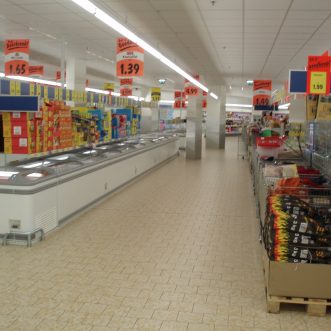
Having a staff member sat idle at an empty checkout lane feels wasteful.
So the company policy is to train staff to do everything in the store, so when its quiet, they can be re-stocking, tidying up or whatever else needs to be done. When it gets busy, people jump back onto their checkouts to quickly get the queue down.
Not a bad policy, provided you have enough people.
But having a staff member sat idle at an empty checkout lane, or casting about for something to do still feels wasteful. So its tempting to the store manager to cut the total number of people. “We have a self-checkout people can use, so unless its really busy, we don’t need any other checkout open, and I can handle that – I can make more profit with a smaller team.”
Now you’ve introduced a bottleneck for customers, a bottleneck some of them are going to dislike so much they will stop shopping with you, despite all the changing stock you put in to encourage return visits, browsing and impluse buys.
Your shop gets less busy, so you cut down further on staffing levels. The queues at the self-checkout get longer, the queue at the manned checkout even longer.
Suddenly you’re hardly ever busy, and company management are wondering whether your store is viable.
3 points:
Checking out is merely one step in the customers’ cyclical process of shopping. Before optimising any step, consider its impact on the process as a whole.
A store is a system designed to enable that process for the people you serve locally. All systems need slack if they are to work efficiently.
A store is part of a larger company system designed to make and keep a particular promise to a particular set of people. Before optimising anything, consider whether it will reinforce that promise or undermine it.
It is of course perfectly OK to put some people off shopping with you – so long as you do it on purpose, and only to the right people.
You’ve guessed it.
The question I, and business advisers like me, need to be asking ourselves is then:
What can I do to help them achieve these things?
The side-effect of delivering that is likely to be scalability.

Nothing says ‘Us’ and ‘Them’ quite like a wall. Whichever side you’re on.
Except of course that isn’t how people work.
In practice, each fort along the wall becomes the nucleus of a community, a vicus or neighbourhood, made up of the garrison and the local people who service it; adopting each others’ fashions, assimilating aspects of each others culture.
As a business, it pays to be really clear who your Promise is for; to put a metaphorical wall around ‘Us’, so that a prospect can easily tell which side they are on.
But it shouldn’t be set in stone. Walk your boundaries regularly, see where new neighbourhoods are forming and adjust accordingly.
PS my friend Lisa Settle is trekking the other Wall to raise funds for more research into Type 1 Diabetes.

It’s very satisfying to try out your idea for a pot, refining with each attempt until you come up with a version you are happy with. But what about reproducing that time after time exactly, in the quantities required to make profit?
To make a living, potters have to choose between two poles – to be an ‘artist’ commanding high prices for one-off pieces, or become a ‘manufacturer’, getting other people to churn out copies of their original by the thousand, competing with even bigger manufacturers to reach a mass market.
Studio potteries are the mid-point many have found.
Small runs of standard wares in standard glazes are produced by the potter and their team, with enough variation in the form and glazes to satisfy maker and purchaser. One-off pieces can behave more like art and give scope for exploration of ideas that keep the pottery style current.
That seems like a sweet spot in which to sit, and it doesn’t have to be small.
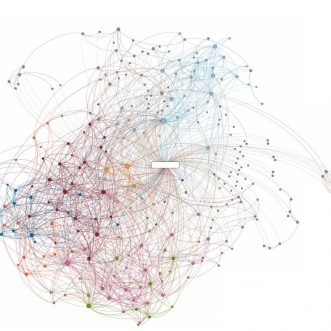
I first became interested in the Pre-Raphaelite Brotherhood at school. I read everything I could about them, gradually expanding my reading to encompass their associates, friends and family, then widened further to include adjacent or overlapping art styles such as Symbolism and Art Nouveau.
Years later, I’m still surprised by finding new connections between artist craftspeople of this era and people who designed and things I actually own.
The most interesting thing about this is how organic it is – a furniture maker’s nephew becomes a glass designer, a family friend gets roped in to help with embroidery and ends up founding a needlework school.
It took longer than we would like today, but gradually, these people changed the world around them, and continue to do so.
Something worth remembering in the rush for exit.

Too often, it seems, people have to look outside their work to achieve the things that matter to them – agency, mastery, autonomy, purpose and community.
What if the thing we call ‘work’ enabled this too?
Owners who offer this to the people who work with them, find themselves able to achieve more of these things outside the workplace.
There’s no need to balance anything. It’s all life.

When people are given responsibility for a job, and the autonomy and resources to complete it, they impart a kind of delight to the thing they create, a delight shared with anyone who uses it.
We know this, which is why we love farmer’s markets, indy coffee shops, craftspeople and artists of all kinds.
It works for intangible creations too.