Discipline makes Daring possible.

Learned carelessness

Learned carelessness

Here’s a scary thought.   When their satnav says there is a road, but all they can see is water, drivers will believe the satnav, rather than their own eyes, and end up having to be rescued.

Luckily, most of the time the results of such satnav errors are not drastic – they simply start the conversation after a late arrival – “You won’t believe where the satnav took us!”

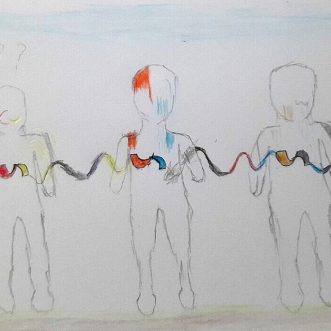
But the phenomenon behind these stories – automation bias or “learned carelessness” – is a serious problem.   Confronted with a ‘black box’, whose workings we don’t understand, and which seems on the whole to be reliable, we humans switch off, stop monitoring, and stop thinking.  “Computer says no.”

There are ways to prevent this.

You can de-mystify the ‘black box’, so people understand that it is part of a system designed and built by humans to achieve certain ends; you can frame the information provided by the system as support or advice rather than instruction, and you can engage the human brain by making the human do some of the work – especially where there are other humans involved.

Automation is great, but I want the best of both worlds.

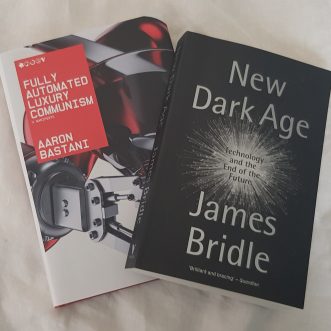
Thanks to James Bridle for sparking this one.


Why do I need good people if I have process? Evolution.

Why do I need good people if I have process? Evolution.

Why do I need good people if I have process?

No process can be designed to deal with every possible scenario, exception or eventuality.

Without good people a process-based business gradually fossilises and becomes irrelevant, or worse, gets completely out of step with its environment.

Good people can handle exceptions appropriately when they occur.   They can also identify when those exceptions are due to environmental changes that need to be dealt with by adjusting the process.

Good people spark off constraints (such as a process), they ad-lib, improvise, invent workarounds, dream up ridiculous scenarios that open up new opportunities.

With a solid framework to play in, good people bring a business to life – they make it human.

Why do I need process if I have good people? Detachment

Why do I need process if I have good people? Detachment

Why do I need process if I have good people?

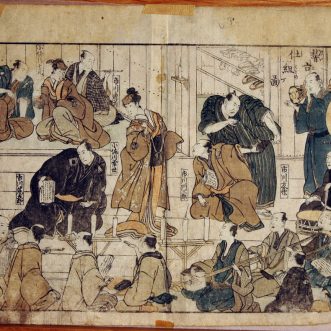
As Japanese businesses know well, process embodies the ‘thing’ a group of people are working on – whether that’s a play, a car, a building or a service.

This allows a certain level of separation between ‘what I am trying to achieve’ and ‘who I am’, which makes it much easier for everyone involved to discuss and agree improvements, because it’s ‘the thing’ that’s being judged, not ‘me’.

Free from the fear of personal criticism, your good people can eagerly look for ways to make things better.

Why do I need process if I have good people? Responsibility

Why do I need process if I have good people? Responsibility

Why do I need process if I have good people?

Having a process to follow while they learn, gives people confidence that they are doing the right thing.

Once people are confident that they know what they are doing, they don’t wait to be made accountable – they take responsibility.

With the confidence of a process behind them, your good people can pretty much manage themselves.


Why do I need process if I have good people? Emotion.

Why do I need process if I have good people? Emotion.

Most modern businesses, large and small, involve interactions of some kind – with other employees, customers, and suppliers.

These interactions require emotional labour – listening; empathising, being present to the other person as well as intellectual labour – pattern-matching, imagining potential scenarios, reviewing possible solutions etc..

Without a process interactions become harder than they need to be, because every interaction is treated as unique, where in fact they fall into common patterns, with unique features.

Process captures what has to happen in the common patterns, giving your people a framework to work from that doesn’t need much thinking about.

Process frees up intellectual and emotional energy to be spent on the unique and personal aspects of regular interactions, and on the exceptions that either prove the rule, or highlight the start of a new pattern.

With their heads cleared of the routine, your good people can use their hearts to exceed your promises.

Why do I need process if I have good people? Memory

Why do I need process if I have good people? Memory

Why do I need process if I have good people?

Without a process, some of the knowledge of “what we do here” and as importantly, “how we do things round here” and “why we do what we do” gets lost every time one of your ‘good people’ leaves.   This knowledge also gets changed as new people join.

This can be overcome by a founder that spends time and energy ‘policing’ the culture (think Steve Jobs), but one day even the founder will disappear.

Process gives your business a memory of its own.

That memory needn’t be prescriptive.  The most detailed score still leaves room for interpretation, and you can make it more improv if that’s your style.

If the business always remembers the “what”, “how” and “why”, your people don’t need to make it up as they go along.

Persuasion

Persuasion

All marketing is designed to invoke action.

The difference between persuasion and manipulation is who really benefits.

Bananarama

Bananarama

“It’s not what you do, it’s the way that you do it.  That’s what gets results.”

I disagree.

“The way we do things round here” clearly reflects the culture of an organisation or institution.   So does “What we do around here”  – the things an organisation or institution chooses to do, and the things it decides to leave out.

So what really gets results is to be clear about the promises that are being made, and intentionally design the ‘what’ to deliver on that in a way that embodies the ‘way’.

Not to be a straightjacket or monorail, just so it isn’t only in the heads of the people who happen to be around right now.

Thanks to Radio 4’s Thought for the Day for inspiring this one.

Browsers welcome

Browsers welcome

I’m old enough (just) to remember when you weren’t really supposed to go into a shop unless you were serious about buying.

You couldn’t just see what they had.   As soon as you were through the door an assistant pounced on you.

Soon, retailers realised that letting people browse increased sales.   Times had changed.  People had spare cash.  They were no longer buying to fill a need, but to fill a mood.

Today, of course, browsing is always welcome.

Only now, online retailers do the equivalent of chasing you down the street with stuff you browsed – “Hey, you looked at this and didn’t buy it!  Why don’t you buy it?  Go on, you know you want to really!”.

Desperation is not a good look.   It’s not healthy either – especially if it works.

Spoiled

Spoiled

We bought a new sofa on Saturday.  We visited the Soho showroom and spent a good hour or so trying various models out, measuring them, discussing how we would get them into the room, and then ordered one.

We were helped by a very pleasant assistant who took us through creating an account so we could track our order, then placing the order for the sofa we wanted.   All this was done via a large tablet – so essentially, we could have been anywhere – except that we got to print a postcard of our sofa, so we could look at it while we waited the 14 weeks for delivery.

All good.   We left the showroom and went off to have a celebratory pint and a proper sit-down in the pub across the road.

That’s when they spoiled it.

The first thing I saw when I looked at my phone was an email from the sofa company, triggered by creating the account: “£10 off your first purchase with this code.”, followed by another email “Thank you for your order.”

Now, I am very happy with the sofa I’ve ordered, I liked the showroom experience, and found every person we spoke to extremely helpful.  And £10 is no big deal given the price of the sofa.

But still I felt cheated.  Because the way ordering worked in the showroom meant I couldn’t see that discount offer until it was too late.   Better then, not to have made it, or to have applied it automatically.

As the money being poured into emotional AI shows, companies are very aware that humans are feeling beings, who can easily shift and be shifted between emotions.

It would be a pity for all that money to be thrown into making promises, not at keeping them.