Discipline makes Daring possible.

Distance

Distance

At home, if I burn my hand on the handle of the grill pan on my cooker (because I’ve forgotten that when the oven is on, the grill also gets hot), I don’t have to report that to my boss, who’ll report it to her boss, along with all the other mishaps of the kitchen. I don’t have to wait for a decision from them on how best to avoid that next time.

Of course not. I’m a grown-up. I say to myself “stupid woman, of course that would be hot!”, and remind myself to use an oven-glove next time. And I do. I don’t need a notice on my grill pan handle saying “Caution – may get hot”.

If I keep burning my hands, then I need to find out why. Are my oven gloves getting lost? Am I rushing things too much? Should I buy different oven gloves that are easier to use? Should I invest in a different cooking arrangement?

Of course this is fine for me, I don’t share my kitchen with other cooks. But I think the principle is the same.

Given the responsibility and the means, the people in the kitchen are probably best placed to solve most kitchen problems.

Reporting

Reporting

Nobody likes reporting. It gets in the way of doing the job.

Because it feels like an extra task, it gets pushed back to the last minute, and possibly even made up. Worse, it can be very tempting to request more information in a report, because ‘they’re reporting anyway’.

On the other hand, feedback is essential if a business is to thrive and evolve.

So how best to get feedback you can rely on?

Firstly, keep it simple. What is the least you need to know whether are not things are going well?

Secondly, make collecting that information a side-effect of doing the job. The trick here is to find a step in your process that creates its own trail. A step that either gives you the data you need or can act as a proxy for it. If that’s not possible, sample instead of monitoring continuously.

Of course, reporting as we know it only happens because the person doing the job is not the person making decisions about how best to do the job.

That’s where the real problem lies, and the solution to that is responsible autonomy.

Measuring what matters

Measuring what matters

Years ago, on my way to work, I’d call in to the Benjy’s sandwich bar next to Cannon Street Station to pick up breakfast. It was always full of other City workers doing the same thing.

In those days, the hot sandwiches and toast were freshly made, and there were only 2 kinds of coffee – with or without milk. You ordered at the counter, waited for your food, and paid at the till.

So far, the same as every other Benjy’s.

But here’s where it changed, because the manager of this Benjy’s had a system.

He took your hot food order, shouted it to the team in the kitchen behind him, wrote it on a paper bag and stacked that bag on top of the one before. That was it. You mooched around the shop (picking up an extra snack or two), until he called out your order. You picked it up along with a tea or coffee from the ready-made batch at the counter, then paid at lightning speed at the till.

The wait for food was never that long – he had clearly parallelised that, so that bacon, eggs and baguettes were always ready, and the stock of teas and coffees was constantly topped up, at least during the busiest times of breakfast and lunch.

All in all it probably took less time to happen than it’s taken me to write down.

What this manager had realised was that what mattered to his clients was not the wait for hot food, it was the wait to place an order. So he built his system around minimising that.

Once you saw that paper bag go down, you knew you were taken care of and could relax. Once you knew your order was in, you weren’t going to walk out without it. In fact you were likely to spend more, to fill in time while you waited.

I never visited another Benjy’s that worked like this one.

I’m guessing that central management assumed that the volume of business this manager handled was simply down to being next to a busy commuter railway station, so never thought to come and look at how he did it, so they could pass that system on to other franchisees.

I don’t know what they were measuring, but it wasn’t what mattered. Which may be why the chain failed.

Rest

Rest

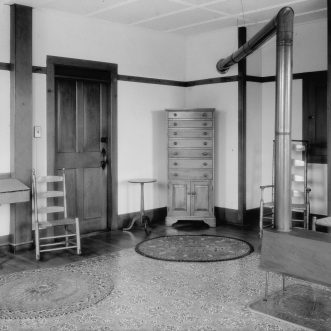
For at least the last 189 years, we’ve known that overburdening people, equipment and systems leads to mistakes, wasted effort and sometimes, tragedy. We know that people, systems and even equipment need rest. Time out to repair, recharge and recalibrate.

In the past, days off work were imposed by law – admittedly not so people could rest, but so they could observe religious holy days, but at least they were guaranteed non-working days for almost everyone.

That is no longer the case. Now that consumerism is the national religion and online shopping never stops, we are individually responsible for making sure we take rest days. And the vestiges of our national holidays make that a bit easier to achieve.

So, this is my reminder to have a break. From work, from shopping, from the day-to-day.

Enjoy the long weekend.

See you Tuesday.

Wasted effort

Wasted effort

It’s easy to get very excited about increasing efficiency through digitalisation, automation and AI.

But in the excitement we can forget that by ‘increasing efficiency’ what we are really trying to do is reduce ‘waste’, or to put it better, ‘wasted effort’.

In Lean, ‘wasted effort’ falls under 3 categories:

  1. ‘Mura’ or wasted effort due to variation
  2. ‘Muri’ or wasted effort due to overburdening or stressing the people, equipment or system.
  3. ‘Muda’ also known as the “seven forms of wasted effort”

Muri seems like the kind of wasted effort we should always try to eliminate (and interestingly, is the least talked about).

Otherwise, what makes effort wasted?

Quite simply that the customer is not willing to pay for it.

This seems blindingly obvious. Less obvious is the necessary implication – that if a customer is willing to pay for effort, it is not wasted.

So if a certain type of customer is happy to pay extra to be treated differently, this is not Mura. If a customer is willing to pay to have their papers picked up in person, this is not Muda.

The customer’s perception of value is your source of profit. Don’t throw it out with the bathwater.

Reconstruction

Reconstruction

It will be rebuilt.

It’s a disaster, but it’s also an opportunity to create a story worth remembering about community, craftmanship and caring. One more layer in this palimpsest of Parisian, French and human culture.

If only we felt the same for every building that burns.

Passive Income

Passive Income

Everyone, it seems, is looking for ‘passive income’ – money you don’t have to work hard for, that simply flows from the ownership of an asset.

The most popular asset of this kind is property – land or the buildings on it.   The problem with this is that the underlying resource is finite, and the more people want these assets, the higher the price.

Next comes intellectual property – patents, design rights, licenses.  These take deep pockets to defend, and ultimately expire.

Then there is debt.  This too is limited as a passive income stream because ultimately it kills the source.

There is a type of asset that has none of these limitations.   The autonomous enterprise.   A business that runs without you, generating income by continuously creating new value for the people it serves, and continually finding new ways to create that value.

Paradoxically, this kind of asset is only possible when you fully devolve management and reward to the people who work in it.   That’s not easy to do, it takes courage and a long-view.   But those are the only factors that make it scarce.

Given a framework it can thrive in, there is no limit to human ingenuity.

P.S. I discovered writing this that the word ‘asset’ actually comes from the French for ‘enough’.   That’s an interesting fact worth remembering.

Second Nature

Second Nature

Do you remember your first driving lesson?

I do.   At the end of it I wondered how on earth I was going to be able to remember everything – never mind watch out for pedestrians and other traffic!

But after several lessons I got the hang of it, and eventually of course driving became second nature.   To a point where some nights I got home from work almost without realising it.

We humans are able to make a lot of things second nature.  Walking, driving, playing the cello, or rugby, or chess.

We do this by repeating certain combinations of actions until they become habit.   We no longer need to think about them.    That frees us up to to concentrate on the exceptions – those things outside the habitual that are going to prove interesting or dangerous.

But too much reliance on pure habit can also be dangerous.   I bet you’ve had to go back to your car after half an hour of shopping because you can’t remember locking it, even though you’re sure you did.

That’s why pilots have checklists.   To make a habit of the actions that must be done, and then to make sure they perform those actions consciously every time.

What’s the relevance of this for business?   Well, you need to actively create this interesting tension between habit and consciousness:

  • If you want people to develop a particular set of habits (rather than their own), you need to specify what those desired habits are, and get people to practice them.
  • If you want to ensure that certain key actions are always done, you have to find a way to make people aware they are doing them.

Then you can happily let them play with the exceptions.

Discipline makes daring possible.

Delegation

Delegation

A quick trawl of the internet found me these definitions of the verb “to delegate”:

  • to give (part of one’s work, power, etc) to someone else.
  • to send or name someone as a representative, as the one to do a job, etc.
  • to entrust to another.
  • to appoint as one’s representative.
  • to authorize and send (another person) as one’s representative.
  • to commit or entrust to another.
  • to entrust (a task or responsibility) to another person, typically one who is less senior than oneself.
  • send or authorize (someone) to do something as a representative.
  • to give or commit (duties, powers, etc) to another as agent or representative; depute.
  • to send, authorize, or elect (a person) as agent or representative.

In most cases the meaning is not ‘doing your work for you’, but ‘acting on your behalf’.

In other words, the key relationship is not between you and the person you delegate to, but between you and the clients they serve as if they were you.

Not employees. Agents. Or ambassadors.

People you can trust to do the right thing.