Discipline makes Daring possible.

Machine-readable humans – is that a good thing?

Machine-readable humans – is that a good thing?

This morning I read that a London-based firm has just announced $12.4 million worth of investment in its “emotion AI” – software “to help machines detect the intricate and finely balanced emotions of a flesh-and-bones homo sapiens.”

According to the article, the company “targets its technology at marketing campaigns, including videos and other creative assets such as photos or GIFs”

I wonder if their customers will also use it on self-checkouts, ‘contact us’ pages or customer service call lines?


Thanks to Frank Pasquale for sharing the article.

Pipes

Pipes

If processes are like pipes, it certainly pays to make them flexible, and capable of local configuration and re-configuration.

Flows

Flows

We’re familiar with the idea of flows in business – people flow through a sales pipeline, and add to our stock of customers and our stock of cash.  Often though, that’s where the metaphor ends for us.

It doesn’t end for the business though – the promises we make to those customers flow through our delivery system and add to our stocks of promises kept.

Promises kept may in turn result in repeat business and/or referrals, which also add to our stocks of customers and cash.   The promises we don’t keep drains our stock of customers, and another valuable resource, our credibility or ‘reputation’.

A business is a system, and every resource in a business, whether tangible like cash or equipment, or intangible like reputation or staff morale is continuously being topped up or drained through flows, and in turn influences other flows.

It makes sense then, to design our pipes to maximise the resources we want to build and minimise the leaks.

Resources (again)

Resources (again)

It’s easy to count or measure our resources, the things we have, in business as well as in our personal and public lives.

It’s harder to see how those resources arrive, or how they leave – necessary though, because its not what we have that creates value, but what we do with it.

Connection

Connection

‘Stuff’ is just a poor substitute for what people really want – autonomy, mastery, agency, purpose and above all connection.

With that in mind, the questions any business, new or established should be asking are these:

“What do the people I serve want to become?”

and

“How can I help them get there together?”

not,

“How can I play that to get them to buy my stuff”.

Resource-management

Resource-management

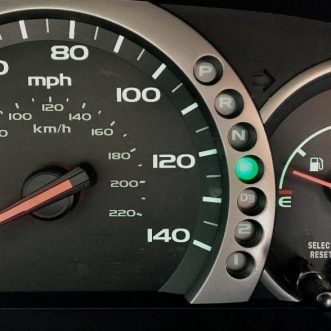
We’re used to dashboards, to keeping an eye on resource-levels as indicators of the overall health of a system.

We’re less used to understanding or tracking the processes that update those levels.

If we did, we could probably fix things more quickly when they go wrong.

If we made those processes self-managing (as they often are in modern cars), not necessarily automated, we might even prevent things going wrong in the first place.  After all, humans are sensitive instruments.

Process

Process

People are ambivalent about ‘process’.

For some it feels like a way to ensure consistency, a helpful prop to support them in what they have to do.

For others, its a straitjacket, that turns people into robots.

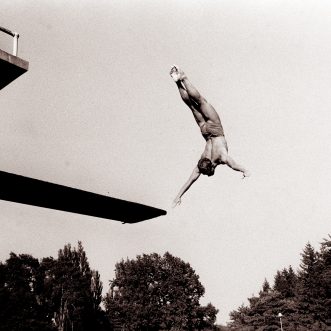
I prefer to think of it as a springboard.  Something with enough give to be able to support different people, and enough resistance to help them really take off.

Significance

Significance

A worker honey bee will make just over 0.4 grams of honey over its lifetime.

That seems an almost insignificant contribution – about a twelfth of a teaspoon.

But as one of a hive of 30,000 bees, it mounts up.

If you’re trying to make change happen, recruit the others.

Black and White

Black and White

We humans like things to be clear-cut, black-and-white, yes-or-no, all-or-nothing.

Perhaps because that appears to make choosing a solution both easier and somehow more heroic.

Reality is rarely that simple, and if we treat it that way, we are likely to end up creating a lot more work for oursleves.