Discipline makes Daring possible.

What you do is what they get

What you do is what they get

Repoussé is a metalworking technique in which a malleable metal is ornamented or shaped by hammering from the reverse side to create a design in low relief.  What appears on the front of the object is a direct and immediate result of what is done on the back.  No more, no less.

It’s the ultimate LEAN process.  There is nothing extraneous, nothing intermediate, nothing behind the scenes.  Every action contributes directly to the result.

And as Wikimedia also says “There are few techniques that offer such diversity of expression while still being relatively economical.” 

The perfect marriage of customer experience and operational efficiency.

Something to aim for in your business?

Niche, then niche again

Niche, then niche again

For an individual business, competing with dozens, hundreds or even thousands of other businesses, the key to achieving an above average rate of profit is to differentiate yourself. To de-commoditise your offer. And one way to do that is by specialising how you do things, rather than what you do.

Most coffee shops do the same thing as their competitors, what differs is the mode of delivery, the ambience, sometimes the coffee.   In any given high street, where a customer can choose from half a dozen coffee shops, the one they buy from regularly will the one that feels like their kind of coffee shop. For me, its Cuore, an independent Italian, possibly Caffe Nero, never Starbucks or Costa.

The implication here is that any coffee shop is catering to more than a physical need or desire for coffee. My choice of coffee shop says something about my taste in coffee, but more about my values; who I identify with; the lifestyle I aspire to, and who I want to be seen to identify with.

My choices are a function of my mindset, my worldview, not my age, postcode area or gender. My psychographic profile, not my demographic.

When you articulate the Promise of Value for your business, you are identifying your business psychographic, and by extension that of your ideal clients. These are ‘your kind of people’, the people you can serve, who’ll be willing to pay you more than the alternatives available to them.  They’ll thank you for being there for them.

Sometimes, this is enough. But if you are a new business, or an existing business looking to expand, it helps to narrow your focus even further to a subset of the people you serve.

This is where demographics becomes useful. If your psychographic tells you what kind of people you’re looking for, demographics tells you where you’re most likely to find them.    It can also help you to identify where they are currently being under-served.

That makes psychographics part of your Promise, demographics part of how you share that Promise.  Which leads to the following rule of thumb:

Niche your Promise to find the people you can serve best. They’ll thank you for it.

Niche your Share Promise to find the people you can serve best now. They’ll thank you for it now.


Ma

Ma

Ma.

The gaps between things.

The pauses between words or notes.

The white space on a page.

“a holder within which things can exist, stand out and have meaning.”*

“the emptiness full of possibilities, like a promise yet to be fulfilled.”*

The places where we can come alive for each other.

Let’s leave room in our processes for ma.


*from Wawaza.com

A different flywheel?

A different flywheel?

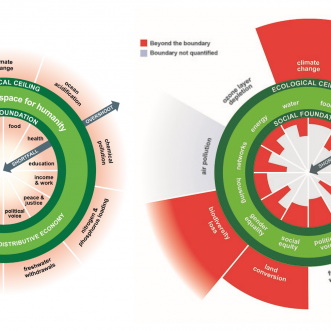
What if a business became a place where people co-operate to create value, in the form of products and/or services that will help their clients to live in the just space for humanity ?   A business makes a profit of the money it receives from those others more than covers all the costs of delivering the goods.

So far, so good.

And?

Why does this kind of business need to make a profit?   So it can expand.

Why does this kind of business need to expand?  So it can help more people to live in the just space for humanity.

This could be a flywheel that doesn’t lead inexorably to self-destruction.

Or one that we might even decide to stop.

Shouldn’t we be switching to it?

The flywheel

The flywheel

A business is a place where people co-operate to create value, in the form of products and/or services that others want.  A business makes a profit of the money it receives from those others more than covers all the costs of delivering the goods.

So far, so good.

But.

Why does a business need to make a profit?   So it can expand.

Why does a business need to expand?  So it can make more profit.

For the last 200 years this flywheel has driven everything that humans do.

Last year, we saw it slow down a bit, and caught a glimpse of what we’re missing.

Are we sure we want to get back on it?

The sleep of reason

The sleep of reason

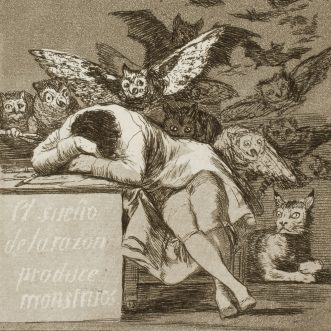
NASA engineers had noticed a problem with the O-rings used to seal joints in the boosters of the Challenger space shuttle.  When the weather was cold at launch time, the O-rings failed to seal the gaps properly.   But they couldn’t quantify the effects, so were not allowed to act on their concerns.  After all, the NASA engineering watchword was : “In God we trust.  All others bring data.”

But what if you don’t have data?  Does that mean you just leave it to God?

Of course not.

As Richard Feynman said at the enquiry following the disaster “If you don’t have data, you must use reason.” 

Our processes must allow for that.

If the sleep of reason produces monsters, imagine what wonders we create when we combine data with waking reason, driven by humanity?

Our processes must be designed for that.


HT to Abishek Chakraborty for the prompt.

Cobbler’s children

Cobbler’s children

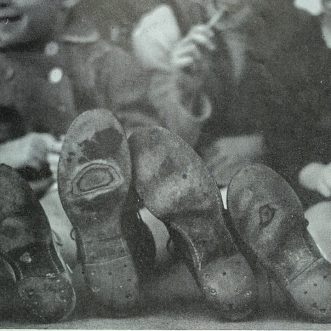
At the end of my road there lives a builder.  His house has been a mess for years.

I know commercial knitters who wear old jumpers out at elbow, and doctors who  smoke, drink and eat junk food.

As a business owner, it’s helpful to ask yourself – regularly if possible – ‘If I was my client, what would I be telling myself to do?’

Then follow your own advice, the way you’d expect a client to.

If nothing else, you’ll find out what it feels like to be your client.

Concentrated learning

Concentrated learning

As aboriginal Australians know, the way to deepen learning is to make it immersive.   They also know that practising scenarios before you encounter them speeds up the process.

We small businesses have our own form of immersive learning.  We call it ‘throwing them in at the deep end’.

Somehow, we hope that through this experience, newbies will learn to make and keep promises on behalf of the business as well as we do.  Of course, many don’t, and some just drown.

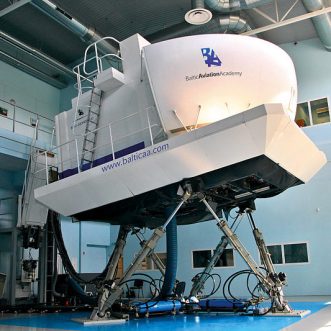
I don’t know about you, but I wouldn’t be happy if pilots learned by being ‘thrown in the deep end’.   I prefer what actually happens.  They learn in a simulator.  A safe space – the paddling pool if you like – where they can be immersed in what if feels like to fly a plane, and systematically run through all the scenarios they may have to cope with – taking off, landing, turbulence, bid strikes, engine failures, and so on.

You and I can feel safe getting on a plane because pilots have literally been through all these experiences many times before they get anywhere near a real cockpit, at the head of a tubeful of passengers and crew.

Why not do the same for your prospects and clients?   Build a simulator for your business, program it with likely scenarios and use it to train new people, or practise new services before you deliver them, or explore how you could do things differently.  Make it a psychologically safe space and it will be fun, team-bonding and surprisingly productive.   It will become a practise space people use regularly to improve your customer experience score.

Discipline makes Daring possible.

Goals

Goals

I’m not remotely into football, but inevitably I catch the odd England game – or at least snippets of them.

What’s struck even me this time round, has been the aim to win rather than merely not lose.  There’s been a definite effort to actively score more goals than their opponents, rather than get away with letting fewer goals in, or relying on penalty shoot-outs.

This is not rocket science.   If you try and score goals, while preventing the other side from scoring against you, you give yourself more chances to win, and win conclusively.  It also makes for a much more exciting game to watch and to play – for both sides.

Delightful as it is to win, winning isn’t everything.   How you win matters.  The process matters.  And speaks volumes about your priorities.

Atomic

Atomic

With a few exceptions, atoms don’t like to be alone.

They prefer to join with other atoms.  They can’t help themsleves, they’re just built that way.

If they stick to their own kind, together they make an element.  A useful building block.  When they combine with different atoms, they create a compound, generating properties none of the constituents have on their own.

Almost all the interesting things in our varied world are the result of atoms combining with atoms that are different from themselves, repeating the process until something durable emerges.

Inter-connection with different others is our natural state.

We can’t help ourselves, we’re just built that way.

Atom by atom.