Discipline makes Daring possible.

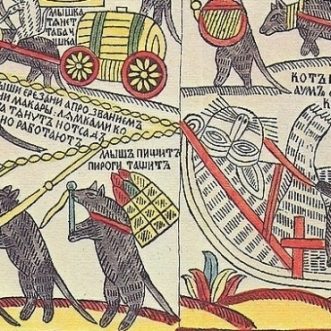
While the cat’s away…

While the cat’s away…

…the mice will continue with whatever processes are in place.

Do you want them to be yours or theirs?

Preserving process knowledge

Preserving process knowledge

How do you embed ‘process knowledge’ – the knowledge of how to do things – into other people’s heads across space and/or time?

Well the first step is obviously to get it out of your head first.    Then you have to communicate it to others in a way that is easily absorbed yet also ‘sticky’.

One familiar way is through apprenticeship – repeated physical practice under the eye of a master.  Great over time, although slow, harder to apply over space.

Another familiar way is to write things down – in manuals, standard operating procedures, process maps.  This solves the problem of space as well as time, but is actually notoriously un-‘sticky’.  Nobody likes reading manuals – in fact most people hate it.

So the best way is to create some combination of scribing and physical practice that combines the best of these approaches.

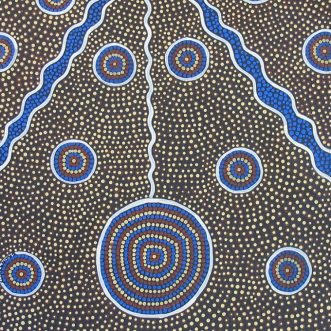
And that’s just what aboriginal Australians have been doing for around 40,000 years.  They preserve their culture – their ‘way of doing things’ through a complex combination of activities that includes mapping, painting and sculpture of all kinds, song, dance and actual doing, tied to a landscape that acts as both operating territory and memory jogger.

What’s interesting is how even the ‘scribing’ is so physical and multisensory – maps can be physical representations that are walked around; memorisation takes the form of songs and stories attached to landmarks.  Painting or dancing is not just a way of representing an activity, its a form of doing it.

We process mappers and manual writers could learn a lot from this approach.

Hmmm.

Watch this space.

Even brilliant businesses fail in the end

Even brilliant businesses fail in the end

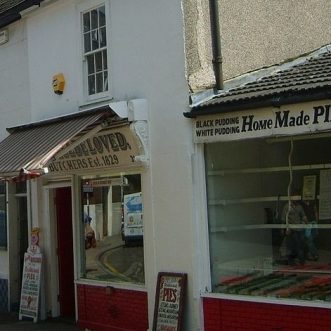
A butcher’s shop Deptford is closing down soon.

No big deal you might think.

Except this butcher’s is a family firm that’s been going for 192 years.  Their pies, home-made, filled with succulent chunks of meat and delivious gravy are legendary.  Their T-bone steak has topped the leaderboard of the Steak Society’s ‘T-bone Tour’ since 2018.  And it’s all surprisingly good value too.

It will disappear just when the market for it’s wares is growing as Deptford gentrifies.

But the current owner, Bill Wellbeloved, needs to retire, and couldn’t find anyone to take over the business.

Even brilliant family businesses fail in the end, if they don’t find a way to last longer than their current driving force.

That’s why Gibbs & Partners exists.  So brilliant businesses can carry on for as long as their clients need them.

Bucket list

Bucket list

Basecamp and Brewdog both got into trouble last month – so much so that Corporate Rebels deleted them from their bucket list of companies to visit.   Looking at what happened, I think there is a difference between the two cases.

At Brewdog, ‘the way things get done round here’ bore no resemblance to the face the company showed the outside world.  As is all too often the case with ‘brands’, it was all just marketing.  Behind the hype was the same-old, same-old.

This is what happens when you don’t build your Promise of Value into the way your business operates.

In Basecamp’s case, the founders felt that ‘the way things get done around here’ had drifted too far from their core reason for being, and yanked things back.   For me it was the yanking back that was mistaken here, not the realignment with their original purpose.   And that realignment was always going to be painful, because they’d left it so long.

This what happens when you let yourself be seduced away from your Promise of Value by fashion.

There’s a difference between these two episodes, which I think it pays to think about.

And Basecamp is still on my bucket list.

Conversations

Conversations

I love conversations.  Proper conversations, that sometimes get passionate, even heated.  Where the interplay of light shed by multiple perspectives allows new insights to appear between us.   Where I can feel new creases forming in my brain as I change my thinking.

A philosophical workout, if you like.

Good conversations allow new knowledge and wisdom to emerge.

Great conversations do it on purpose, with questions that are designed to bring out the participant’s wisdom, and a structure that helps that wisdom emerge in a coherent form.   Discipline makes Daring possible.

Having them recorded is priceless – you can pick up on insights you missed in the thick of things, and of course, share them with others.


I was lucky enough to be part of one of these recently with Scott Perry of Creative on Purpose.   Our conversation isn’t available yet.   You can look out for it here.

Why not enjoy some of his earlier conversations while you wait?

Planning to disappear.

Planning to disappear.

It’s well known that being employee-owned is good for a business.

But why stop there?

Why not make your business employee-run too?

Enable every employee to be ‘a Boss’ with a Customer Experience Score.

You business will be scalable, replicable, durable.

And you can plan to disappear.

Showing your work

Showing your work

I used to wonder how potters could charge so much for their pots, until I took up pottery.

Then I saw how much work went into producing a pot fit to sell.   Not just the work of potting, but also how many pots get thrown away because they broke or cracked in the kiln, or because the glaze didn’t work.  Or even because the idea itself just wasn’t good enough.  I wondered then how they could charge so little.

A brilliant way to help your prospects and clients understand the value you bring is to show your work.    To share the process by which you create that value.

It’s easier when that process is clearly, genuinely focused on them.

Getting better

Getting better

At this morning’s Like Hearted Leaders, Ruth Polden made a beautiful point “We all think we have to do something well, and that puts us off starting. We can all do something, so why not do it? Not to be the best, or even good, but because we want to.”

Sonnets

Sonnets

I accidentally listened to Melvyn Bragg and guests on ‘In our time’ this morning.    I’m glad I did, because they were discussing Shakespeare’s sonnets, one of my favourite collections of poetry.

For me, the most interesting thing in this morning’s was not about the content of the sonnets (controversial, complex, certainly not all sweetness and light), but about their form: 14 lines, divided into 3 lots of 4 (quatrains) and a final two lines (couplet).  With rhymes.  An extremely tight box within which to work as a poet, and a box which was already old-fashioned by 1609.

Yet Shakespeare used this structure to express content that was new in language that was unconventional, to create a collection of poems that has outlasted most others of his era.

Discipline makes Daring possible.


PS. Guest professor and poet Don Paterson made a really interesting point that I think is worth sharing.  To paraphrase:  we humans get bored quite quickly when reading poems, somewhere between ines 8 and 9.  So it helps to create some sort of turn or twist at that point in your sonnet, to re-pique the readers attention and interest, and carry them through to the end.

Something to think about for my next blog post.

Cacophony

Cacophony

A hedgeful of birds makes a right old racket.  To our ears at least.  But for the birds, each species hears what it needs to hear loud, clear and beautiful.

A Customer Experience Score describes a client journey into and through your business.   It’s an end-to-end process, ideally run by a single individual.

Of course clients don’t arrive in sync, and they all take individual paths through your business.   That means that as you take on clients, and people to serve them, the sound of your Score being played becomes a right old racket.

To your ears, maybe.   For the client, it’s music, loud, clear and beautiful.

So resist the tempation to ‘tidy up’ what you hear from the inside.   Beauty is in the ear of the listener, and it very much depends on where you’re standing.