Discipline makes Daring possible.

Why justice must be blind.

Why justice must be blind.

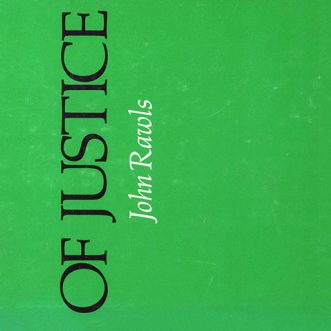
I’m about halfway through John Rawls’ A Theory of Justice.  We’ve finally got to a statement of principles.  Which can be informally summed up as something like this:

“All social primary goods – liberty and opportunity, income and wealth, and the bases of self-respect – are to be distributed equally unless an unequal distribution of any or all of these goods is to the advantage of the least favoured.”

That seems pretty obvious.   Why has it taken 300 pages to get to here?

Because imagining a just system is a process.

We don’t choose where or when we’re born.  We don’t choose our parents or our society or our status in that society.   We don’t choose the talents or abilities we’re born with – any more than we choose our eye colour or complement of limbs.   That’s all down to chance.

That doesn’t mean we have to accept what we’ve landed in.   We can imagine a different kind of setup.

But to do that justly, and end up with something fair, we need a starting point that takes chance out of it.  We have to take ourselves out of space and time, and imagine what we as individuals would accept if we didn’t know where we end up in the particular set-up we happen to be born in.  We have to make ourselves blind, and build our picture of a just system from there.

That takes a lot of thought and empathy with all our possible selves.

It’s worth the effort, because then we can start to shape our societies to move ever closer to that ideal.   Starting with what’s closest to us, our families and our businesses.

Learning from queens

Learning from queens

We had some unexpected guests yesterday.   The first I knew of it was the sound.

‘What on earth is that noise?’

I looked up from cleaning the floor, and there they were, a mass of bees madly buzzing across 3 neighbouring gardens.  15 minutes later, they were clumped together near the top of our hawthorn tree.

I looked up my nearest beekeeper on the British Beekeepers Association website, (try them before you call pest control, beekeepers will give bees a good home), and Andrew came over.

We agreed that it was too dangerous for him to try and collect the bees from the tree, so he set up a bait box, to entice them down.

While we waited over a cup of tea, he taught me a bit about bees.

A hive swarms in stages.  First the queen leaves, taking half the bees with her, to set up a new colony somewhere.   10 days later, her brood of queens start to hatch, along with the other eggs she’s laid.

It used to be thought that the first queen out killed the others, but research has found that isn’t the case.  As each new queen hatches they replicate the original queen’s behaviour – taking off with half the hive.  Only each time the half is smaller, even though the hive grows each day as new bees hatch.  So each ‘cast’ becomes progressively smaller until the last is about tennis ball sized, and will be lucky to form a viable colony that can get through the following winter.

This it makes perfect sense.  The bees are all the old queen’s children.  Why kill other queens when you only need half the available resources?  There is no scarcity, and so no competition for them.  And why kill queens when replicating a simple process maximises the chances that the colony will survive and spread?

We humans could learn a bit from bees.


PS, they’re still in our tree.  If they don’t fancy the bait box, they’ll swarm again and find a new place.  If you see them, remember to give them 15 minutes to settle down, then call your local beekeeper.

On kings and forgiveness.

On kings and forgiveness.

Seth wrote a very interesting blog this week on Monarchists.

“As Sahlins and Graeber outline in their extraordinary (and dense) book on Kings, there’s often a pattern in the nature of monarchs. Royalty doesn’t have to play by the same cultural rules, and often ‘comes from away.’ Having someone from a different place and background allows the population to let themselves off the hook when it comes to creating the future.”

I agree, but I think the whole thing is more subtle and interesting than that.

Kings ‘from away’ could act in ways that were totally unacceptable to the native population – in order to create change.   Sometimes, they were even asked in.

Beyond that though, those same Kings were contained and constrained into a purely formal role.  They became figureheads, cherished, personally pampered but essentially powerless over the society they ‘ruled’.  They didn’t administer the results of their change and they certainly didn’t take over resources.   The original population carried on as custodians of the land, society and cuture, as before.

That was the point.

A stranger king enabled a system based on shared authority and collective, consensual decision making to radically change without breaking itself apart.   You could almost call them a scapegoat rather than a king.  Nowadays we’d call them a consultant.

The challenge then, is not merely to be prepared to ‘put yourself on the hook’ to lead change that will make the community uncomfortable, but also to forgive those of your peers who do it for you.

Desire lines

Desire lines

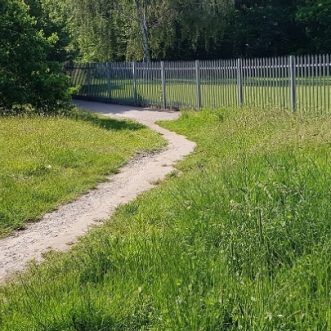
On my way to receive my second dose of the vaccine today, I used a well-worn but ‘unofficial’ route for part of my journey, at what is effectively an off-centre T-junction.

This desire-line shortened the distance by no more than 7 yards at most for people going in one direction.  Interestingly, there was no desire line going in the other direction.

Why is this?

Well, when the path was built, it was obviously more efficient to build it as a single path.  But using the path isn’t the same as building it.

For people going one way, the official path is close enough, even though it isn’t quite direct.   It feels like you’re going in the right direction.

For the other way though, the official path feels completely wrong.  You’re effectively going back on yourself before you can get in the rght direction.  So it makes perfect sense to cut the corner, even though it saves very little.

There’s a nice lesson here for designing processes of all kinds.    Obviously, you try and make the process as efficient as possible when you build it.   Then look out for the desire lines and reconfigure as appropriate.

Not all short-cuts are are the right thing to build in, but nobody should have to go backwards in order to move forwards.

News

News

A system of any kind survives through feedback.   What feels/sounds/smells/tastes/looks right.  Or wrong.   Or not particularly either way.   Feedback helps us to learn, evolve and interact safely with the world around us.  That means that getting good quality feedback about what’s actually going on is crucial.   In fact, much of what concerns us as business owners is how to gather feedback effectively and act on it appropriately.

Marketing isn’t feedback.  Although you can use it that way.   I don’t wear fashion, but I do like to know ‘what’s going on’.  A twice-yearly trawl through marketing materials – magazines, shop windows, a look at what’s around and at what people are actually wearing – keeps me up to date.

Social media isn’t feedback.  It’s marketing.  Increasingly it’s geared to tell us what we want to hear, to entrench us in our worldviews, intensify our outrage, because that keeps us on the platform, there to see the marketing that pays for it.

‘The news’ as we mostly know it isn’t really feedback either.  It’s also marketing.  Designed to sell a newspaper or a news channel, or a worldview.   And it gets more like social media every day.

But it could be feedback, if we wanted it to be.

Bank Holiday thinking

Bank Holiday thinking

One of the things I love about Bank Holidays is that I get to spend a whole day reading.   I’m halfway through this book and there’s already interesting stuff in it.

One of the ideas I  particularly like is that of ‘pure procedural justice’, where a process inevitably leads to the desired result (in this case, a ‘fair’ one), and where the desired result can be projected beforehand according to criteria that are independent of the process applied.

Pure procedural justice is rare, unless you are dealing with a simple outcome, such as dividing a cake up equally, but it does seem to be a useful way of approaching process design:

  • What outcome do I want?
  • How could I define it before I run any process designed to achieve it?
  • How can I design a process so that I will inevitably achieve the outcome I want?
  • How could I measure the outcome independently of the process?

For processes that involve human beings, part of the answer is to abstract the desired outcome.  Rather than trying to list out every possible acceptable outcome, instead you define the characteristics of a set of possible outcomes each of which would be acceptable, even though you have no way of knowing what they are, or which you will actually get as a result of any particular run-through of the process.

That’s what your Promise of Value is for, to help you define those characteristics.

Shuhari

Shuhari

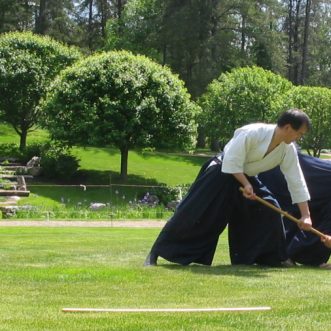
“It is known that, when we learn or train in something, we pass through the stages of shu, ha, and ri. These stages are explained as follows. In shu, we repeat the forms and discipline ourselves so that our bodies absorb the forms that our forebears created. We remain faithful to these forms with no deviation. Next, in the stage of ha, once we have disciplined ourselves to acquire the forms and movements, we make innovations. In this process the forms may be broken and discarded. Finally, in ri, we completely depart from the forms, open the door to creative technique, and arrive in a place where we act in accordance with what our heart/mind desires, unhindered while not overstepping laws.”  Endō Seishirō

You want your entire team to get to ri.

That’s impossible while the shu is only in your head.

Discipline makes Daring possible.


HT to Carlos Saba for the thought. And to Claire Perry-Louise for creating the space where it can be shared.

Markets

Markets

When Adam Smith wrote “It is not from the benevolence of the butcher, the brewer, or the baker that we expect our dinner, but from their regard to their own interest.”, he wasn’t thinking of JBS S.A, or Anheuser-Busch InBev, or Grupo Bimbo, S.A.B. de C.V..

He was thinking of Mr Jameson, Mr Paterson and Mr McDermid – people his mother knew and spoke to regularly, trying to make a decent living.   Who knew that if they tried to short-change customers or cheat their suppliers they’d be found out, word would spread and business would be lost.

But as Adam Smith also wrote “The interest of the dealers, however, in any particular branch of trade or manufactures, is always in some respects different from, and even opposite to, that of the public. To widen the market and to narrow the competition, is always the interest of the dealers. Monopoly of one kind or another, indeed, seems to be the sole engine of the mercantile system.

There’s a reason marketeers talk about ‘brands’.   Brands aren’t people, or even companies, they’re more often monopolies masquerading as humans.

As consumers (and human beings) we should at least keep ourselves aware of that.

The invisible hand can’t work without a market.

Rearranging deckchairs

Rearranging deckchairs

Before you cut costs in your central department of government or business by removing a job it currently does, here’s a good question to ask:

  • Can we remove the need for this job completely?

If the answer to that is ‘No’, then ask these:

  • Who is best placed to do this job effectively and efficiently?
  • What resources do we need to shift along with the responsibility?
  • What resources will they need to set themselves up to do this job?

I’m all for devolution.  The closer to the front line the better, but too often ‘devolution’ merely means shifting where the work is accounted for without shifting the resources needed to get it done.

When you’re looking for real efficiency gains, shuffling deckchairs is rarely the best answer.