Discipline makes Daring possible.

What it costs you to do

What it costs you to do

An entire industry has grown out of working out what it costs a business to do the things it does.   Along with a panoply of tools and techniques.  When I was studying at London Business School, I loved it.

It turns out that there is a simple measure that’s good enough for most cases.

Time.  Or more accurately, duration.

If you know how many clients you deal with, how long it takes for each client to go through your Share and Keep Promise process, and what your total operating costs are over that time period, then you know what it costs you to do what you do for each client you serve.

If you don’t like the answer you can drill down into Share Promise or Keep Promise to find out where things could work better.  And so on.

So how do you measure duration?

By logging events that are of interest and adding up the time that’s elapsed between them.

I’m sure you already note these events: when a prospect makes an enquiry; when a prospect becomes a client; when you welcome a client onboard, when the particular promise you made to this client has been kept.

You may even collect them automatically – they’re in your CRM, or your accounting system, they might even be in your workflow management system.  String them together for each client and you’ve got some extremely useful data.   Combine this with some other equally simple metrics and you’ve got the kind of process feedback you can use to grow your business efficienty and sustainably if that’s what you want.

A little bit of Discipline makes a lot of Daring possible.

Improvement

Improvement

Improving how you make and keep your promises starts with feedback.

You don’t need to start with the whole thing – just the bit you are currently uneasy about.   So, if you’re attracting plenty of business right now, you can skip Share Promise and concentrate on Keep Promise.  Or if you’re confident you can Keep promise efficiently and effectively, but want to reach more clients, start with Share Promise.  If you’re looking to move into new markets, start with Package Promise.

Wherever you start, there are only really 3 things you need to measure:

  • what it costs you to do
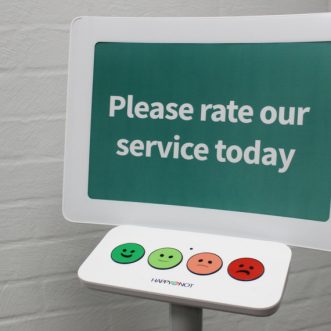
  • how people feel about how you do it
  • and ideally, how much value you create for your client as a result

And if you can measure these as a side-effect of doing the job, so much the better.

That way you don’t even have to be there.

Do what’s obvious

Do what’s obvious

My friend Kevin Steinlechner gave me a brilliant piece of advice this morning:

Do the obvious thing.

We’re so easily seduced by the novel, the arcane, the difficult thing.  The thing that will impress everyone around us, and make them think we’re a genius.

But we can often have more impact by simply acting on the obvious.

Like talking to the people we wish to serve.

Like giving your team the ability and autonomy to Share and Keep your Promise on your behalf.

Like paying people enough to actually live on.

Like banning single-use plastics.

Like insulating homes.

Like leaving fossil fuels in the ground.

These things are so obvious, why haven’t we already done them?

A thought…

A thought…

What is it exactly that the people you serve are trying to achieve?   What’s the job they are trying to get done?  (Hint: it’s not ‘buy your product or service’).

How do they go about getting that job done?  What’s the process they follow to achieve it?  What difficulties do they encounter in that process?   How can you remove those difficulties for them?  How can you make the process simpler/easier/cheaper/safer/more effective?

What if you organised your business around these things, instead of around your own job to be done? (Hint: that’s probably ‘sell my products/services’)

Just a thought.


Why try to be a unicorn when you can be a zebra?

Why try to be a unicorn when you can be a zebra?

Last week, someone sent me a link to this article from Harvard Business Review:

“Lessons from Germany’s mid-sized giants”

If you’re interested in what makes small businesses successful, it’s well worth a read.

Ignore the points made at the end – that’s just wishful thinking on the part of management consultants.  These companies don’t need outside interference, or to look more like their Anglo-Saxon counterparts.   They’ve been working well this way for decades and are likely to continue.

For me, it’s an encouraging article, that shows that given the right environment it is possible to be a global business and operate humanely at home and abroad.

Why try to be a unicorn when you can be a zebra?

I’d like to think there are many such businesses hidden away here in the UK too.   I’m unlikely to find out of course, because if there are, they won’t be looking at social media.


Reality TV

Reality TV

Since, as usual at this time of year, there’s been nothing on TV, we’ve been catching up on ‘Connections’ with James Burke.   A fascinating ‘alternative view of change’ first broadcast in 1978.

Watch it here, at Internet Archive while you can.

What the series shows is that change (or as some like to call it ‘progess’) is not linear at all.

Discoveries are sometimes made on purpose, but almost as often they are made by accident, as a side effect of looking for something else, or as a failed experiment, or by someone coming at it from a different perspective.  Often they were ignored completely, until enough of them were in place for others to put them together and create something new.

And as we know from the history of steam power, gunpowder and moveable type printing, if the social conditions weren’t conducive, they were often simply abandoned or used for pure amusement for centuries.

Serendipity, obliquity and culture play such an important part, that it’s almost impossible to predict where future change will come from.

What we can do is keep ourselves aware of the bigger systems, cultural and scientific, which are the drivers and sources of change – ecology, physics, capitalism, politics, the carbon cycle.  That way, we can at least have an idea of where the impacts of change might be felt, and decide if we want it or not.

That means learning about how our world works.   It takes effort, and often a bit of digging to find the material – which in itself tells us something about the system we currently live in.

‘Connections’ is the kind of reality tv we used to make.  The kind I’d like to see more of.

That Question

That Question

What question do you get asked over and over again about your product or service?

What could you do to save people having to ask it?

What could your people do with the time they spend answering it?

My weird habit

My weird habit

I have a weird habit.

If I’m in a loo where the toilet roll holder is empty, and there are toilet rolls around to refill it.  I refill it.

It doesn’t matter whose loo it is.  A client’s, a friend’s, a department store’s, a pub’s.   I’m sat there anyway, the job needs doing, so I do it.

Imagine, if everyone did this, how much more comfortable office life would be?

A small example of what happens when responsible autonomy is paired with direct and immediate feedback.

Now imagine what your business could be like if you took this approach everywhere.

How does improvement happen?

How does improvement happen?

How does improvement happen?

First by collecting feedback, both quantitative and qualitative.

Then by looking at what that feedback might be telling you about what’s happened in the past, and what is likely to happen in the future if nothing changes.

Then by adjusting the system accordingly.

Your adjustments might be wrong of course, which is why it’s a good idea to keep them small until feedback shows you’re heading in the right direction.

Over time you’ll learn to keep it simple.

Then improvement will come naturally.

Connect the dots

Connect the dots

Back in February, I got involved in a project called ‘Connect the Dots’, an ancillary to The Carbon Almanac.

The idea was to take the well-researched facts, issues and solutions from the Almanac and connect them together visually, so that someone can see how they interact.   More importantly, so someone can see how a single action can have multiple impacts.

We started with Solutions, because in spite of what we see and hear, they are already out there.  People are already taking practical, unheroic, collective steps to change the systems that we have turned into traps.

We’re having a rest for a week, and then we’ll come back to it, perhaps with more people joining in.  So it will continue to grow.

Yesterday the project went live.

Find it under ‘Extras’ at The Carbon Almanac.

It’s not finished – it never will be.

It’s not perfect – it never will be.

Hopefully it is inspiring enough to prompt more people to take action.

Together.

Connecting the dots.