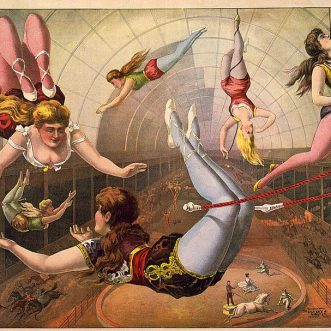
Discipline makes Daring possible.

People will always want [insert naughty but nice product here]

People will always want [insert naughty but nice product here]

Building a business around giving people what they want, even when you know it isn’t good for them, seems like another safe option.  After all, most of us, like Oscar Wilde, can resist anything except tempation.

But what happens, when someone decides to use the ‘want’ as merely a route in, a way to deliver something much more than the immediate gratification of a fleeting desire?

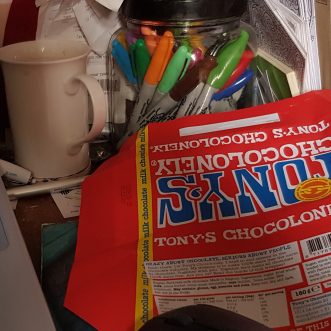
Tony’s Chocolonely doesn’t simply make 100% slave-free chocolate.   Once you’ve know about it, you can’t avoid the question: “Is there slavery in the bar I’m eating now?”.


Play

Play

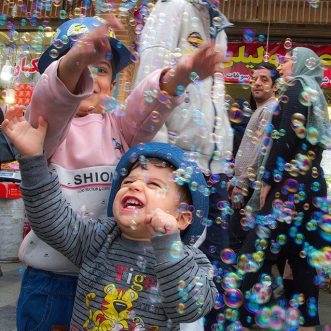
“To exercise one’s capacities to their fullest extent is to take pleasure in one’s own existence, and with sociable creatures, such pleasures are proportionally magnified when performed in company.”

That’s when ‘work’ becomes ‘play’.


From “What’s the Point If We Can’t Have Fun?” by David Graeber – well worth a read over the weekend.

Have a good one.

Happy Birthday

Happy Birthday

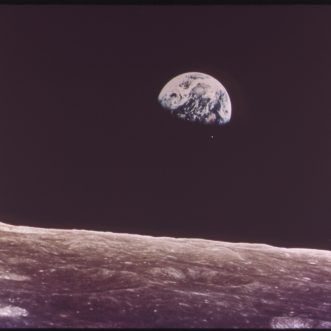
James Lovelock is 100 years old today.

Dr Lovelock is best known for his ‘Gaia hypothesis’ – the idea that living things interact with their non-living environment to create a synergistic, self-regulating, complex system that helps to maintain and perpetuate the conditions for life.

The hypothesis has come in for a lot of criticism over the years (after all, it is a hypothesis, not a theory), but the idea of the Earth as a system seems obvious to us now.

This wasn’t the case when Lovelock developed his idea, while working at NASA in the 60’s. And for me, this is the core of his contribution – he gave scientists a new paradigm for thinking about the Earth and our relationship to it, that enabled them to improve our understanding of how it works, and how it might evolve.

That’s quite an achievement.

Happy Birthday Dr Lovelock!

Research

Research

I’ve been researching the history and theory of accounting, and I have to say I’m finding it fascinating, not least because it leads off into some very interesting side-alleys.

Along the way I found the Digital Commons Network, an excellent resource.

But the best thing is finding that I’m not wrong about some of the questions I want to ask.

What questions would you ask of Accounting?

Be more Pirate

Be more Pirate

I vividly recall one networking meeting where, one after another, 6 accountants stood up and pitched themselves with “You all know what I do, I’m an accountant.  I’m looking for anyone who needs an accountant.”.

No wonder accountants have a reputation for being boring.

They aren’t of course, but until now they have been a key part of the compliance necessary for anyone running a business, which means that in the whole, they haven’t needed to market themselves, let alone differentiate themselves from other accountants.

Now that meeting compliance is being eaten away by automation, forward-thinking accountants are looking for new ways to make themselves necessary, this time based on what the customer wants and needs, not what the regulator requires.

That’s why I’m launching The Pioneers, a club for accountants who want to ‘be more pirate’.

If you know anyone who you think would like to be part of it, please pass this on.

Thank you.
 

Sawubona

Sawubona

You can’t be seen until you learn to see.

Sawubona.

Questions

Questions

People are asking big questions about accountancy.

Both from a technology perspective, as in this paper from Deloitte, and from a more existential perspective, exemplified by Professor Richard Murphy and the Corporate Accountability Network.

Big changes create great opportunities to re-think our models of the world as consumers and as producers.

Where do you think accountancy should go?   What should accountants do?  For whom?  What do we want from accountants?   Most importantly, what could we want?  What should we want?

Big questions, now is a good time to ask them.

Decisions

Decisions

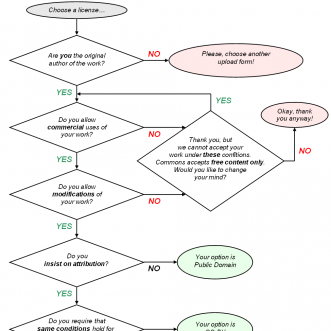
One of the easiest ways to overcomplicate a process that is designed to be run by humans is to spell out every possible decision.

That’s not to say decision trees like the one above aren’t useful in helping people to think through options or scenarios, they are.  But often it’s impossible to pre-identify every possible scenario – especially where other living things are involved – and the attempt to include everything we can imagine in a process simply slows down its execution.

For the most part, simple, black & white, truly binary decisions can be automated.

For everything else we want people to think before they act.   In which case the best instruction starts with “Use your judgement and experience, together with your knowledge of our purpose and values”.


Reification

Reification

Humans are very good at taking ideas or feelings that are abstract, implicit, unexpressed, and possibly inexpressible, and giving them a concrete form, so that we can reason about them as if they have a real physical presence.

We do it all the time, with maps; forms; questionnaires, diagrams; musical scores; plans; and especially software.  Those familiar icons on your phone or laptop screen are reifications of the idea of a dustbin, or a filing system, just as the original dustbin was a reification of the idea of ‘a place to collect rubbish’.

This is OK when we know that we are doing it.   When we look at a map, we know it isn’t the territory.   But when we give the map a voice that tells us where to go next, we forget that it is a map, and treat it as if it is real – more real than the territory.

But the most dangerous thing about this aspect of reification is that some ideas and feelings are possibly inexpressible, which means that in order to capture them, we must simplify them, reduce them, lose nuance – lose meaning.

We’ve all filled in questionnaires, for serious purposes or for fun, where some of the answers don’t really fit with our experience.   But we have to choose one, so we go with an answer that is the nearest, or which captures one aspect of it.  By the time everyone does that, the people who formulated the questionnaire have created a model of the group of questionnaire answerers that in fact does not capture the reality at all.

That’s fine if it was just for fun, but what if that model is then used to build the ‘systems’ (not necessarily software) and institutions that surround us?  It becomes the reality, and woe betide you if you don’t quite fit.

So, it’s important to be aware that the map is not the territory.  The way we model the world around us is not the world, and other models are available – even if we haven’t dreamed them up yet.

And, I think, its important to leave inexpressible things unexpressed.   Some parts of the score should be left to the imagination of the musician.  They’re usually the most memorable parts of each performance.