Discipline makes Daring possible.

Investment

Investment

We’ve got used to thinking of investment as a purely financial thing, undertaken by shareholders in a company.   A risk taken in the hope that the return will be worth it.

We’ve also got used to the idea that capital investors are the most important investors, and that returns to them should be kept high and constant, because otherwise they’ll take their capital elsewhere.

‘Investment’ carries another meaning though – to put on clothes, especially the ceremonial clothes of office.   In other words to publicly adopt the roles and responsibilities associated with that office.

Looked at this way, there are certainly other investors in a business.  The founders, workers, suppliers, and customers who take a risk with their time, energy and belief, in the hope that the return will be worth it.   These (along with some personal capital investors to be sure), are the people who adopt the roles and responsibilities associated with it.   Who clothe themselves in its values, purpose and ways of doing things.   Who may even wear its uniform, badge, or logo publicly and with pride.

Money isn’t the only thing necessary for the long-term success of a venture.   It certainly isn’t sufficient.

What if we focused our dividends accordingly?

Reading the signals

Reading the signals

Quite a while ago, I lost a lot of weight.   I was happy with where I was, so I stopped trying.   I ignored the signals (tightening waistbands, reverting to my old clothes), and refused to even look at the ones that would have told me the brutal truth (the scales, mirrors).

Now I’m back to where I started, doing it all again, with 5 stone to lose instead of only 1.

Don’t judge me.

What signals are you ignoring in your business?  Which are you wilfully blind to?  Which are you not even seeing?

From Recovery to Evolution

From Recovery to Evolution

A little while ago, I mused on what might make a good recovery process:

I’ve been thinking about this again, and with a simple addition, this becomes something much more sustainable – a process for evolution as well as recovery:

Maybe we’re always recovering?

Being prepared is much better than trying to predict the future.

Being prepared is much better than trying to predict the future.

Yesterday, I caught a repeat of “The Spark” on BBC Radio 4.   A conversation with Margaret Heffernan on preparedness.

There was far too much in this 30-minute programme to summarise here.   I recommend a listen, but here are some of Margaret’s brilliant thoughts on preparing for various eventualities rather than trying to predict which will happen:

  • “Preparedness is a better mindset when you know you are dealing with things that are generally certain, but specificially amibiguous.”   For example, we know epidemics occur, but we don’t know when, where, or exactly what.   We can’t predict, but we can be better prepared by asking questions like this: “If X (or Y or Z or J) happens, what will we wish we had had?”
  • Too much focus on efficiency (as quickly as possible, as cheaply as possible, as high a utilisation as possible), is the enemy of preparedness. Cutting out the margins for error, leaves no margin for resilience when you need it.
  • It’s a good idea to separate what’s predicitable from what isn’t, and deal with the two things as separate processes.   Human beings are inherently unpredictable, they can’t and won’t be bureaucratised.  Don’t try.   For truly predictable things use technology.   For the unpredictable stuff (such as dealing with human beings), use human beings, they are much better at using their judgement.
  • Surround yourself with people who are different from yourself.  who don’t see things the way you do.  Who will help you ask this question regularly: “If you were wrong, what would you see?”

And if you want to take preparedness even further, I recommend “Antifragile: things that gain from disorder”, by Nassim Nicholas Taleb.

Purpose

Purpose

If there is one thing that human beings like better than making their own individual dent in the universe, it’s being part of something that promises to ma

Mastery

Mastery

Humans love learning to the point of mastery, where we can start to pass that learning on to others.

We can’t help ourselves.  If we don’t get the opportunity in school or at work we make our own opportunities.

Don’t believe me?

I challenge you to pick anybody in your circle who has not mastered something well enough to be able to teach you what they know.

You may not think it a skill worth mastering, but it is mastery nonetheless.

Maybe we’ve got work all wrong?   We’re making people seek mastery outside work instead of helping them to find it in their work.

Why is that?

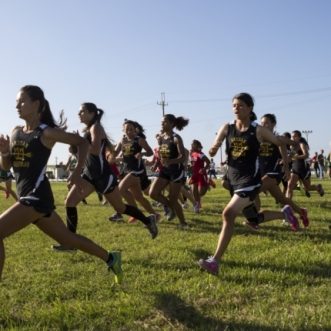
Go!

Go!

Now go.

Get started.

Move faster than you feel you should.  Faster than you thought you could.

Not because you’ll get there quicker, not even because you’ll get there.

Because it’s the running, the doing, the moving forward, with others, with people like us, that is the real reward.

This is what it means to be human.

Re-focus

Re-focus

The world has changed since the last time you did this.

Before you get going again, take another look.

Knowing what you do now about the resources you have to deliver what you really want; what the people you serve really want and what the people you work with really want, which version of better are you aiming for this time?

Take stock

Take stock

Once you’ve accepted what is, it’s time to take stock of the resources you have available to you.

Obviously, the physical resources – cash; credit; working capital; stock; work in progress, the available working hours of your team.

Also the intangibles – your Promise of Value, your ‘way we do things round here’; your know-how and expertise; the willingness/ability of your team, clients and suppliers to support you through changes.

Less obviously perhaps,  its time to take stock of what matters.   Because that will almost certainly have changed, for you, your clients and your team.   And that may open up whole new futures, and close some you thought you had available.

Possible futures are resources too.   It’s worth taking stock of them before you decide which ones to explore.

Let it be

Let it be

Over the weekend, as well as reading, I listened to wise words from Scott Perry, of Creative on Purpose:

“Acceptance of what is opens the door to what is possible.”

It’s difficult to avoid grieving over what you’ve lost, which includes the future you thought you were going to have.

It is lost.    There is nothing we can do about that.

But other futures are open to you.   Different futures.   Better futures.  Because you can make them so.   At least, you can do your best to make them so.

The first step in a process of recovery is to accept what is, now.