June 19, 2020
The product you really make
I’ve saved the best gems from Eric Ries’s podcast episodes with Brian Chesky in Out of the Crisis till last. … Read More “The product you really make”
I’ve saved the best gems from Eric Ries’s podcast episodes with Brian Chesky in Out of the Crisis till last. … Read More “The product you really make”
I’ve written before about multiple stakeholders, so I was pleased to hear what Brian Chesky shared about who he considers to be the stakeholders of Airbnb.
Yes, shareholders. But also employees (who also hold equity), visitors, hosts, suppliers, partners and the communities they operate in.
What particularly struck me was the way Chesky has designed in consideration for each set of stakeholders into the way the business works.
Here are his recommended first steps for setting up in business:
I love this! It means that a business is a system for making and keeping promises – to all its stakeholders.
Sometimes, its impossible to keep all your stakeholders happy, as Airbnb found right at the beginning of the COVID-19 crisis. But it seems that for Airbnb, knowing the promises they’ve pledged to keep has helped them to do the right things, in the right way, as far as they can.
And in the long run, this is what keeps the public wanting you to exist.
*Freeman, R. & Reed, Dl. (1983). Stockholders and Stakeholders: A New Perspective on Corporate Governance. California Management Review. 25. 10.2307/41165018.
These two episodes of Eric Ries’s podcast Out of the Crisis are rapidly turning into the theme for this week. Brian Chesky just keeps coming up with gems.
Today’s is this:
“The best thing you can do for shareholders is for the public to want your company to exist.”
How many businesses, enterprises, organisations, large or small, have you supported during lockdown, because you want them to exist?
Here’s a more challenging, perhaps painful question:
How many people are supporting your business, because they want it to exist?
Whatever the answer is, the next questions to ask, are:
Why is that?
What can you do about it?
and hopefully,
How can you thank them?
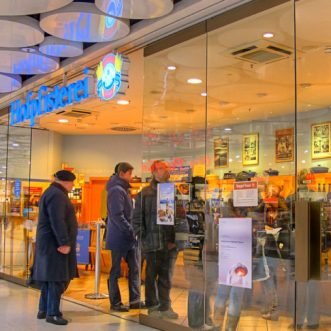
PS Hofpfisterei is a bakery chain founded in 1331.
You aren’t going to live forever, but the company you’ve founded might. And the chances are you’d like it to carry on pretty much as you envisaged it.
As Brian Chesky puts it in another gem from Eric Ries’s Out of The Crisis podcast:
“Design your company so that the wrong person running your company doesn’t ruin your company.”
One way of minimising the risk of this happening is to build it so that it makes and keeps it’s unique Promise of Value purposely, consistently yet creatively, so that even in the wrong hands, it can’t help but deliver the Promise you meant it to.
Another way is to have everyone in the company running it.
It’s hard to hijack everyone.
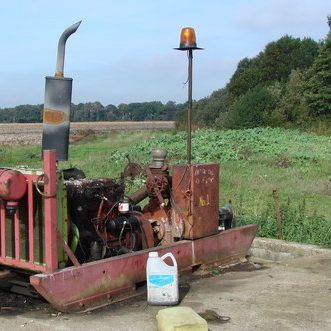
We tend to think of keeping things as they are, of doing nothing, staying with the status quo, as the neutral option. But of course that’s not true.
If we don’t act with intention to design our business around what’s important to us, it will still be designed, by everyone in it and the systems surrounding it. Just not on purpose. And not necessarily for the better.
“The system is what the system does.”
I’d rather trust to judgment than to luck.
“Design your company or it will be designed for you.” Brian Chesky, talking to Eric Ries on Out of The Crisis podcast.
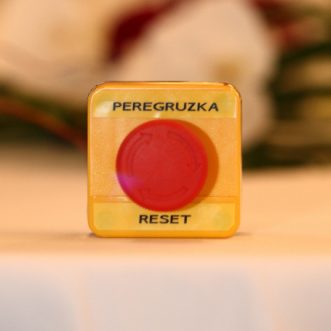
The word ‘reset’ is being used a lot at the moment. Not least by the World Ecnomic Forum.
Personally, I’m not convinced a reset is what we need.
Is simply stopping the machine, then restarting it – “turning it off and on again” going to be enough? After all, it’s the same machine, with the same capabilities and the same structure as before, all that happens with a reset is that recent memory is wiped.
No, I think we need something more radical, more difficult, but ultimately more rewarding. A rethink, a reimagine, a redesign, a rework.
If we’re looking for a different result, we need to start with a different machine.

It’s easy to talk about ‘a new way of doing things’, a ‘new normal’, but unless we actually make it happen, it’s all too easy to drift back into the old, familiar ways.
So, here are a few of the people I know of, some of whom I know, who are actually doing a new normal. Showing us that not only is there another way, but that new ways work, often better than the old way:
Some of these people have been doing things their new way for years.
Maybe ‘new’ isn’t so new after all? Not untried, not unsuccessful, just unfamiliar.
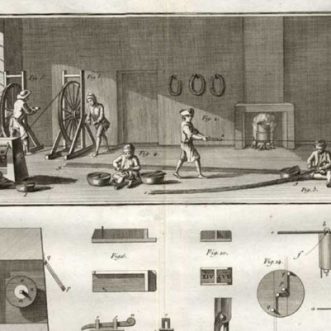
I’ve long had a problem with ‘workflow’. It’s taken me a while, but I think I’ve finally worked out why.
Workflow is the application of a pin factory model to service businesses, to professions. It breaks a process into tiny, individually repetitive steps that can be done faster and faster over time, making the whole process more efficient.
This is great for pins, and was a leap forward when Adam Smith wrote about it in 1776. Back then, “See a pin, pick it up, then all day you’ll have good luck.” made sense. A pin was valuable. You were lucky to find one for free.
Nowadays, we don’t have a shortage of pins, or of other simple things that can be efficiently made using the factory method. We have made enough garments to clothe the next 4 generations of the entire human race.
We do have a shortage of what’s needed to thrive in the face of enormous and challenging complexities: empathy, creativity, imagination, judgement and flair.
You can’t make any of those in a pin factory.
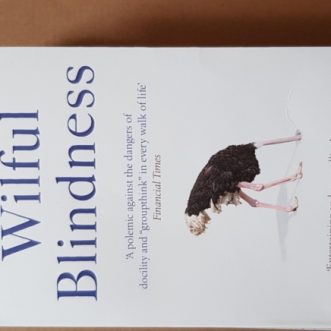
I’ve just finished reading this book, the first of 3 I ordered after hearing Margaret Heffernan on the radio last … Read More “Wilful Blindness”
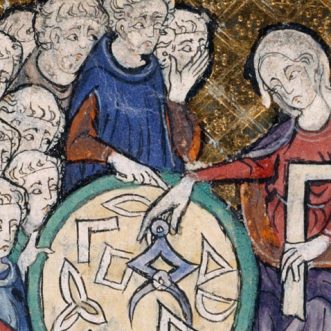
It’s said that the best way to learn is to teach.
I’ve had a couple of conversations recently that have got me thinking about this. The first was around training people remotely, the other was about franchising.
I think it’s true.
The thing about teaching is that your students don’t know what you know.
They aren’t in your head, and they haven’t been working next to you for the last umpteen years. In terms of your business, your unique system for making and keeping promises, they know nothing.
That means they ask stupid questions: “What’s one of those?” Why do we use that?” “Why do we do it that way?” “What if we did that instead”.
Good students point out contradictions, anomalies, blind spots. Things you should have seen, but have never had time to look at. things you never imagined could be done, that come naturally to them. This can feel threatening, but really what’s happening is that the value is passing both ways. They learn from you, you learn from them. A better business results.
Having to explain something forces us to think about it. Teaching forces us to make habits explicit, to surface reasoning that we just take for granted, to make our assumptions visible. It forces us to write down our score, so someone else can learn to play it. Writing it down allows it to be questioned, validated, improved, until suddenly we are no longer the only people who know how it goes. Even better, new people take our score and riff on it in new and exciting ways.
You don’t need new students to do this. You already have them working with you in your business.
Teach them, then let them teach you back.