Discipline makes Daring possible.

Amplification

Amplification

The genius of a composer like Mozart, is that no matter who plays his music, or what they play it on (even a synthesiser), you know it’s Mozart.

The genius of a musician like Grappelli or Menhuin, is that no matter what they play you know it’s Grappelli or Menhuin.

A genius musician playing a genius composer amplifies the experience of both.  And shows other musicians and composers what can be achieved.

It’s the score that makes this amplification possible.

Every musician get’s told what notes to play, what mood to create.  No less, no more.  The how is completely up to them – as long as it delivers the required experience, or better.

Discipline makes Daring possible.

Give us a clue

Give us a clue

In a business, striking the right balance between control and freedom is hard.

We want the serendipity that freedom brings.  To be open to emergent behaviour or trends.   And increasingly, we want our workplaces to be human, places where people can exercise their natural powers of creativity, collaboration and problem solving to the benefit of the customer and the company.

But emergence without direction or foundation simply turns into entropy.

The answer is to make sure the culture doesn’t only live inside people’s heads.

Document your Promise of Value as a compass to guide everyone on your journey.

Install a floor through which nobody can fall.

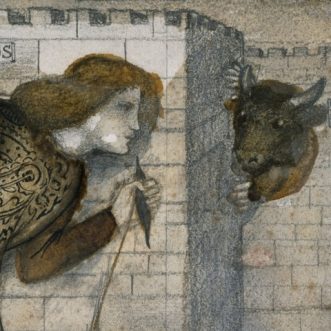
Capture the high-level process as the clue that will get everyone (especially newbies) through the labyrinth safely.

Then set your people free.

Down with pin factories.

Down with pin factories.

For Adam Smith the pin factory, with its production line and strict division of labour, was the epitome of efficiency.  It meant that thousands more pins could be manufactured, which in turn meant more people could afford to own them.

Until eventually a pin became the epitome of worthlessness, a thing you wouldn’t bother to pick up if you dropped it.  The factory model solved a production problem.

Products aren’t the only thing we make through our work.  We also make people.   And since Adam Smith, we’ve also known that the pin-factory approach makes unhappy people.

Humanity no longer needs to be efficient.  We no longer have a production problem.

We have a distribution problem. We have an unhappiness problem.  And we have a survival problem.

It’s time then, to look for a different mode of production.

One where the survival of our species is the side-effect of work that produces lives well lived for all.

We can start from the bottom up, as we grow our own small businesses:

Think orchestra, not pin-factory.

Selling up

Selling up

Your business doesn’t have to get big.   It should however, be capable of lasting longer than you do.  Of continuing to make and keep its (your) promises long after you’ve gone.

Otherwise, all there is to sell when the time comes is your customer list.

How do you think your customers will feel about that?

The good news is that scalability equals saleability.

Which means you really can sell up, not out.

On kings and forgiveness.

On kings and forgiveness.

Seth wrote a very interesting blog this week on Monarchists.

“As Sahlins and Graeber outline in their extraordinary (and dense) book on Kings, there’s often a pattern in the nature of monarchs. Royalty doesn’t have to play by the same cultural rules, and often ‘comes from away.’ Having someone from a different place and background allows the population to let themselves off the hook when it comes to creating the future.”

I agree, but I think the whole thing is more subtle and interesting than that.

Kings ‘from away’ could act in ways that were totally unacceptable to the native population – in order to create change.   Sometimes, they were even asked in.

Beyond that though, those same Kings were contained and constrained into a purely formal role.  They became figureheads, cherished, personally pampered but essentially powerless over the society they ‘ruled’.  They didn’t administer the results of their change and they certainly didn’t take over resources.   The original population carried on as custodians of the land, society and cuture, as before.

That was the point.

A stranger king enabled a system based on shared authority and collective, consensual decision making to radically change without breaking itself apart.   You could almost call them a scapegoat rather than a king.  Nowadays we’d call them a consultant.

The challenge then, is not merely to be prepared to ‘put yourself on the hook’ to lead change that will make the community uncomfortable, but also to forgive those of your peers who do it for you.

Shuhari

Shuhari

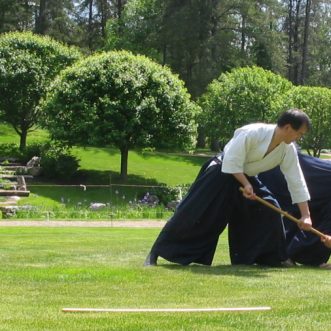
“It is known that, when we learn or train in something, we pass through the stages of shu, ha, and ri. These stages are explained as follows. In shu, we repeat the forms and discipline ourselves so that our bodies absorb the forms that our forebears created. We remain faithful to these forms with no deviation. Next, in the stage of ha, once we have disciplined ourselves to acquire the forms and movements, we make innovations. In this process the forms may be broken and discarded. Finally, in ri, we completely depart from the forms, open the door to creative technique, and arrive in a place where we act in accordance with what our heart/mind desires, unhindered while not overstepping laws.”  Endō Seishirō

You want your entire team to get to ri.

That’s impossible while the shu is only in your head.

Discipline makes Daring possible.


HT to Carlos Saba for the thought. And to Claire Perry-Louise for creating the space where it can be shared.

Security

Security

A child, confident that her parent will be there when she needs them, is willing to leave their side, to explore and try new things.  This is how she learns to be independent.  Having an anchor you can rely on is important.

Children put into a big space and simply asked to play stay close together more or less where they’re put.  If, however they are told there are boundaries to their space, and where those boundaries are, they range more widely in their play – often right up to the boundaries.  Some of them may even test how firm those boundaries are.    This is how children learn to be creative.  Boundaries are important.

I’m not sure I’d want my business to behave literally like a family, but it is possible to give it some of the same structure to create a community.  Your Promise of Value and the processes that are driven by it are both anchor and boundaries.  Everyone can fall back on the anchor in times of stress, and push the boundaries of the system when they’re feeling adventurous.

In the space between, let them play.

Discipline makes Daring possible.

Disappearing

Disappearing

There are two ptarmigans in the picture.  Did you spot them?

There’s more than one way to disappear.

The obvious way is to take yourself out of the picture.   The less obvious solution is to blend in.

Not by matching yourself to the background, but by making yourself indistinguishable from the others around you.

What if, like Spartacus, you could enable and inspire everyone else in your team to behave as if they were you, the original?   You would no longer stand out.   In fact you’d no longer even have to be there.

It starts by thinking differently about what your business is.

Issue 2 of The Disappearing Boss is out today.

Blind man’s buff

Blind man’s buff

Working away from the office has been uncomfortable for many people.  Not least leaders.

We’re so used to the panopticon of open plan, together with the richness of non-verbal communication that enables ‘management by walking about’ – the ability to dip in and help where it’s needed with feedback and encouragement.

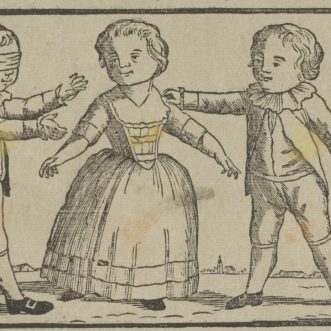
Remote working has made leading feel like a game of blind man’s buff.

It feels like we should become more like old-fashioned managers – telling people what to do then trying to assess where they really are through regular progress reports or software.   None of these things tell you what you really want to know – whether people are struggling, or have misunderstood what’s required, or are simply missing something – all the things you used to be able spot really quickly when everyone was together in the office.

It’s an interesting problem, that existed long before before lockdown and work from home.  What do you do when people struggle but don’t ask for help?

For some the answer is more surveillance, and more checklists.  For others it’s mandating a return to the office.   But I wonder if framing the problem differently might work better?

What if we looked at our people as students, rather than workers?  What if instead of asking ‘How do I know they are where they should be?’ we asked ourselves ‘How do I know they are learning?’.

The answer to that question would I’m sure lead to a different way of organising how teams are supported.

And from my experience we could do worse than look at how Akimbo does it.

Pattern vs Catch-all

Pattern vs Catch-all

When designing your Customer Experience Score, you often uncover processes that follow a specific pattern.

For example, you want a client to have a similar experience every time you request information from them – perhaps you send an email, then immediately follow up with a phone call or a text, or both.   Perhaps you call, then follow up with an email. After a while, you might remind the client if they haven’t responded.  There might be a limit to the number of times you do that.

However you want the experience to be, you want that experience to be consistent across all the information requests you might make, so it’s tempting to lump all these different processes intoa single catch-all process.

That’s a mistake.  Although the pattern is the same, each individual process turns out to be slightly different.  The information being requested is different, the purpose is different, the priority, urgency and timescales may be different.  The Roles involved may be different.  The Props will definitely be different.

These differences will out, and somewhere in the depths of what looks like a simple process, you’ll end up having to include some way of spelling out what actually happens in each case.  It usually involves a complicated list of “If you’re dealing with A, do B; if you’re dealing with C, do D;…”

And so on.

The key is to remember why you’re writing your Customers Experience Score, which is to enable someone else in your team to perform the process as well as or better than you.  That is best achieved by making each process self-containedly easy to follow, without cluttering it up with decisions about alternative possibilities.

When Google gives you directions for getting from your house to that beauty spot you love, it gives you full directions for each and every route, even though most will start with the same turn out of your street, and end with the same turn into your destination.    Imagine trying to find your way with directions that say “If you’re following route A, turn right at the next roundabout.  If you’re following Route B proceed straight across.   If you’re following Route C, turn right.”

You’d take longer, annoy fellow drivers along the way, and probably get lost a few times.  You might even give up and go home.  That’s the last thing you want your team to do when they’re delivering your Promise to clients.

A pattern is a pattern, nothing more.  Use it to design in consistency that reinforces your Promise of Value.

A catch-all, on the other hand, makes everyone work harder, for no extra benefit.