Discipline makes Daring possible.

A market of one

A market of one

I’ve been known to wax lyrical (or just go on about) about how your Promise of Value drives the way you design your business, so that it can’t help but deliver on the Promises you make.

But what does that actually mean in practice?  How do you actually do that?

Let’s follow a thread of an example.

Your Promise of Value contains 3 sets of qualities – behaviours (the way you do things, which shades into your values), what you do (what you do to deliver benefit to your clients) and what you are (the relationship that is created between you and a client as a result).

Let’s say that one of your behaviours is ‘honest’.   Among other things, that might mean that you always tell the truth.   That has implications for your Share Promise process.  For example, you may decide to never make claims you can’t substantiate.   That might mean that for you ‘Showing Up’ is essentially about presenting the substantiation.  Your 60-seconds is a story of a happy client, or your social media feed is full of testimonials, or that your website contains a live feed showing the positive impact you’re having.   Or maybe the negative impact, reducing?

Always telling the truth has implications for your Keep Promise process too.   It affects how you deal with a complaint, or the advice you give a client.  It implies that before either of these situations arises, you must have a process for gathering as much ‘truth’ as you can.  That might translate into a separate process each time (receive a complaint, research it, then get back to them), or it may mean building a process for continuously recording data you might need, as a side effect of doing the job.

Your Promise of Value isn’t just for prospects and clients, it also drives how you design your Improve Process – how you organise or re-organise the resources you have to serve your people better.   How you design your measurement systems, your appraisal systems and your recruitment systems.   For example, how could you test that a potential team member is ‘honest’?   How would you build ‘always telling the truth’ into feedback mechanisms?

There will be other options.  The form your processes take depends on other aspects of your Promise of Value – not everything all at once, but the behaviours that are most important to you and the people you serve.  How does your business combine a behaviour like ‘honest’ with ‘kind’, or ‘professional’ or ‘cutting-edge’?

By embedding your Promise of Value into what you do and how you do it, your prospects, clients, employees, suppliers – all your stakeholders – experience who you are, and what you are here to do in a very concrete way.   You’re showing, not telling.   What you are, is what they get.    And what you are is unique.   You’re now in a market of one.

Gen Z

Gen Z

Gen Z are demanding what every generation before them has always wanted – #autonomy, #purpose #agency #mastery #community.

Good for them!

Give it to them. And watch your business scale.

New tunes

New tunes

“Research carried out by Oxford Economics found that it takes recently hired professional workers 28 weeks to reach optimum productivity – which has an attached cost of £25,200 per employee.”

Why is that?

Because even if your new hire has worked in your industry for years, they haven’t worked in your business before.  They don’t know what you know, don’t believe what you believe, and don’t do things the way you do them.

You may have started out as a one-man-band, doing covers.   But by now you play your own music, nobody else’s.   That’s why your best clients love you.   That means that no matter how experienced, every new person that joins your team has to learn new tunes.

Maybe it’s time you got that music out of your head?    So others can learn to play it more easily and more quickly.  Bringing their own personality and flair to the performance right from the start.

And you can spend less time telling them where to put their fingers.


Leadership?

Leadership?

At this morning’s Like-Hearted Leaders gathering we had an interesting discussion around what leadership is or could be.

It was an interesting, intricate, circular discussion.

But in the end, I think what leadership could be might be best summed up in the LHL values:

  • Real conversations, even if they are difficult.
  • Courage to be vulnerable.
  • Growth & Learning comes through thoughtful feedback.
  • Freedom of expression, where everyone is worthy of contributing.
  • Amplify others.
  • Trust grows in balanced relationships of give and take.

It’s an interesting question though.

What does leadership mean to you?

What does it mean to whoever you lead?

Rotations

Rotations

Circles are an interesting form of organisation.  Like King Arthur’s famous Round Table, nobody is ‘above’ or ‘below’ anyone else.  All are on a level.

A circle can be the basis of useful mechanisms for sharing work fairly, without the need for discussion, consensus building or command.

For instance, if you all work in an office, someone has to open up each day.   Often it’s one person’s job.   What happens when they don’t turn up?

You could decide to give everyone a key, and it’s simply the first to arrive that opens up.    But if you are the habitually early one, you might start to resent being the only one who has to do this in practice.

Or you could create an ‘opening up ‘ circle (which could include everyone) and do it by rotation.  You might even use a single set of special keys to make the mechanism visible, perhaps even more like a game.

There are probably more jobs that could be organised in this way.   You could rotate delivery drivers through different routes or rounds, to give them a change and to introduce customers to more of your team.   You could rotate people through networking events in the same way.  You could even rotate people through Roles to expand their experience and get clients used to the idea that anyone in your business can help them equally well.

The beauty of a circle is that you can start anywhere, and go clockwise or anti-clockwise.  You can choose whatever frequency you like for the rotation.  It can even accommodate absences – you just jump the gap if today’s person is missing.  Best of all, there’s no room for argument.  Everyone takes their turn, then forgets about the job until it comes round again.

No need to write up complex rotas, just draw up your circles, put them somewhere visible, and set them going.

How powerful a signal it would be if everyone, including the boss, took their spot?

Down with management

Down with management

I’ve talked before about the application of pin-factory thinking to work that requires empathy, creativity, imagination, judgement and flair.   This kind of thinking reduces management to supervision, control, and reporting.   Activities that are easily automated, but add little value.

No wonder we have an employee engagement problem, an innovation problem and a productivity problem.

Because we have a management problem.

People don’t need managing.  We are perfectly capable of managing ourselves, and do so every day.

We don’t need supervision and reporting.  We need communication – a vision, a score to follow, feedback on how we’re doing.

We don’t need to be controlled.   We need freedom – to make mistakes, learn from them, correct ourselves, improve how we do things.

We don’t even need to be led.   We can lead each other – the right leader, at the right time to deliver what’s required.

Down with management!

Long live responsible autonomy!

Communication, not control

Communication, not control

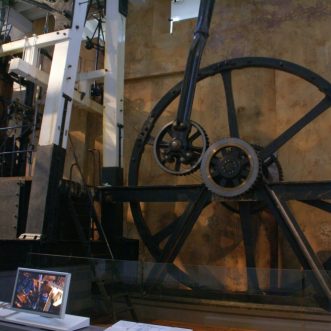
Yesterday evening I watched ‘the very long and very beautiful history of technical drawing’ on the #Railnatter podcast.

Boulton and Watt’s industry disrupting atmospheric engines were the size of a house.  They couldn’t be factory built and transported, there was no railway then.

Instead, the firm sent technical drawings to the customer so that local engineers could build the engine on site.

The same technical drawings enabled later, different engineers to maintain, repair, relocate and upgrade these engines.  Or, back at Boulton and Watt, to design new, better engines – on paper, cheaply.

Even later, they’ve enabled modern engineers to recreate these engines for our edification and delight.

Technical drawings aren’t even only for techies.  They were often used to explain complex ideas and processes to clients, funders and the wider public.

In other words, technical drawings, like musical scores, building plans and other tools we use to collaborate around are about communication, not control.  The kind of communication across space and time that allows a business to scale across space and time.

How about your business?  What would your technical drawings look like?  Do you have them, or are they only in your (or someone else’s) head?

Management

Management

Management – the co-ordination of activities executed by many people – is expensive.  Managers don’t contribute directly to the bottom line, and good managers cost good money to hire.   So it’s no surprise that firms around the world have been looking for a way to get rid of managers.

One solution is to automate – management by algorithm, as used by Uber, deliveroo and the like, and increasingly applied to fields such as home-care.  This is hideously expensive to set up, of course, and it depends on creating an effective monopoly.   Plus it effectively turns humans into mindless robots, paid accordingly.

The other solution is to devolve responsibility out and down to the front-line – radical de-centralisation, where teams on the front line manage themselves.   An extreme (and very successful) example of this is Haier Industries, essentially what Corporate Rebels call ‘the biggest startup factory in the world’.

At Haier, ‘teams’ are startups, consisting of internal and external people (such as suppliers), all working to create value for customers, sharing the risks and the rewards along the way. They are monitored and supported, but not controlled.  Haier doesn’t decide what will work and what won’t, the market does.

In contrast to Uber and the like, Haier has created a highly profitable solution to getting rid of managers – by creating an ecosystem that enables self-managing people to do what only humans can do – create value for other humans – supported and rewarded by systems that help them to keep growing.

In the future, there will be no managers, only management.  What kind of management do you want for your business?  Uber? or Haier?

I know which I’d prefer.

Innovation

Innovation

When we think of innovation, we tend to think of physical or digital technologies embodied in products or apps.

Management is a technology too.

And as Michele Zanini, co-author with Gary Hamel of ‘Humanocracy‘ observed only last Friday:

“Our research suggests that the longest-lasting competitive advantages come from innovation in management systems and practices, not from business or operating model innovation. So diligently pursuing management innovation pays off handsomely.”

And the good news is that small businesses on the cusp of scaling are best placed to take advantage of this.

Founders Syndrome

Founders Syndrome

I learned a new concept this morning: ‘Founder’s syndrome’.  Here’s the Wikipedia definition:

  • The organization is strongly identified with the founder;[8] and a result sometimes believed to be related to the founder’s ego.[9][10][11]
  • Obsessive leadership style compared to a more standard behavior.[12][13][14]
  • Autocratic decision-making (autocratic management style): Founders tend to make all decisions in early start-up companies, big and small, without a formal process or feedback from others. Decisions are made in crisis mode, with little forward planning. Staff meetings are held generally to rally the troops, get status reports, and assign tasks. There is little meaningful strategic development, or shared executive agreement on objectives with limited or a complete lack of professional development. Typically, there is little organizational infrastructure in place, and what is there is not used correctly.[11] Furthermore, the founder has difficulty making decisions that benefit the organization because of their affiliation.[10]
  • Higher levels of micromanagement by checking on employees or colleagues subject matter work instead of maintaining and evolving the overall company’s picture.[15]
  • Entrepreneurs show higher levels of bias (e.g. overconfidence) than do managers in established organizations.[16][17]
  • There is no succession plan.[11]
  • A failing so-called leadership transition[18] within first couple of years leading to consequences such as trust, moral, unforeseen future for the business.[19][20]
  • The founder has difficulty with adapting to changes as the organization matures.[10]
  • The culture of the leadership team and company plays an important role for success or failure.[21][22]
  • Often the founder’s idea is central to the initial business and clients of the company, so that if markets change, the need for the initial idea might vanish.[23]
  • Key staff and board members are typically selected by the founder and are often friends and colleagues of the founder. Their role is to support the founder, rather than to lead the mission. Staff may be chosen due to their personal loyalty to the founder rather than skills, organizational fit, or experience. Board members may be under-qualified, under-informed or intimidated and will typically be unable to answer basic questions without checking first.[24]
  • Professionally trained and talented recruits, often recruited to resolve difficulties in the organization, find that they are not able to contribute in an effective and professional way.[24]
  • The founder begins to believe their own press/PR and other marketing related issues.[25]
  • The founder, who is usually the CEO or managing director, suffers HiPPO (Highest-paid-person’s opinion), which means that often their ideas, decisions, etc. keep winning over the actual better ideas, decisions, etc.[26][27]
  • The founder becomes increasingly paranoid as delegation is required, or business management needs are greater than their training or experience.
  • Falling into two traps:[28]
    • Actions without a goal or
    • Wrong actions based on defined goal

The founder responds to increasingly challenging issues by accentuating the above, leading to further difficulties.[29] Anyone who challenges this cycle will be treated as a disruptive influence and will be ignored, ridiculed or removed. The working environment will be increasingly difficult with decreasing trust. The organization becomes increasingly reactive, rather than proactive. Alternatively, the founder or the board may recognize the issue and take effective action.[30]

A lot of this looks to me like the classic painful transition from one-person-band, to few-person-band, to full-blown company.   Which is really the transition from a small, personal, human-scaled business to a large, impersonal capitalist corporation.   The founder wants to keep things personal and true to their original vision.  New owners or new management want to make things efficient, corporate and therefore impersonal.  As far as the founder is concerned, they want to make it ‘someone else’s business‘.  Of course the founder resists.

There is a preventive for ‘Founder’s syndrome’.

Embed the founding vision and personality into the operating processes of your business before you try to scale, with a Customer Experience Score.  You’ll be able to scale without managers, even without investors other than the people you serve.  The best of both worlds: personal, true to the original vision and magnifying your impact.

Even better, once it’s built into the way your business works, your Score takes on a life of it’s own, nurtured and improved by everyone in the business.   It becomes harder for anyone to interfere – even you.