Discipline makes Daring possible.

Handovers

Handovers

When you grow a business by adding functions – accounts, sales, customer service, warehousing, delivery – you inevitably add overhead.  Because every new function you add introduces the need for handovers, often several of them.   Running the business becomes a matter of co-ordinating handovers and catching the things that fall between functions, rather than making and keeping promises to customers.

All of this costs money.   You’ve introduced transaction costs.   At the extreme, the thing the business is supposedly here to do is the thing that suffers – because it’s the only part that can give.   So you get turkey twizzlers for school dinners at a higher cost than if a local dinner lady cooked from scratch every day.

The answer is to pick a unit of growth that’s focused on the customer, and replicate it.   That unit is the process of making and keeping a promise to them.

Let one Role run the entire process of making and keeping a promise to a customer from beginning to end, with no handovers, no transaction costs, no overhead, and you’ve got a recipe for efficient scalability, that works within the firm and beyond.  It’s also more fun for the people running the process.

More efficiency, more impact, more fun.   What’s not to like?
 

The devil is in the detail

The devil is in the detail

Except when it isn’t.

Often, the devil is in the big picture.  The model you’re working to.  Unquestioningly, perhaps even unconsciously.

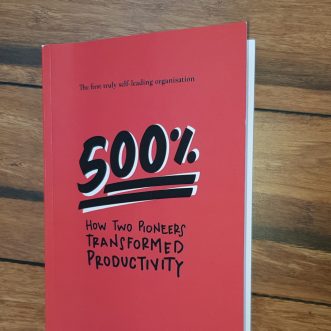
That’s what Julian and Andrew realised at Matt Black Systems.  After a decade of attempts to turn around their business, with LEAN consultants, re-organisations, and efficiency drives, none of which worked, the devil wasn’t in the fine detail of processes, nor was it in the employees.  It was in the model the business was built on – top-down, hierarchical, siloed into specialisms, command and control.

Alternative models aren’t necessarily easy, but they give you the opportunity to choose your problems:

“The organisational design you adopt will determine the set of problems you have to live with.  Often the design is considered a ‘given’ its problems unavoidable.  We chose to change our model because the problems we had were threatening our business.  We wanted a better set of problems.”

Once Andrew and Julian had realised this, it took just 18 months to transform their business to the point where productivity had increased by 500%; customers were delighted, and staff found their work rewarding personally and financially, without killing themselves in the process.

Julian and Andrew could leave the building, never to return.

Of course, business-threatening problems are a great spur to radical change.   But you don’t have to wait till then.

You could pick your problems early, and walk out of your business when you choose.

The sleep of reason

The sleep of reason

NASA engineers had noticed a problem with the O-rings used to seal joints in the boosters of the Challenger space shuttle.  When the weather was cold at launch time, the O-rings failed to seal the gaps properly.   But they couldn’t quantify the effects, so were not allowed to act on their concerns.  After all, the NASA engineering watchword was : “In God we trust.  All others bring data.”

But what if you don’t have data?  Does that mean you just leave it to God?

Of course not.

As Richard Feynman said at the enquiry following the disaster “If you don’t have data, you must use reason.” 

Our processes must allow for that.

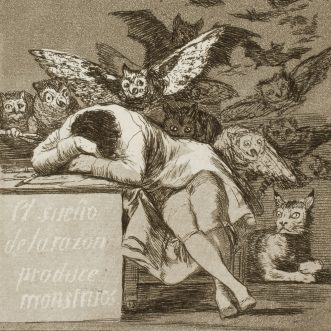
If the sleep of reason produces monsters, imagine what wonders we create when we combine data with waking reason, driven by humanity?

Our processes must be designed for that.


HT to Abishek Chakraborty for the prompt.

While the cat’s away…

While the cat’s away…

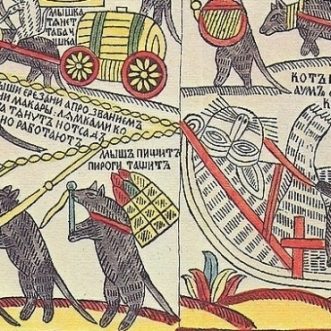
…the mice will continue with whatever processes are in place.

Do you want them to be yours or theirs?

Preserving process knowledge

Preserving process knowledge

How do you embed ‘process knowledge’ – the knowledge of how to do things – into other people’s heads across space and/or time?

Well the first step is obviously to get it out of your head first.    Then you have to communicate it to others in a way that is easily absorbed yet also ‘sticky’.

One familiar way is through apprenticeship – repeated physical practice under the eye of a master.  Great over time, although slow, harder to apply over space.

Another familiar way is to write things down – in manuals, standard operating procedures, process maps.  This solves the problem of space as well as time, but is actually notoriously un-‘sticky’.  Nobody likes reading manuals – in fact most people hate it.

So the best way is to create some combination of scribing and physical practice that combines the best of these approaches.

And that’s just what aboriginal Australians have been doing for around 40,000 years.  They preserve their culture – their ‘way of doing things’ through a complex combination of activities that includes mapping, painting and sculpture of all kinds, song, dance and actual doing, tied to a landscape that acts as both operating territory and memory jogger.

What’s interesting is how even the ‘scribing’ is so physical and multisensory – maps can be physical representations that are walked around; memorisation takes the form of songs and stories attached to landmarks.  Painting or dancing is not just a way of representing an activity, its a form of doing it.

We process mappers and manual writers could learn a lot from this approach.

Hmmm.

Watch this space.

Even brilliant businesses fail in the end

Even brilliant businesses fail in the end

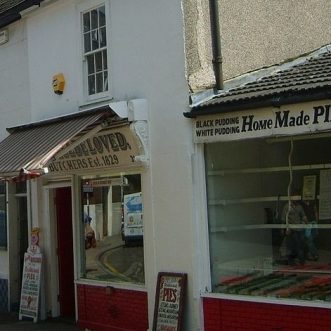
A butcher’s shop Deptford is closing down soon.

No big deal you might think.

Except this butcher’s is a family firm that’s been going for 192 years.  Their pies, home-made, filled with succulent chunks of meat and delivious gravy are legendary.  Their T-bone steak has topped the leaderboard of the Steak Society’s ‘T-bone Tour’ since 2018.  And it’s all surprisingly good value too.

It will disappear just when the market for it’s wares is growing as Deptford gentrifies.

But the current owner, Bill Wellbeloved, needs to retire, and couldn’t find anyone to take over the business.

Even brilliant family businesses fail in the end, if they don’t find a way to last longer than their current driving force.

That’s why Gibbs & Partners exists.  So brilliant businesses can carry on for as long as their clients need them.

Planning to disappear.

Planning to disappear.

It’s well known that being employee-owned is good for a business.

But why stop there?

Why not make your business employee-run too?

Enable every employee to be ‘a Boss’ with a Customer Experience Score.

You business will be scalable, replicable, durable.

And you can plan to disappear.

Acumen

Acumen

Acumen:  Sharpness.  The ability to get right to the point, to the heart of the matter.

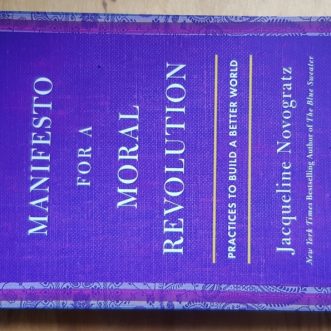
Acumen is something Jaqueline Novogratz obviously has in spades, because she realises that the people at the bottom of the pile have it too.

And that the best way them to help them is to enable them to apply it to help themselves.

Bottom up, ripple out.  That’s the way to do it.

No need for you to be there.


Work/play

Work/play

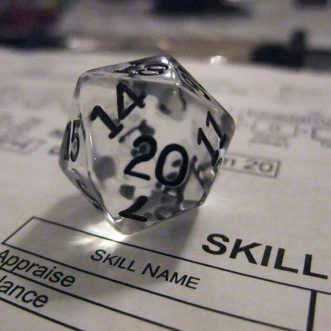
Why do we enjoy playing Dungeons and Dragons?

Because we know the rules.  We know the world we’re operating in.   We know our own capabilities.  We know there is randomness, provided by the dice.  And we know that the people we’re playing with know all that too.

Within that framework, each one of us can play freely with the skills we’re given and the attributes we acquire.  We can collaborate, go it alone, or switch between the two.  If we’re Dungeon Master, we can even change the rules.

Nothing is predetermined, there’s room for the unexpected, yet everything is coherent.    It’s a safe space enclosing the perfect balance between constraint and freedom, between box and creativity, between process and play, between community and individual.

Life can’t be like this.

But work can.

Discipline makes Daring possible.

I’m sorry, I haven’t a clue

I’m sorry, I haven’t a clue

The joke hidden in the game of ‘Mornington Crescent’, played to inscrutable rules on ‘I’m Sorry I haven’t a Clue’ –  is that actually there are no rules.   The teams make them up as they go along.

It’s an old parlour game, a jolly hoax played by a group of friends on a newcomer.    Hilarious for the friends.  Bewildering for the newcomer.

And it’s probably what joining your business feels like.