Discipline makes Daring possible.

Design your business or it will be designed for you

Design your business or it will be designed for you

“Design your business or it will be designed for you.”  It’s one of my favourite sayings, spoken by Brian Chesky of AirBnB.

But what does it actually mean?   How can others design your business for you, when you’re the boss?

When you started out as a one-person band, you did everything.  You tried different things to market and sell your services, and to deliver them in such a way that customers came back, or told their friends.  You designed the business.

Once demand grows beyond what you can personally deliver, you have to add capacity.   And every time you do that, you bring in someone else’s idea and experience of what a business looks like.

You might add capacity by automating some of what you do with software.   That job management software, quote generator or CRM tool was designed by someone else, according to their vision of what a business is and how a business works.  A vision that is necessarily generic, otherwise they couldn’t sell enough to be viable.

You might outsource some of what you do, your accounts, or your HR for example.  Your accountant or sales agent will have their own idea of what a business is and how it works.  If they’re any good they’ll try to find out more about yours, but often they’ll fall back on a generic design to fit all industries, or a design learned working elsewhere, or their own design.  It’s not your area of expertise, so even though you don’t love it, you put up with it.

You might work with other small businesses like yourself, sub-contracting some of the delivery.   But like yourself, they will have designed their own small business, and that design probably won’t match yours.   That can prove exasperating and stressful, unless you decide it doesn’t matter that much, and accept the differences.

You might recruit a business partner, co-director, manager or experienced staff to take on some of the work you do.   Almost certainly you’ll want them to have experience of business in general and your industry in particular.  In other words, they’ll bring with them the design of those other businesses they’ve worked in, plus their own ideas of how to do things.   If you’re very lucky, those ideas will chime with yours.  If you’re not, you’ll be fighting to maintain your business design, or running through several cycles before you find ‘the right person’.

You might recruit juniors, school-leavers or graduates even, who you can ‘mould’ to suit your business design.  But moulding takes time, and even they will have their own ideas of how things should be done.  They need almost constant supervision and just don’t seem to get it.

You might hire a business coach or consultant to help you deal with all these problems.   They too, come with baggage of what a business ‘should’ look like, learned at the Bank, or at business school, or from building their own successful businesses.  They will try and shape your business to fit.

In the face of all this, you have a choice.  You can supervise closely, re-do work, fight to correct what everyone else is doing ‘wrong’, or you can accept other people’s designs for your business.   The first is exhausting, the second feels like it’s not your business any more.

There’s a step you can take, which can solve all of these potential problems before they happen, which is to take your business design out of your head and get it down as a shareable ‘blueprint’ everyone can work from.  The Customer Experience Score for your business.  That captures your unique way of making and keeping promises to the people you serve.

Your Score becomes a specification for software, an operations manual for new staff, suppliers and contractors at all levels.  Above all it becomes a permanent record of your design for your business, that enables your unique creation to scale, evolve and persist through time.

Design your business, or sooner or later, you’ll be back to working in someone else’s business.

Tension and delight

Tension and delight

Of course, inspiration on its own isn’t enough.   Inspiration needs a starting point, a constraint, something to bounce off, spark to or rebel against.

The maker of this ‘crazy’ quilt was already constrained by the assortment of odd-shaped leftovers they had.  Perhaps also by the limited colours they’d been given.   They decided to impose another constraint  – the nine square layout.  The result isn’t random.  Nor is it purely functional.   It satisfies more than the need to keep warm at night.

Why would someone do this?

We humans like order as much as we like wildness.  We desire both certainty and uncertainty, rules and license.    Pulled by these opposites, we find the tension between them uncomfortable.

So we turn it into the most delightful thing of all – art.   Capturing a fleeting, but satisfying moment of balance between the two.    The ‘right’ balance is elusive, every time we try, the result is different.  That’s what keeps artists in practice.   The ‘right’ balance is also personal.   That’s what gives each artist their own style.

If you want your business to feel human, it needs to be a place where art can happen.

You can’t dictate the artistic solutions.   But you can create the required level of tension, by imposing rules, order and constraints.

If those constraints are designed around making and keeping your promise to the people you serve – if they define a floor, but no ceiling – you’ll have created a safe, exciting and human space for everyone.

Especially you.

Facts are the enemies of truth

Facts are the enemies of truth

When you create your own business, the ‘truth’ of why it exists, what it does, who it’s for and how it should work is only in your head.

If you want to grow beyond the impact you can make on your own, you have to find a way to communicate and transfer that truth to the heads of your collaborators.

At that point, we tend to replace our truth with facts.   Facts are controlling, dry, objective, soulless.   We try to flesh the truth out as much as possible by adding too many facts, hiding the very thing we need to reveal.

No wonder people resist, preferring to follow their own idea of the truth – however different that may be from yours.   What’s really needed is a way to position your truth in the space between the people who work together to deliver it.   That way everyone can access it, everyone can question it, everyone can improve it.

Your truth is your Promise of Value.   The space between the people who work together to deliver it is your business.

Make a map of that space that describes how you make and keep your Promise to the people the business serves.   Keep the facts minimal – just enough to indicate concrete action;  allow the truth to shine through.

Leave room for interpretation, dissent and discussion.   Then make sure there’s a process for reaching consensus around a new, better truth.   That’s how your business will grow and evolve.


Thanks to Carlos Saba, for introducing me to the book that inspired this post.  It’s well worth a read.

Structuring emergence

Structuring emergence

The problem with a hierarchical management structure, is that it’s expensive – adding layers of overhead and transaction costs that have to be carried by the revenue-generating part of the business.   Even worse, it encourages everyone working within it to focus on the wrong thing – their immediate boss.  And that makes work miserable for many, especially those at the bottom of the pyramid.

Alternatives to hierarchy, such as holacracy, co-operation and teal address this by delegating much of the management and decision-making to the people at the coal-face – no longer the bottom, but the cutting edge, where the business meets its customers.

This doesn’t reduce overhead that much because in effect, as Dr Julian Birkenshaw of London Business School observes, these structures “replace a vertical bureaucracy with a horizontal one”.    Considerable interaction costs remain as people collaborate and generate consent to create emergent actions.   But at least the focus is where it matters, on the customer, client or stakeholder.

It seems to me that what’s really needed is both structure and emergence.  A structure that takes the thinking out of doing the right thing most of the time, but allows for emergence at the edges to respond to exceptions and to evolve.  The main thing is that both the core structure and the processes for emergence are focused on the same thing – the customer, client or stakeholder.

By now, you know all about my core structure:

Even hierachy works better around this.  Replace that with holacracy, co-operation, teal or responsible autonomy, and your business will fly.

Discipline makes Daring possible.

Pattern Books

Pattern Books

One of the things that put good housing within reach of ordinary people was the pattern book.

Instead of designing and building each house from scratch, an architect could design a basic pattern with variations that any local builder could construct.   The first owners could even personalise their home by choosing features from a list – a parquet floor here, a bay window there, a different bedroom layout.

The result was our typical suburbs, from Hampstead Garden Village through to Metroland and beyond.  Houses that are enough like each other to give a pleasing sense of uniformity and rhythm, but different enough in their details to be lively.

You are the architect of your business.   What if, instead of building each customer experience from scratch, you created a pattern book that your team can start from, and clients can adjust to suit their tastes?

Chippendale

Chippendale

In the pre-industrial age, the only way to grow your business was through apprenticeships.  Teaching aspiring masters everything you knew one-to-one, or one-to-few.

Once they had mastered their craft those apprentices went off and repeated the process in their own workshops.  A few might stay with you if you could get enough work to employ them.

The downside for customers was that everyone tended to make the same, tried and tested stuff for the same local customers.  If you wanted to make your mark by producing something different, it was impossible to grow fast enough to keep up with demand.

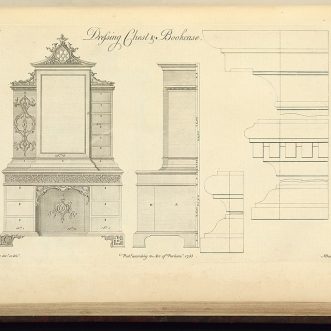
Thomas Chippendale knew what his gentleman customers in London wanted.    He knew that there were similar markets in towns and cities across the country.   He couldn’t serve those markets himself, but he could enable other cabinetmakers to do so – with a pattern book that could be sold to both cabinetmakers and gentlemen.

The pattern book specifies the end product – what it should look like, dimensions, some key details.   Chippendale knew that of course any master cabinetmaker would know how to construct the pieces.  He didn’t need to tell them that.

The result is that each piece produced from the pattern book reflects the skills of the cabinetmaker who used the pattern as inspiration, tailored to the sensibilities of their local gentlemen customer.

‘Chippendale’, but not by Chippendale.   A halfway house between handcrafted and factory-made.

Not a bad way to scale your unique approach.

Sharing

Sharing

I’m one of seven children.  A lot of work for my mother, who was nominally ‘The Boss’ in our house.

She didn’t like it though.

She resented being the parent who had to get us to do homework, or tidy our rooms, or do the washing up.  She resented being the one who shouted and told us off.   She resented the fact that her contribution was taken for granted, invisible, unappreciated.  Most of all she resented being the one who had to think of everything, for everyone else.

Fortunately for my mum, and as I realised later, for us, she went on strike when she was in her mid 40’s.

From that point on, if we were 16 or over, we took responsibility for ourselves.   If we wanted washing done, we did it ourselves.   If we wanted clothes ironed, we did it ourselves.  If we didn’t like ironing, then we could choose clothes that didn’t need ironing.  If we didn’t like tidying our bedrooms, we could live in a mess.  If we wanted a different meal from everyone else, we could, as long as we planned and cooked it and washed up ourselves.

It was hard for my mum, because it meant we did quite often live in a mess, but it showed me at least that beyond a certain age, a family, like a small business is a collaborative affair.  And that this collaboration works best when its the responsibility that’s shared, not just the work.

Being ‘The Boss’ isn’t as nearly as much fun as people think.

The solution is to make everyone the boss of themselves, within a framework of shared purpose.  Everyone is better for it.  Especially the business.

What’s wrong with being a boss?

What’s wrong with being a boss?

A boss is someone who tells you what to do.   Often they also tell you how to do it.    A boss’s job is to get more work out of you than they are paying you for.

On the whole, we don’t like how it feels to be on the receiving end of either of these things, which is why we leave big corporates to become ‘our own boss’.

But when we have to work with other people, we have to become ‘the boss’.   And it doesn’t matter how much you dress it up as leadership, the job is the same – getting more work out of others than we’re paying them for, telling them what to do and how.  It’s uncomfortable.  It feels wrong.  Especially when we’re a small team that feels more like family.  You don’t do these things to family.

It’s also frustrating, because your team know what a boss is, and what a boss does. and they don’t like it any more than you did.

Turning yourself into the thing you hoped to leave behind is not inevitable.  If you build a system that enables every person in your enterprise to lead, and rewards them accordingly, you avoid the discomfort and frustration of being a boss.   Ironically, it enables everyone to get more work done too.  So if you’re focused on impact rather than profit, this is the way forward.

When everyone’s a leader, the boss can happily disappear.

Less is more

Less is more

Have you ever stood in front of sweet counter full of chocolate bars?   Or a wall-full of 500 pizza choices.   And walked away empty-handed after a few minutes, because you couldn’t decide which to choose?

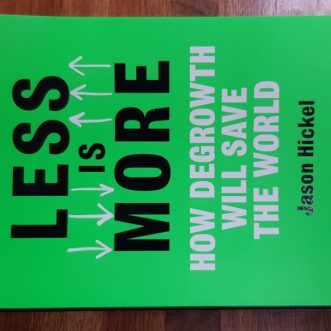
As Sheena Iyengar and her co-researchers discovered, too many choices actually makes it harder to choose something over nothing.

In a well-known experiment in a store that was famous for the extensiveness of its range, they set up a tasting station for jam.  Every half an hour the choices available to taste switched from 6 jars, to 24 and back again.

More people looked and tasted when there were 24 jams to choose from.  But 6 times as many people bought when there were only 4.

The lesson for packaging your Promise?

If you want people to notice you, have lots of choice.  If you want them to buy, don’t make them work so hard.  They’ll probably give up.

500 percent

500 percent

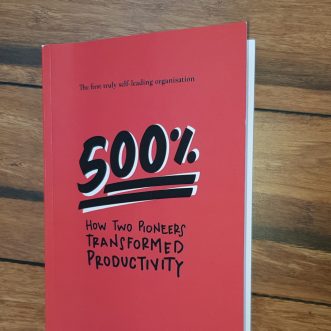
I realise I forgot to mention the book pictured in my earlier blog this week.

It’s well worth a read, sadly only available on Amazon.

Here’s my takeaway from reading it:

Sustainable improvement only came when the owners, Julian and Andrew did three things:

  1.  They re-framed what a business is about: “A business exists to form contracts, and satisfy them successfully.”    In other words, it’s about making promises and keeping them.
  2.  They re-designed the highest level business processes around that definition to create a framework.     In other words, they created a score for people to follow, without telling them where to put their fingers.
  3. They handed over all the work that takes place within that framework to each and every person in the business, along with the lion’s share of the rewards.   Each person became in effect a virtual business running the entire end-to-end process of forming contracts and satisfying them successfully, and collaborating with peers to do so.   In other words, they enabled people to fulfill all their human needs for purpose, mastery, agency, autonomy and community, not just their basic need to ‘make a living’.

As a result, the business became not just self-managing, but self-leading.  In other words, they built a scalable, replicable system for making and keeping promises, that didn’t need them to be there.

If a manufacturing business can do this, then so can you.

And I’d love to help.