Discipline makes Daring possible.

On Purpose.

On Purpose.

We tend to think of keeping things as they are, of doing nothing, staying with the status quo, as the neutral option.   But of course that’s not true.

If we don’t act with intention to design our business around what’s important to us, it will still be designed, by everyone in it and the systems surrounding it.   Just not on purpose.   And not necessarily for the better.

“The system is what the system does.”

I’d rather trust to judgment than to luck.

“Design your company or it will be designed for you.” Brian Chesky, talking to Eric Ries on Out of The Crisis podcast.

Imagine a workplace

Imagine a workplace

Now people are talking about going ‘back to work’ (of course many have never been away), I’m going to shamelessly steal an idea, and challenge you to imagine how ‘work’ could be different from before.

Over the weekend, sit back and imagine a workplace you’d look forward to joining.   A workplace you couldn’t keep away from.   A workplace you’d feel totally yourself in.  A workplace you’d feel fulfilled, energised, stretched by.   A workplace that enabled you to reach your potential.

What would it look like?  Where would it be?  What would you be doing? What would others be doing?  Would there be others?   How would it be organised?  What would it produce?  Why would you be there?

Now document what you’ve imagined, in 500 – 800 words, or as a drawing, painting, audio recording, video, and send it to me at ki*****@**************rs.com

I’d love to see what you imagine, and I think it would be very interesting to share it.

Happy imaginings.   I look forward to seeing them


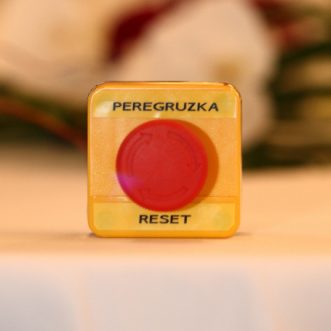
Reset? or Rethink?

Reset? or Rethink?

The word ‘reset’ is being used a lot at the moment.   Not least by the World Ecnomic Forum.

Personally, I’m not convinced a reset is what we need.

Is simply stopping the machine, then restarting it – “turning it off and on again” going to be enough?   After all, it’s the same machine, with the same capabilities and the same structure as before, all that happens with a reset is that recent memory is wiped.

No, I think we need something more radical, more difficult, but ultimately more rewarding.   A rethink, a reimagine, a redesign, a rework.

If we’re looking for a different result, we need to start with a different machine.


Recognition

Recognition

Occasionally, Keith Brymer Jones, a judge on ‘The Great Pottery Throwdown’ will shed a tear over someone’s work.   Making Keith cry is to aspiring potters what a Hollywood handshake is to aspiring bakers.

But what is it exactly that makes Keith cry, or Paul Hollywood put out his hand?

It isn’t the idea they put into their make, both judges only ever react to a completed product.

It isn’t the effort that goes into the making either.   All the contestants work hard.

It isn’t the style of the finished work, very different styles of work can provoke the same reaction.

I think it’s that the person in front of them truly understands their materials; has mastered the skills needed to make those materials express their idea perfectly, and has put their whole self into the process of making, without making the whole thing mere self-expression.

The product they make stands alone, ready for a customer to claim it.

I think what makes Keith Brymer Jones cry is recognition of a Promise truly kept.  That touches the heart.


Sorry

Sorry

Yesterday, I forgot to blog. For the first time in over 19 months.

I am sorry.   I got engrossed, editing the next episode of the Pioneer Accountants Podcast.

To make up for it, there’ll be another one later today.

Thank you for sticking with me.

A little bit of Mintzberg

A little bit of Mintzberg

I’m a big fan of the Corporate Rebels blog, so I was interested to receive this post yesterday, about what managment might look like after Coronavirus.

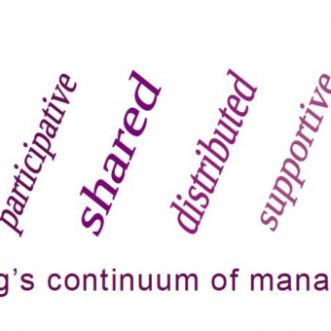
In it they discuss Mintzberg’s Continuum of Management:


The blog is an instructive read, so I won’t reproduce it here.  I’d just like to make a few observations of my own:

  • Most organisations I’ve worked in, have barely made it past a ‘participative’ style.
  • Mintzberg and the Corporate Rebels believe that ‘No managers’ is not a viable option.  I disagree.
  • Having a clear Promise of Value, and a Score for how you deliver on it, helps any organisation move from left to right along this line. All the way to the end, if you want.

Witch-hunts

Witch-hunts

Famously, a common test of whether you were a witch or not, left you dead either way.

If you floated when thrown into water, you were a witch, ripe for burning.   If you drowned you were innocent.

That must be pretty much how the sub-postmasters using The Post Office’s Horizon system must have felt, when they discovered discrepancies in their accounts.    They could either make up the difference themselves (again and again, as the error repeated itself), or stand accused of theft.   Either way they lost everything.

The difference is that this is 2020 not 1620.   Computer systems are human artefacts not gods.   Blind faith in them is unforgiveable.


PS.  This very angry post is my 400th.

If you’d like to help these people get justice, you can support them.

New paths

New paths

It’s easy to talk about ‘a new way of doing things’, a ‘new normal’, but unless we actually make it happen, it’s all too easy to drift back into the old, familiar ways.

So, here are a few of the people I know of, some of whom I know, who are actually doing a new normal.   Showing us that not only is there another way, but that new ways work, often better than the old way:

Some of these people have been doing things their new way for years.

Maybe ‘new’ isn’t so new after all?  Not untried, not unsuccessful,  just unfamiliar.

My workflow problem

My workflow problem

I’ve long had a problem with ‘workflow’.   It’s taken me a while, but I think I’ve finally worked out why.

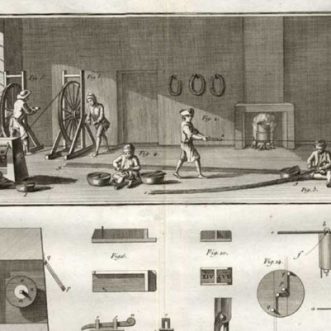
Workflow is the application of a pin factory model to service businesses, to professions.   It breaks a process into tiny, individually repetitive steps that can be done faster and faster over time, making the whole process more efficient.

This is great for pins, and was a leap forward when Adam Smith wrote about it in 1776.   Back then, “See a pin, pick it up, then all day you’ll have good luck.” made sense.  A pin was valuable.  You were lucky to find one for free.

Nowadays, we don’t have a shortage of pins, or of other simple things that can be efficiently made using the factory method.   We have made enough garments to clothe the next 4 generations of the entire human race.

We do have a shortage of what’s needed to thrive in the face of enormous  and challenging complexities: empathy, creativity, imagination, judgement and flair.

You can’t make any of those in a pin factory.

Empathetic Magic

Empathetic Magic

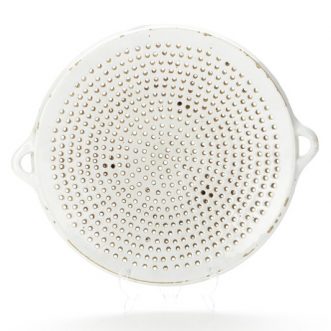
One way to make rain, is to pour water through a sieve.   The idea is that by imitating something like rain ourselves, real rain will fall.

We call this sympathetic magic, and the more people involved, the better.   If we all ‘make rain’ together, “The Rainmaker” is bound to respond.  This kind of group rainmaking is probably the origin of the myth of the Danaides.

There is a better kind of magic.  Where we all act as if we are the kind of people we’d love to live with.  Seeing our neighbours and fellows as human beings, very like us, yet not us, and all the more interesting for that, even when they are being ‘difficult’.

That’s empathetic magic.   It works.  And the more people involved, the better.