Discipline makes Daring possible.

Pattern vs Catch-all

Pattern vs Catch-all

When designing your Customer Experience Score, you often uncover processes that follow a specific pattern.

For example, you want a client to have a similar experience every time you request information from them – perhaps you send an email, then immediately follow up with a phone call or a text, or both.   Perhaps you call, then follow up with an email. After a while, you might remind the client if they haven’t responded.  There might be a limit to the number of times you do that.

However you want the experience to be, you want that experience to be consistent across all the information requests you might make, so it’s tempting to lump all these different processes intoa single catch-all process.

That’s a mistake.  Although the pattern is the same, each individual process turns out to be slightly different.  The information being requested is different, the purpose is different, the priority, urgency and timescales may be different.  The Roles involved may be different.  The Props will definitely be different.

These differences will out, and somewhere in the depths of what looks like a simple process, you’ll end up having to include some way of spelling out what actually happens in each case.  It usually involves a complicated list of “If you’re dealing with A, do B; if you’re dealing with C, do D;…”

And so on.

The key is to remember why you’re writing your Customers Experience Score, which is to enable someone else in your team to perform the process as well as or better than you.  That is best achieved by making each process self-containedly easy to follow, without cluttering it up with decisions about alternative possibilities.

When Google gives you directions for getting from your house to that beauty spot you love, it gives you full directions for each and every route, even though most will start with the same turn out of your street, and end with the same turn into your destination.    Imagine trying to find your way with directions that say “If you’re following route A, turn right at the next roundabout.  If you’re following Route B proceed straight across.   If you’re following Route C, turn right.”

You’d take longer, annoy fellow drivers along the way, and probably get lost a few times.  You might even give up and go home.  That’s the last thing you want your team to do when they’re delivering your Promise to clients.

A pattern is a pattern, nothing more.  Use it to design in consistency that reinforces your Promise of Value.

A catch-all, on the other hand, makes everyone work harder, for no extra benefit.

Slow burn

Slow burn

Every now and then, my husband has a big bonfire in the garden.  I must admit they make me nervous.   I find myself compelled to watch them well into the night to make sure they’re properly out before I go to bed.   I’ve been known to resort to water, just to be absolutely sure.

I much prefer an incinerator.   Contained, controlled, slow-burning but often more intense, an incinerator gets the job done with less risk and almost no need of supervision.

For me, on purpose beats all-out, every time.

Whatever Easter means to you, enjoy the break.

See you Tuesday.

Unwritten

Unwritten

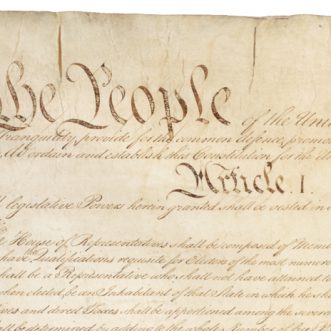
A written constitution is certainly open to interpretation (Who exactly are ‘We, the People’?  What exactly does ‘Happiness’ mean?), but it does at least provide a tangible, concrete reference point for discussion, amendment and clarification.   It is separate, both from the people who made it and the people interpreting it right now, a thing in its own right, and therefore capable of improvement.  And at all times, citizens can compare the current culture with what that culture once aspired to be, as embodied on the constitution, and decide to act.

The unwritten is protean, slippery, even more open to interpretation, even exploitation.  But what’s worse is that the culture that surrounds it can change beyond recognition without anyone really noticing.  Until suddenly, the flag we’ve grown up with comes to stand for something rather disturbing.

Brands, whether national or corporate, are tokens of an underlying culture.   If you want that culture to persist, it’s a good idea to write it down.  An an even better idea to share it with everyone.

That way everyone can hold you to account for it.

Spring

Spring

If you’ve been considering making changes in your life, work, or business, it seems to me that now is a good time to get started.  Much better, than say, January.

Why?

Because there’s a reason we celebrate re-birth around this time of year.  From now on (in the northern hemisphere at least), longer, brighter, warmer days and a general atmosphere of growth and increase all around us will make it easier to stick to the new habits we’re trying to build.   Which means there’s a good chance we’ll have them bedded in by the time the year turns back again to Autumn.

It’s hard enough to re-invent ourselves.  We might as well get nature on our side.  Maybe that’s why we call it Spring.

How to capture a business process: Step 5

How to capture a business process: Step 5

When sketching out a process it helps to start with the most straightforward case.  The one where everything goes right, or at least goes as expected.   Once you have this laid out, you can identify exceptions.

I find it helps to think of the whole process as a river.  The straightforward case is the main, well-worn channel, but there may be parts that break off and loop round before coming back into the main flow.

So, for example, your straightforward case for preparing a set of annual accounts for a client assumes you have all the information already, the client approves your draft immediately and you can go straight on to filing them.  But what happens if you don’t have all the information?  Or the client doesn’t bother to get back to you with approval?  The process needs to deal with these too.  These are alternative routes through the process – loops in your process river if you like.  And that’s exactly how I like to represent them.

Here’s another example.  For a maintenance business, the ‘straightforward’ case is the typical reactive, unscheduled job:

Semiotics

Semiotics

I keep thinking about yesterday’s recorded message, about how simple it was, how effective.  And how creating such a message isn’t rocket science.  It probably doesn’t even need the latest tech or AI.

It reminded me of a visit to a care home a few years back.  It was more like a hotel, or serviced apartments, actually.  The decor was lovely, the amenities were plentiful, a lot of support was included.

But the main thing that made it attractive was the attitude.

“This is home for everyone who lives here.  They should be able to live as they would at home.  So we run this place around them.  There are no mealtimes, no prescribed activities, no common routine.  Just lots of extra support, from simple things like extra deep dado rails to a hoist over the bath and onsite carers.” 

In other words, the attitude drove the design of everything – the building, the services and the atmosphere.  It showed.

It always shows.

When everything behind the sales pitch sends the same signal, nobody can be disappointed.

Recorded messages

Recorded messages

On the whole, I prefer to interact with a human than a bot, or a recorded message.

There are times though, when the recorded message is the right response.  Yesterday afternoon, my internet went down.  I did all the usual things – turned the router off and on again, tested the connection to the wall, waited to see if it woud resolve itself.  Nope.  Still down.

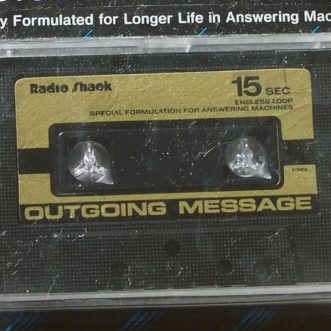
I rang my provider.  There was no wait for the call to be answered – because it was a recorded message:

“We can tell your account from the number you’re calling on.  We already know there is a problem with your line.  We’re working to fix it as soon as possible.”

For once, I was glad to hear a recorded message.  Something constructive, that told me exactly what I needed to know and allowed me to get on with something else.

By doing that for me, and probably countless other customers, this message also enabled the provider to concentrate resources on fixing the problem instead of holding angry and frustrated users at bay with the “All of our operators are currently busy…”, or “We are currently experiencing high call volumes…” or “Your call is important to us…”. 

Recorded messages that signal “We don’t care about you.  We can’t be bothered to see things from your perspective.  We probably don’t have to because you have no choice.”

Until someone gives us that choice.  And we tell the others.

Escalation

Escalation

If you don’t carry a big stick, you can’t be tempted to use it.

Which makes turning up with no stick, the best and most believable demonstration of peaceful intent.

On both sides.

Purposes

Purposes

What’s your business for?

Is it to give you a job?  Is it to make you money?  Or is it to make money for someone else?  Or for a cause?

Is it to make you happy?  Is it a means for you to express yourself?  Is it a means for you to do what you really enjoy outside of work?

Is it to give other people a job?  Is it a means for them to express themselves?  Is it a way for them to grow and transform? Is it a way for them to make money, or do what they really enjoy outside work?

Is it to make your clients or customers happy?  Is it a means for them to express themselves?  A way for them to grow and transform?

Is it your way to make your me-shaped dent in the universe?  Or your way to help everyone involved make a we-shaped dent in the universe?

The answer is rarely simple.  And it probably changes over time.

Depending on your answers, it may or may not matter that the business will end when you do.

If it does matter, what are you going to do about it?