Discipline makes Daring possible.

Appropriate Technologies

Appropriate Technologies

The internet is a wonderful technology.   For instance, I’ve just bought an antique dining table with a few clicks and couple of phone calls.   Not so long ago, it would have been impossible to find it, never mind buy it so easily.

The telephone is still great technology.   In combination with the internet, it can be wonderful.  Yesterday I booked an X-ray with just one phone call.  A human being answered and booked me in.   I updated my online diary as we spoke.  Job done for both of us.

Yesterday, I also tried to book a blood test.   Same NHS trust, different department.   This time I got an automated answer offering the option of a long wait in a queue or to be sent an online form.   I chose the online form.  A link was sent to my phone.   I followed it and completed the form.   So far so good, if a little clunky.

But as soon as I’d submitted it, the form was gone.  No email, no text, not even an acknowledgement of receipt.  It’s gone into a black hole.   I don’t know when it might be reasonable to try again.  I have no record that I filled it in at all.

In other words, as far as I’m concerned, it didn’t work.

Adding the internet doesn’t automatically make for wonderful.   What’s really needed is appropriate technology.  Whatever makes the job easier for everyone.

Choosing it takes empathy.


Keeping it simple

Keeping it simple

I needed to consult my GP, and I wasn’t looking forward to spending hours on the phone to get an appointment. Imagine how pleased I was that in response to

Repose

Repose

I really liked this piece, shared as part of a brilliant masterclass on doing nothing by Laurence McCahill at this morning’s Like Hearted Leaders.

So as it’s Friday, and nearly the week-end, I thought I’d share it with you.

https://ideas.ted.com/the-7-types-of-rest-that-every-person-needs/

Or, if you prefer, 7 ways to avoid the criminal waste that is Muri.

Re-pose.

The wrong day

The wrong day

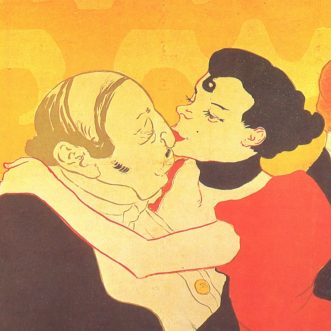
I shared a post on LinkedIn this week about World Kiss Day.

It turns out I got the day wrong.  Apparently it’s July the 6th.

Hey ho.

I still think this film clip is worth sharing, and watching, from one of my favourite ever films:

No longer welcome

No longer welcome

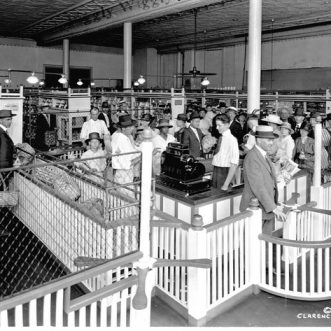
When supermarkets first opened (the first as early as 1916), customers were delighted.

Suddenly, they were in control.  No more queueing at the cheese counter, the deli counter, the fish counter or the meat counter.  No more being at the mercy of the person behind the counter for the cut you received.   No more waiting around to be served.  You could serve yourself with whatever took your fancy, and simply pay for it all at the end.  How convenient!


Over time, this style of shopping spread to other kinds of shops, until browsing, shopping around, even window shopping became ‘the new leisure’.  Supermarkets expanded their ranges to capture as much as possible, even including cafes, so you could spend all day if you wanted – literally, for a short while, as 24-hour shopping became allowed.

No more.

In-person shopping is dying – and not just because of Covid-19.  Long before the pandemic hit, supermarkets had decided that shoppers should stay at home, order online and take what they were given.

Back to the bad old days, only this time without the personal interaction.

It seems that supermarkets don’t want customers any more.   Only their custom.

I don’t think you can really have one without the other.

Disappearing

Disappearing

There are two ptarmigans in the picture.  Did you spot them?

There’s more than one way to disappear.

The obvious way is to take yourself out of the picture.   The less obvious solution is to blend in.

Not by matching yourself to the background, but by making yourself indistinguishable from the others around you.

What if, like Spartacus, you could enable and inspire everyone else in your team to behave as if they were you, the original?   You would no longer stand out.   In fact you’d no longer even have to be there.

It starts by thinking differently about what your business is.

Issue 2 of The Disappearing Boss is out today.

Blind man’s buff

Blind man’s buff

Working away from the office has been uncomfortable for many people.  Not least leaders.

We’re so used to the panopticon of open plan, together with the richness of non-verbal communication that enables ‘management by walking about’ – the ability to dip in and help where it’s needed with feedback and encouragement.

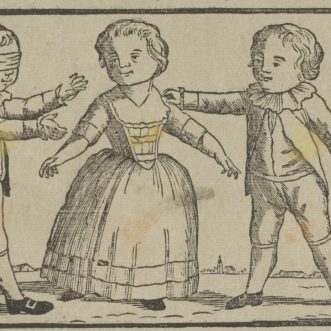
Remote working has made leading feel like a game of blind man’s buff.

It feels like we should become more like old-fashioned managers – telling people what to do then trying to assess where they really are through regular progress reports or software.   None of these things tell you what you really want to know – whether people are struggling, or have misunderstood what’s required, or are simply missing something – all the things you used to be able spot really quickly when everyone was together in the office.

It’s an interesting problem, that existed long before before lockdown and work from home.  What do you do when people struggle but don’t ask for help?

For some the answer is more surveillance, and more checklists.  For others it’s mandating a return to the office.   But I wonder if framing the problem differently might work better?

What if we looked at our people as students, rather than workers?  What if instead of asking ‘How do I know they are where they should be?’ we asked ourselves ‘How do I know they are learning?’.

The answer to that question would I’m sure lead to a different way of organising how teams are supported.

And from my experience we could do worse than look at how Akimbo does it.

Freedom Rules

Freedom Rules

“Freedom … is the tension of the free play of human creativity against the rules it is constantly generating”  ‘The Utopia of Rules’, David Graeber 2015

Without rules, we get nothing done.

With only rules, we get nothing done.

The interesting challenge is to create a set of rules that enable the creativity that will in turn makes new rules necessary, while at the same time ensuring that each cycle of new rules never becomes stifling.

It seems to me that’s only possible when everyone shares in the work of creating the rules and breaking them.

Teams

Teams

The team you’ve built for your business will have things in common.   There are reasons you decided to hire them and they decided to work with you.   There are reasons that you’ve stayed together.

Some of those reasons will be around shared values, behaviours and principles.  Some of them will be to do with an alignment of vision and purpose.

Some will be entirely to do with their own personal preferences, aims and desires – perhaps proximity to home, an easier commute,  a less demanding job or even friendships formed.

Are those reasons enough for you to entrust them with the client experience?  I hope so.

But it might be better to be explicit about the values, behaviours, principles, vision and purpose.

That way you’ll both know for sure.  And be able to act accordingly.

Not like. The same

Not like. The same

Sometimes, a process that looks like it could be a pattern isn’t.

If the same thing happens in the same way every time, and it’s performed by the same Role using the same Props, then what you have isn’t processes that are alike.   You have the same process, repeated exactly as part of several larger processes.

As an example, take dealing with a visitor to your office.   Often this is the responsibility of a particular Role.  They greet the visitor, take their coat, show them to a waiting area and offer them a drink.  It makes no difference why the visitor is here, what happens afterwards or who deals with them next, the process is exactly the same whether the visitor is a client, a prospective employee or a tax inspector.

In this case, it’s better to define the process once, and include it in the Customer Experience Score wherever it occurs.  You could call it ‘Receive Guest’, define it the first time you identify it (for example as part of your ‘Enroll Prospect’ process) then refer to it elsewhere (for example, in Handle Tax Inspection, Recruit Team Member, Hold Social Event).

Identical twins, triplets, even quintuplets are a wonderful thing in humans.  We don’t mind that they make more work because they’ll each grow to be unique human beings.

You don’t want them in your Customer Experience Score though.  The extra work they create there is pointless.