March 14, 2019
Co-operation
Last week I attended a workshop on co-operatives. I learned two things that surprised me. The first was that being … Read More “Co-operation”
Last week I attended a workshop on co-operatives. I learned two things that surprised me. The first was that being … Read More “Co-operation”
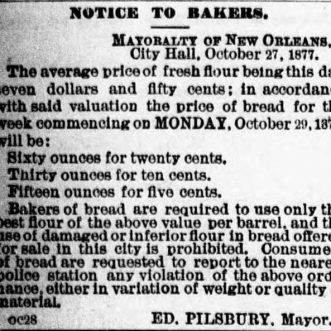
The need to satisfy a regulator, or meet legally binding deadlines creates a difficult balancing act for professional service firms.
The regulator’s process is easy to see, so it is much easier to build a business around satisfying their requirements. Effectively the firm becomes not much more than an interface, taking information from a widely disparate set of clients and reshaping it to meet a required format.
One danger is that if every firm looks like this, prospects are going to buy on price.
Another is that once compliance can be automated or outsourced, the firm’s purpose effectively disappears.
Now might be a good time to start re-framing.
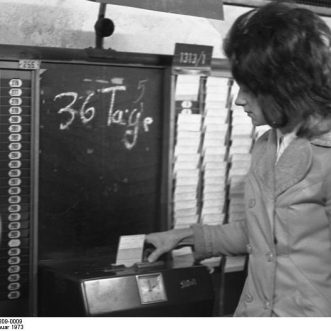
In my teens, I had a Saturday job in what was then a well-known department store. I worked behind the scenes in the kitchen, preparing cold sweets for the restaurant.
Breaks were the minimum the firm could get away with, and a bell rang for the start and the end of each break, to make sure you knew when it was time to go back to work. Lunch hour was 30 minutes.
One Christmas Eve, we cleaned the kitchen five times over, because in spite of the fact that nobody was shopping (everyone else in the High St. having gone home early), we were paid our £3.80 to work till 5:30 , so that’s what we would do – even if we had to make work up to do it.
In short, the firm did all they could to squeeze as much work out of us as possible. My co-worker, who made the sandwiches, broke down one Saturday, having been told for weeks that she wasn’t working hard enough, and was promptly replaced by two people.
The irony was, that the more they squeezed, the less energy we put in. All the initial enthusiasm and desire to please was wrung out of us within a few weeks. We worked to rule, doing as little as possible, and certainly not thinking about the customers.
In my next job in a small independent bakery and coffee shop, I learned a different way of working.
A bit of flexibility on my lunch hour was repaid with an early stop when I had a party to go to. I went the extra mile when it was needed, and it was noticed. I helped my colleagues out and they helped me.
I enjoyed that job. I’d start early because I looked forward to the day. I got on with my Saturday colleagues. I got to know customers. I was proud of my coffee shop. And I got paid more.
It doesn’t take much to create engagement – treat me like a responsible adult, and I’ll behave like one.
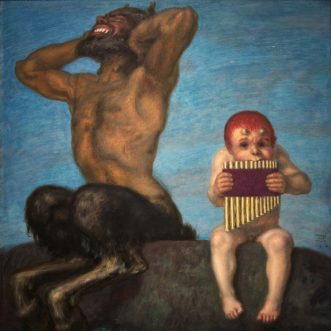
It takes effort to be consistent, to make sure that what we do is congruent with what we say; to treat everyone we deal with in the same way; to stick to our principles when nobody is looking, when maybe nobody even cares.
It’s worth it because that’s how we stay in harmony with ourselves, and beause its also how we attract the like minds who will help us make more of an impact.
People like us do things like this.
Thank you.
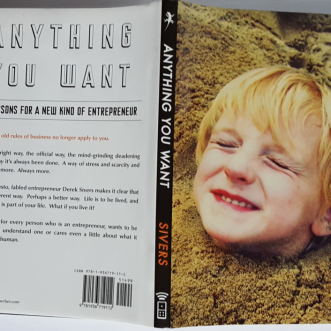
As Derek Sivers pointed out – building a business is a creative act, and like imagining a building, or hearing a symphony in your head, or visualising a ballet, you can make it behave however you want it to.
You make the rules.
You don’t have to do what everyone else does. You don’t have to do what most people expect. You don’t have to do the same-old, same-old. You don’t even have to get big.
You can build a business that creates value in a way that matters to you an the people you serve. That gives people the physical, mental and spiritual nourishment they need; that husbands resources; that grows everyone it touches; that empowers everyone to lead. That enables everyone to be fully human.
For millennia people have used new and innovative technologies to do this. And sometimes, like New Dawn Traders they re-discover ancient ways of doing it too.
What does your perfect world look like?
You can build it if you dare.
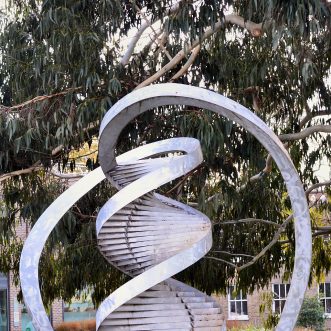
The power of DNA is that it allows for more than simply copying.
If it’s DNA is embedded deeply enough, a business can embody the values and vision of its founders, yet still evolve to meet the demands and opportunities of its current environment.
And that means it can become a legacy that delivers value for generations.
“If ten of thine ten times refigured thee:
Then what could death do if thou shouldst depart,
Leaving thee living in posterity? “
(Shakespeare, Sonnet V1)
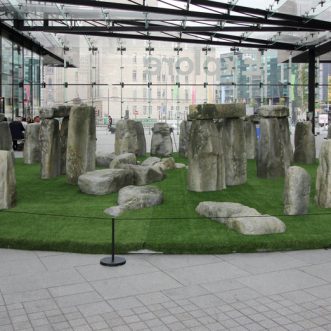
As Ray Kroc understood, recreating the look is not enough to make your new outlet convincing, no matter how faithfully you do it.
What matters is what happens inside.
Replicate that and you’ve got an asset you can scale.
It’s difficult, especially where ‘clockwork’ isn’t the feel you’re after, but it is possible.
The trick is to think up a level or two from the obvious.
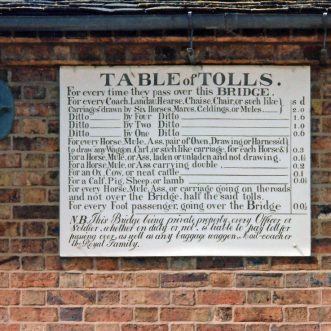
Some things we used to do for free, without the need for a middle-person:
Talk to each other on the way home from school
Eat dinner together
Drink water
Pay for stuff
Enjoy a view of the Thames from the Festival Hall
Hail a cab
Go on a date
In some cases a middle-person can add tremendous value – mediating a dispute instead of going to court for example.
All too often though, that new thing we’re all dying to try is just a mechanism for taking a cut of the value others have created.
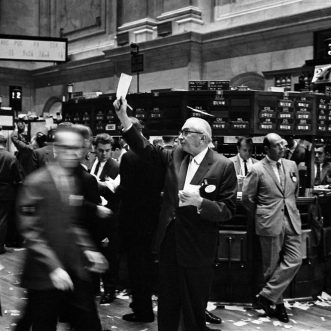
Getting rid of the middle-man. It sounds great.
Except it doesn’t happen that way. What actually happens is that dozens, hundreds or even thousands of middle-people are replaced by a single ‘middle-platform’.
In other words, with what is hoped will become a monopoly. The only place to buy.
And if you achieve monopoly or near-monopoly, you will also eventually achieve monopsony or near-monopsony, the only place to sell to.
That’s every investor’s dream. I’m not sure it should be the consumer’s.
The most benevolent dictator is still a dictator.
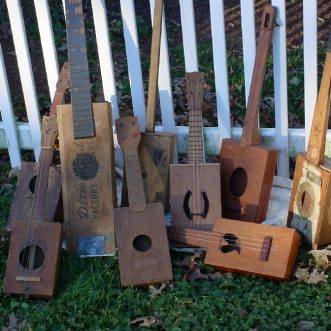
How far can you take the idea of a guitar, and still end up with something recognisable as a guitar? … Read More “Rules”