Discipline makes Daring possible.

Triage

Triage

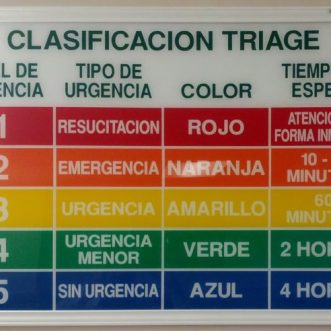
One reason why we can feel overwhelmed at work, is that we don’t use triage enough.

Simple triage for unexpected client phone calls and emails:

  1. If you can answer their question or address their issue in 5 minutes, deal with it now, preferably by phone.
  2. If it is urgent deal with it now.   Have a clear, tangible definition of what ‘urgent’ means.  Don’t rely on the client’s perception.
  3. If it’s not urgent and you genuinely have time to deal with it now (i.e. doing so won’t delay any other client’s work or eat into your rest time), deal with it now, preferably by phone.
  4. Otherwise, schedule time to deal with it and schedule a call with them to give your response.   It helps to keep an hour or so set aside every day to schedule these into.  That way you can keep on top of the work generated, and be clear with your client when they can expect an answer.

Every customer has top priority.  That needs managing.

Self-service

Self-service

My friend Mary Jane Copps (aka The Phone Lady) sent out a brilliant tip for delighting prospects today.    It got me thinking again about self-service.

When supermarkets first arrived, housewives were delighted.  No more queueing at counters to be served, you could just pick and choose whatever you wanted from the shelves of one shop and check out.   They could work to their own timetable.  They were empowered.

The same is true of many online services.   I can renew my passport, book train journeys, order print, buy tyres, whenever I want to.  I’m no longer tied to someone else’s schedule – in some cases not even for physical delivery.  I’m empowered in ways that I never dreamt of as a child.

There is however, one place where self-service really doesn’t work well, and that’s when things go wrong – when I make a mistake, or something doesn’t arrive on time, or I’m not sure what to type.

Cycling through frequently asked questions that aren’t my question, or being directed to a forum that shows hundreds of others with the same (un-addressed) problem is disempowering, and disenchanting.    I want to follow my own schedule – I need help now.    Forcing me to spend the first 60 seconds of a call to the helpline listening to  instructions to visit the website is disrespectful.

Of course self-service reduces costs for the provider.   If you make it obvious that’s the only reason for it, you’ll disgust your customer.

On the other hand, if you make sure it enables them to follow their own schedule in every scenario, you’ll delight them.

Generosity

Generosity

On Tuesday, I found out from my dentist that it’s likely to be a fortnight before I get even a temporary fix for my missing front tooth.  “I’ll try and speed things up though, so ring tomorrow and see what date I’ve been given by the lab.”

I rang.   There was no news yet.  I was expecting to be told to call back, but instead the receptionist said: “I’ll check the lab again on Monday, they should have a date then.  Then I’ll call you to get you booked in as soon as you can.”

It doesn’t take much to engender loyalty in your clients.  Make a promise, then generously exceed it.

Generosity isn’t expensive, mostly, it’s just remembering to be human.

Signing Up

Signing Up

About 20 years ago, when I bought my first mobile phone, it was compulsory to take out an insurance policy alongside.

I signed up of course.

15 years later, I was digging around, looking at direct debits going out of my bank account.  It turned out I was still paying a monthly fee to insure a phone I’d long since ceased to own.

Unlike normal insurance, I got no reminders, no renewal letters, the direct debit never referenced what it was for.   In fact when I checked with the bank, the company taking payment had ceased to trade (which did make me wonder where the money was going).

Being in it for the long run is a great mindset to have when signing up a client, but only when the value goes both ways.

The people you serve want to be enrolled, not press-ganged.

Show up and listen

Show up and listen

It’s tempting to think that showing up where your prospects are is all about you.  That it’s about promotion, raising awareness, getting their attention.

Showing up is really about showing that you care, and one of the best ways to do that is to use the time you spend with the people you wish to serve to listen to what’s really important to them.   Then create products and services that help.

The surest way to gain the kind of attention that matters is to give it first.

Community

Community

I spent Sunday with some of my family.   My sister and I both read Seth Godin’s daily blog and were trying to explain why to her daughter.

At one point we both said, almost in unison “Some days its just like he’s got inside your head.” 

I’m sure many of Seth’s readers say this every single day.

You can only do this if you know a) who it is you are trying to talk to; b) what’s likely to be going in inside their heads and c) where they are likely to go for inspiration, and the simple pleasure of being with ‘people like us’.

And the best way to know where the people you want to serve are at any one time, is to create a space and a community that does all these things just for them.

Not necessarily in that order

Not necessarily in that order

Where choosing from many options is unavoidable, you can help people choose (and keep them engaged in the process of choosing) with hierarchy.

Start with a few big options to select from, then gradually increase the granularity of choice until your client is happy to deal with 57 varieties.

That way you’ve educated them in how selection works, and you’ve made them interested in what comes next.

That makes them much more likely to stick with it to the end.

Make it vivid

Make it vivid

Another way to help the people you serve choose what they need from you, is to make the options concrete.

Instead of simply listing options, show your potential client what a particular combination actually looks like as a ‘finished dish’.

Then go further and put together combinations around what your target client needs, not just what you have to sell.

Narrow down

Narrow down

One way to help the people you serve to choose what they need from you is to categorise your offerings.

We’re used to this of course, in libraries, on menus, on well-organised magazine counters, on campuses.

The category gives us a very quick way in, a guide to where to start our more detailed search.

A caveat though, to be truly helpful, the categories need to be meaningful to your client.

Less is more

Less is more

Have you ever stood in front of sweet counter full of chocolate bars?   Or a wall-full of 500 pizza choices.   And walked away empty-handed after a few min