
Category: Customer Experience OurScore

July 20, 2023
Making payment part of the experience
It’s a cliché that small businesses like me don’t like to ask for payment. That we somehow feel guilty about asking to be paid for the value we deliver – perhaps because we don’t altogether believe in that value ourselves.
The upshot is that either we invoice late, even erratically, or we seek to make the payment aspect invisible to the client, by using a service like GoCardless for example.
But what if there was a better way?
What if you could make payment truly part of the customer experience? In the way it often is for retail.
What if you could use every invoice to remind your client of how far they’ve come on the journey they enrolled on with you? Of how much they’ve achieved as a result of working with you? Of all the ideas and actions you’ve generated together?
To enable them to relive all the reasons they chose you, and the benefits they’ve gained as a result?
That might be a far from unpleasant experience for the client.
Of course to keep invoicing, you’d have to keep delivering value.
But that’s not a bad discipline to put yourself under.
After all, Discipline makes Daring possible.
July 17, 2023
Harmony
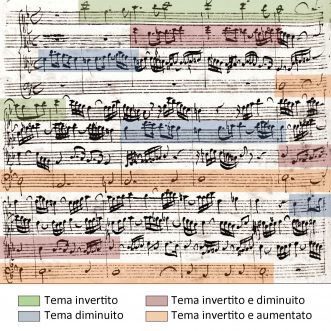
Harmony isn’t only everyone singing or playing the same tune at the same time, powerful as that kind of harmony is.
Harmony can also be an active fitting together of differences so that together they sound more than the sum of the parts.
The first kind of harmony is easy to take part in. Just sing or play along wth everyone else.
The second takes more effort, to hear what’s going on around you, keep time and co-ordinate your own music making accordingly. An active fitting together of differences to create a much richer sound experience.
You can teach people to make the first kind of harmony just by getting them to practice.
For the second, you need a score.
Which means you have to become a composer, not an instructor.
Discipline makes Daring possible
HT to Bettany Hughes for prompting this one.

July 14, 2023
There’s something about Muri
In Lean, ‘wasted effort’ is categorised 3 ways:
- ‘Muda’ – effort that does not add value for the customer.
- ‘Mura’ – wasted effort due to variation.
- ‘Muri’ – wasted effort due to overburdening or stressing people, equipment or systems.
Muda is the most talked about form of waste, sub-categorised into 7 further types:
- Transport – excess movement of product.
- Inventory – stocks of goods and raw materials.
- Motion – excess movement of machines or people.
- Waiting.
- Overproduction.
- Over-processing.
- Defects.
Mura is often a result of Muda, and the solution to many of these issues is to standardise processes and relocate resources so they are available ‘just in time’ when and where they are needed.
The problem with this of course, is that whether an activity is Muda depends on where you draw the line around the system. Biomass boilers are eco-efficient, as long as you don’t count the lorries trucking pellets around a country – a clear case of Transport Muda when you look at the bigger system.
What I want to think about today though, is Muri. Wasted effort due to overburdening or stressing the people, equipment or system.
There’s something about Muri that makes it the Cinderella of Lean.
It isn’t glamourous, fixing it doesn’t attract the kind of kudos Muda does. Perhaps it’s just harder to measure.
Whatever the reason it gets left to pick up all the dirty work.
Muri is often caused by too much attention to Muda. Redundancies are stripped out the system, leaving no room for slack. Everything is expected to run at 100% capacity all of the time. People are expected to do more with less, both at work and at home.
The result?
Look around you and what I think you’ll see everywhere a massive case of Muri. People and systems – including our planetary system – stressed and overburdened to breaking point.
As a small business owner, you can’t fix it all. But you can fix it in your business.
What if you let people work a 4-day week? or a 13-day fortnight? Or take a 2 hour lunch break?
What if you put together a flexible plan of working hours for the year that accounted for busy times and quiet times?
What if you set the example yourself by working only your official hours, having your weekend and taking a couple of weeks off every now and then?
You could do all of this, even in a service business, by paying a little attention to Muda and Muri (but not too much):
Start by writing down your Customer Experience Score , so that everyone can play it consistently.
- Automate the parts that are drudgery for humans.
- Leave room for variations that will delight the customer.
- Then give people the responsibility and autonomy to get on with it, at a sensible level of capacity.
You’ll all work less hard for greater rewards.
Discipline makes Daring possible.

July 13, 2023
Hiding in plain sight
Orange Oakleaf Butterflies confuse their predators on purpose, hiding in plain sight.
In the dry season, they pretend to be a dried out dead leaf. In the rainy season they pretend to be a damp dead leaf. The birds, ants, spiders and wasps that eat them, already have a mental model of what a dead leaf is. That model doesn’t include being edible. So they ignore this leaf and carry on looking for their next meal.
We humans are the apex predator par-excellence. We don’t have to pretend to be anything other than we are to survive.
Still, we confuse other people all the time. Sometimes on purpose, most often by accident. Because we constantly assume that our mental models are the same as everyone else’s. We think everyone knows what we know, believes what we believe and wants what we want.
Take a small business:
For a shareholder or investor it’s a machine for generating dividends on their capital.
For founders it’s a way to make their unique dent in the universe.
For their accountant it’s a set of connected accounts that need to balance.
For their operations manager it’s a set of loosely related functions, one of which they probably consider to be more important than the others.
For some employees it’s simply a means to enjoy life outside work. For others it’s means to survive. For others still, play.
For customers it’s a solution to a problem, a status enhancer, a community they value or a purpose they believe in.
All these different mental models can pull a business in different directions, leading to confusion.
And as we know, a confused mind says ‘no’.
The answer is to get clear about what your business is here to do as soon as you can, and to present that as an explicit model everywhere.
Choose a model that is simple, easy to communicate and effective in delivering what everyone wants.
Design your business around that model, so that the way it works clearly reflects the concept behind it.
Share that model in your marketing materials, shareholder reports, filed accounts, operations manual, help guides and status reports, so that it becomes utterly familiar, whatever your role or relationship to the business.
That way, nobody’s confused.
Some may not like it, but they will leave you alone. The ones that do like it will be more than happy to help you bring it to life.
If you’re a small business employer, looking for a model to adopt, you’ll be pleased to know that you already have one, hiding in plain sight.
And I can help you reveal it.
Discipline makes Daring possible.

June 30, 2023
Your help please
When I talk about a Customer Experience Score in these posts, what immediately comes into your mind?
- a number
- a piece of music
- something else : ___________________________
Let me know.
Thank you!

June 27, 2023
Regenerative Uncertainty – creating space for innovation
I thoroughly recommend following Vaughn Tan on LinkedIn, or subscribing to his newsletter, on innovation and uncertainty. He works with much larger organisations than I do of course but there is always food for thought for me on how to apply his thinking to my framework.
Today’s tasty dish is generative uncertainty, or how to make uncertainty work for you instead of against you.
A problem for any size of business is balancing consistency with opportunity.
Your clients want to broadly know what’s going to happen over the next days, weeks and months in and around your business. And so do you.
At the same time, you want to be able to take advantage of any unforeseen opportunities that might crop up and avoid or at least weather any unexpected shocks.
In other words, you want your business to stay the same, even if you want it to be bigger, and you also want it to be able to change at short notice.
Traditional management structures – hierarchy, silos, bureaucratic workflows – help to keep a business the same, by centralising control and slowing down the business’s reactions to events. Which makes it hard to change.
Complete self-management at the front end enables a business to react rapidly, because control is distributed, but makes it much harder to stay consistent, can lead to wastefulness of shared resources, and at worst leads to entropy.
Vaughn’s solution is to design spaces where innovation is directed, (Clear Guardrails) but within that direction, is free to come up with whatever it likes (Encourage Emergence), and where the ‘parent’ organisation is prepared to put time and money into emergent ideas that look promising without knowing beforehand what that support might look like (Be Ready to Provide Flexible Support).
I think small businesses can provide this kind of space too. Without having to introduce the usual corporate structures.
Here’s how I do it:
Clear Guardrails:
Your Promise of Value, Unbreakable Promises and Customer Experience Score are yuor Clear Guardrails:
- Your Promise states what you are here to do and for whom.
- Your Unbreakable Promises set the boundaries of what you are willing to compromise.
- The Customer Experience Score provides a floor for how you do it at the moment – the least that should happen.
Encourage Emergence:
- Every individual playing your Customer Experience Score is free to use their knowledge, experience and judgement to interpret the Score in the best way possible for the client in front of them. That means every actual Customer Experience can be quite different, yet consistent. When someone encounters a new situation, they can deal with it. The Score encourages emergence.
Be Ready to Provide Flexible Support:
- The value of encouraging emergence comes from recognising when something is an opportunity rather than an exception. It’s unfair to expect someone to do that on the fly, so your Customer Experience Score includes an ‘Improve Process’ Activity, that runs alongside making and keeping Promises.
- Improve Process is about regularly gathering and interpreting feedback, both as individuals running your own performances of the Score, and together as a team, to identify opportunites for both playing the existing Score better and creating new Scores to meet new challenges or opportunities. People can give each other the flexible support they need to take advantage of useful changes.
Discipline makes Daring possible
What do you think?

June 21, 2023
A tool for thinking
Writing your Customer Experience Score makes you think:
About how you really want your business to work. How it can best make and keep its Promise to clients.
About why you started it in the first place. What it is here to do. How it will help you leave your mark.
As you write, you use your Score to communicate your thinking to your team.
Also to help them think:
About how they really want to work. How they can best make and keep their Promise to themselves.
Why they joined your business in the first place, what it is here to do. How it will help them leave their mark.
How they can help you make your business work even better at making and keeping its Promise to clients.
Before long, it isn’t your business.
It’s our business, designed by you, refined by us.
You’re one Boss among many.
So when it’s time for you to leave.
It will be safe in our hands.
Discipline makes Daring possible.
June 8, 2023
Options and Procedures
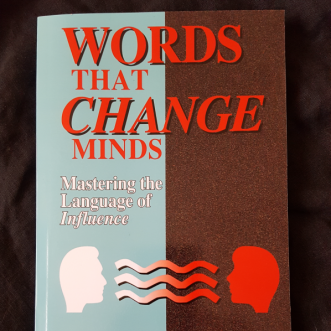
I must apologise to regular readers. I’m about to mention, yet again, one of my favourite business books.
The brilliant “Words That Change Minds”, by Shelle Rose Charvet is both a guide to the different ‘working styles’ people bring to a given context (in this case work), and a guide for using what you learn about these to communicate appropriately.
Some of the dozen dimensions she explores are familiar, such as whether people are motivated ‘towards’ a goal, or ‘away from’ a situation, but others are a bit more unusual, such as how much people are motivated by change, and what kind of change they enjoy; or how people get convinced.
Another interesting dimension is how motivated people are by having a procedure to follow (Procedures) vs making up their own way of doing things (Options).
At the extremes, both styles are difficult – an extreme ‘Procedures’ person needs something they can follow like white lines on a road, and will be completely thrown by missing steps or exceptions. An extreme ‘Options’ person will get nothing achieved, because they are forever reinventing the wheel before they use it.
As you might expect, entrepreneurs are, almost by definition, towards the ‘Options’ end of the scale. After all they’ve identified a better way of doing things, and experimented with that untill they’ve turned it into a successful business.
What they may not realise is that the people they employ aren’t necessarily the same. Which can lead to frustrations on both sides:
“Why don’t you just do it?”, “Why am I the only one that thinks of these things?”, “Why am I re-doing everyone else’s job?”
“Because you’ve never told me what it is you trying to do.”, “Because you never told me how it should be done.”, “Whatever I do, you’ll change it, so why should I bother?”.
Fortunately, most of us fall somewhere in the middle of these extremes, so it’s possible to accommodate everyone’s individual working style without having to delve too far into what they are (although I do recommend using this book to create a ‘brief’ for a role, and recruiting for the critical dimensions).
Here’s how you do that:
- Create a high-level map of how your business makes and keeps its Promise to the people it serves. A Customer Experience Score, that tells people what has to happen when, but leaves the details of how to do it to them.
- Document important detailed techniques separately, in a kind of ‘Enquire Within upon Everything’, so it’s available anyone who needs it, either as a day-to-day guide, or an occasional memory-refresher.
- Where it’s really useful, signpost relevant techniques from the Score.
For example:


Images copyright DogKnows Ltd.
With a score like this, people know the outcome they are aiming for, and can be given full responsibility and autonomy to achieve it (or over-achieve it), in their own unique style. Or to simply follow the process, if that’s how they roll.
Discipline makes work more enjoyable for everyone. Including you.
Which is what makes Daring possible.

June 1, 2023
How to tame the tiger
Growing your small business from you, to a few and then a few more people can feel like riding a tiger. Unpredictable, challenging, dangerous even.
New customers, new employees, new ideas, new ways of doing things that don’t match the customer experience you carefully crafted on your own. Trying to match increased costs with an increase in income. It can feel like everything just gets wilder.
The answer isn’t to cage the tiger, or to beat her into submission.
Instead, make sure she shares the values you value, tell her what you want her to do to make and keep your promises, give her a safe enclosure to roam in, and let her get on with it.
Get off her back.
Because she’s not actually a tiger.
She’s a team of people like you, who want to do the best they can, like you, in a space that gives them agency, mastery, autonomy, purpose and a feeling of community, like you.
Discipline makes Daring possible.
One of the first things a professional de-clutterer will do is get rid of ‘duplicates’.
This is a strictly utilitarian view, that says one cake-slice is much like another, and ignores all the possible reasons why you might end up with 10 of them.
You might have received one as a gift, or inherited one from a parent or friend. You might have had to rush out and buy new because you couldn’t put your hand on one just when you needed it. You might have just liked the look of it.
Or you might simply be satisfying that very human urge for repetition with variation that encourages us to build collections.
All that makes choosing ‘the one’ that’s going to stay, emotional and just a bit stressful, especially if you’re made to feel judged by your inability to maintain a minimal lifestyle.
Which might be one reason I dislike de-cluttering TV programmes so much.
As you grow your small business, working out what your clients really want, and finding new ways to delight them, you acquire business processes like I acquire cake-slices.
You inherit them from your previous workplace, or maybe even the previous owner. A new employee gifts you a shiny new one. You cobble a new one together in a rush, because you can’t quite put your hand on the one you did earlier when you need it.
Or, as happens when we’re in the thick of it, it’s simply easier to focus on the differences between cases rather than the similarities.
Luckily, business processes aren’t like cake slices. We don’t have to choose.
We can combine the best features of all of them to create one beautiful and super-useful process, with all the emotion built in, and still with room enough to deal with a new kind of cake.
That means that when I work with clients, I can start by assuming we’re going to keep everything, and work on capturing and streamlining the most salient version – the one that happens most, or is the most difficult to hand over, or the most complicated.
Usually, by the time we’ve worked through that, the owner has realised that they don’t need all the others. This new process covers all the options.
We check to make sure of course. And if, on further inspection, it turns out we do need another version, we put that in place, reusing as much of the newly designed process as we can.
No stress. No agonising over what to keep and what to throw away. No being made to feel like you are in the wrong.
Just the relief of knowing that all that clutter is now out of your head, and out of the business too. Making it a calmer, clearer place to work for everyone, with added room for innovation.
Discipline makes Daring possible.
I’m Kirsten Gibbs, Boss Disappearer, and I can help you write your Customer Experience Score , to make your business easier to run, easier to grow and easier to build into a legacy you’ll be proud of.
Ask me how.