Discipline makes Daring possible.

From dictatorship to democracy in a single generation

From dictatorship to democracy in a single generation

In business, our view of succession is not unlike that of royals.    An heir apparent is selected, carefully trained, and groomed to take the helm when we leave.

This approach is fraught with difficulties.

First, as regnant monarch, we put off the selection, training and all that, because we’d rather not face our own mortality, and because to do all that takes time out from running the business.

Next, the heir we select may not wish to be chosen – even if they are family.   They may not wish to shoulder the risk of destroying their inheritance.   They may have other ideas on what to do with their life.

The people we’ve overlooked may resent that, and start to at least detach themselves from the business, or undermine it, or worse decide to fight over it.

Finally, there may not be an obvious heir.

There is a more rational, modern approach.

  • Build your business around a clearly defined customer experience (an OurScore ), that gives people the confidence to know what they are doing without constraining their personality and individuality.
  • Give people clear roles to play.  Put all the resources they need to play them well at their fingertips.  Including the feedback that will enable them to improve both the customer experience and their own ability to deliver it.
  • Train them to perform more than one role,  so they can have variety of work, you have redundancy in the system and the customer learns that they can happily deal with anyone in the business.

Built this way, a business more or less runs itself.

It gives you far more options for succession, because anyone who works in it can be your heir, if they want.

Or everyone.

A transition from dictatorship to democracy in a single generation.

That would be a legacy to be really proud of.

Discipline makes Daring possible.

Ask me how.

A reminder

A reminder

Why should I write down my Customer Experience Score, when I have good people working for me, who can work things out for themselves?

Because making good people reinvent your wheel over and over again is a shocking waste of humanity.

Humanity that could be set free to invent even better wheels, and even more exciting uses for them.


Discipline makes Daring possible

Ask me how.

Managing without managers

Managing without managers

I found this excellent article by Michele Zanini yesterday: ‘Can we manage without managers?’.

It’s well worth a read, but here are the phrases that jumped out for me:

vanguard organisations … don’t get rid of management as a set of activities (e.g., planning, allocating, reviewing)–but they syndicate it to the broader organization.

By giving people the ability to gain influence (and compensation) based on accomplishment as opposed to advancement,  an organization ends up with more, not fewer leaders.

Because actually, we want leadership without managers.

One of the objections often raised to a no-manager organisation is “If you remove layers, you’ll end up ovewhelming people at the top“.  Overwhelm at the top is a common experience for growing micros.

What this article shows is that there are other, far better ways of dealing with that than adding managers.    Writing down the music in your head, so that others can play it is one of them.

Why not start as you mean to grow on and make everyone a leader?

Taking ownership

Taking ownership

One day, the child in this photograph might expect to inherit her parents’ motorbike.

She couldn’t expect to use it until she’d learned to drive it safely, keep it in good order and register it with the appropriate authorities.  If that seems like too much trouble, she might very well sell it, run it into the ground, or simply leave it to rust.

Handing over your business to your employees (or your children for that matter) isn’t enough to ensure that it will thrive afterwards.  Transferring ownership transfers power, but not the ability to use that power responsibly.

Of course your people might have that ability already, but if you’re the boss of a 5 or 10 person business, it’s unlikely that you or they know that conclusively.

After the sale is almost too late to find that out.  You’re not the boss any more.

So, if you’re planning to go employee-owned, or to pass your business on to your children, make sure they know how to run it before they take ownership.

  • Spell out your Promise of Value, so everyone know exactly who the business serves and what it really does for them.
  • Document your desired customer experience with an OurScore , so everyone can see the context of the business as a whole.
  • Let people learn and play multiple parts of that score, so they feel how it all fits together.
  • Give them responsibility for living up to the Promise in all the parts they play, and the autonomy to interpret it, to enhance the audience experience.
  • Automate admin and the collection of feedback from each performance.
  • Get everyone used to regular practice at using that feedback to improve both the OurScore and their own playing skills.

This takes effort, but not as much as you might think.  Like most things, the sooner you start, the better.  But you could do it while the legalities of transfer are being worked out, or even include it as part of the transfer process.

The upside is you’ll have something even more worth handing over, and for all the new bosses, the ability to truly cherish it as your legacy.

Discipline makes Daring possible.

Ask me how.

Why Muri matters

Why Muri matters

Absorb.  Adapt.  Transform.

If you’ve ever experienced some kind of shock to your business – like your server being hit by lightning, or a pandemic lockdown – you’ll recognise these three phases of response, even if you went through them unconsciously.

1: Absorb: It’s all hands on deck – you double down, work harder, get people to do overtime, call in retired people, pull in help from fellow businesses or family.  Whatever it takes to withstand the first effects of the shock.

2: Adapt: Things are different now.  The old ways of doing, the old roles, locations and certainties don’t apply any more.  Work-arounds are what’s needed, and you and your team find them.

3: Transform: Now the worst is over, you all take a breath, and think how best to change how your business works, so when a similar shock happens in the future, you’ll be ready for it.  Some of your work-arounds will become part of the system, others won’t.  It’s worth remembering that not all shocks are inherently undesirable – a rush of new customers from referrals is just as much of a shock to the system as a lightning strike.  So it pays to think up some other possible shock scenarios and re-design and re-equip your system to cope with those too.  Or at least plan how you will be able to absorb it enough to give you time to adapt and transform.

Which brings me back to the point.

Muri matters, because if people, machines and systems are already operating at 100% or over when a shock hits, it’s extremely hard to respond effectively.  And only people can make systems work at over 100%.  With no room to absorb, how can you possibly move on to adapt or learn to thrive in the new world by transforming?  Muri destroys resilience.

My way to prepare for this is to share everything about how your business works with everyone in it.

  • Document your customer experience with an OurScore , so everyone can see the context. 
  • Have individuals play multiple roles and deliver multiple aspects of your business promise.
  • Give them the autonomy to develop solutions to exceptions as they occur.
  • Make sure everyone shares their findings.

In other words, introduce the ultimate level of redundancy – make everyone a Boss.

Discipline makes Daring possible.

Ask me how.

Never be afraid to write down the OurScore for your business.

Never be afraid to write down the OurScore for your business.

“There were boisterously spiced empanadas, tamely flavoured empanadas, tightly crimped and crisp empanadas and loosely folded, sloppy empanadas. The standardised recipe couldn’t overrule the uniqueness of each cook, their personality, and experiences, which they inevitably infused into their cooking.”*

This is why you should never be afraid to produce an OurScore for your customer experience.  Like a musical score, it looks prescriptive, but each and every performance of it will be unique.

This is also why you should never automate more than the admin parts of it.  Only humans can humanise an experience.


*from Kevin Vaughn, writing for Vittles Magazine today.

What is this thing we call ‘The Boss’? The Monster’s view.

What is this thing we call ‘The Boss’? The Monster’s view.

I am not a monster.

I’m a gap.

The gap between what you, Founder, have in your mind’s eye, and what you Team, have in yours.

Between you, you fill that gap with a monster. With your assumptions and presumptions, your takings for granted and second-guessings of motivation.

You make everyone owls when they want to be flowers.

You make everyone Hydes when they want to be Jekylls.

You make fog where there should be clarity and purpose.

You make mediocrity where there should be excellence.

You make a straitjacket where there should be a springboard.

You build a pin-factory where there should be an orchestra.

You make noise where there should be be music.

You focus on me when you should be focusing on the people and the world, you serve.

You, Founder, you, Team, between you, you make me a monster.

But you can unmake me.


All you have to do is share with each other.

Founder, share your system for making and keeping promises with the team. Team, share your ideas for doing it better with the Founder.

Everyone, share the work of doing it. Not just the concrete tasks, but the emotional labour, the feelings.  Not just the technicalities, but the customer experience, the bit that wows..

Make everyone a Boss, and watch your floor become a springboard, owned by everyone. With enough give to support different people, enough resistance to help them really take off. Watch that pin-factory morph into an orchestra, delivering customer-delighting performances that have people coming back for more.

That thing you all call ‘The Boss’.

It’s not a monster.

It’s just a gap.

When you close it, ‘the Boss’ will disappear.

And everyone will be free.


Discipline makes Daring possible.

Ask me how.

Moving on

Moving on

If you want maximise your chances of selling your house, you have to de-clutter and tidy it up.  Obviously.  It pays to make sure it’s in good repair too.

But in order to make it as attractive as possible to as wide a range of buyers as possible, you may well have to re-decorate and re-style it too.

To show off its potential.

To take the ‘you-ness’ out of it.

To make it look like you’ve already left.


The advice for selling a business is similar.   De-clutter, tidy-up, make sure it’s profitable, show it has growth potential, take you out of it.  Make it look like you’ve already left.  Go corporate.

But what if it’s you that makes your business amazing?   What if that’s what keeps your clientele coming back?  What if that’s what drives the recurring revenue?

My advice?

By all means take you out of the business, but keep the ‘you-ness’ in.

Go further, embed your ‘you-ness’ into the business so firmly that only like-minded people would want to buy it.  They’d love it so much they’d pay extra for the ‘you-ness’, because for them it’s also ‘me-ness’.

Become a Disappearing Boss.  Build the ‘you-ness’ (actually the ‘we-ness’) into the fabric of the business, into the way it works, so that it can never ‘go corporate’.  Not even as it grows.

Go even further, don’t sell at all.  Let it instead.  To people who love it the way it is and can see how to take that unique potential forward as your legacy and theirs.  Who will want to keep it in good condition, and even replicate its success in other locations.

By then, you’ll have those people in your business already.  They will have helped you build it.


Discipline makes Daring possible

Ask me how.

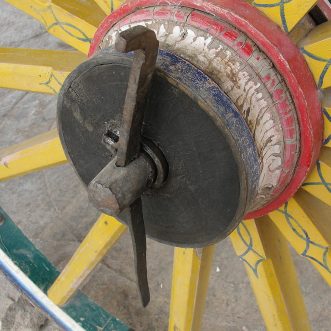
Lynchpin – from the other side

Lynchpin – from the other side

Being a lynchpin in someone else’s business is a good career strategy.

If you are the someone else whose business it is, you might want to think about whether it’s a good business strategy.

A Customer Experience Score isn’t just for capturing your expertise, although that’s where it usually starts.

It can get you up from over that barrel too, by capturing others’ expertise.

Then you can make everyone a lynchpin in your business for the right reason.

Because of what they do, and how, rather than what they know.

Discipline makes Daring possible.
Ask me how.


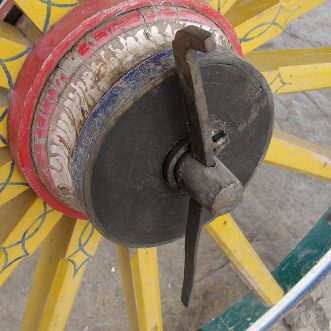
Lynchpin

Lynchpin

You are the expert.  The one everyone turns to for answers to the difficult questions.  When you’re not there, the team notices.   They’re always pleased to have you back.

Being a lynchpin in someone else’s business is a good career strategy.

Being the lynchpin in your own business is dangerous.

When it’s your business, your dent in the universe, the last thing you want is to keep your expertise to yourself.

Share it with a Customer Experience Score.

Make everyone a lynchpin.

Grow your dent.

That’s what the universe needs.


Discipline makes Daring possible.
Ask me how.