Outsourcing
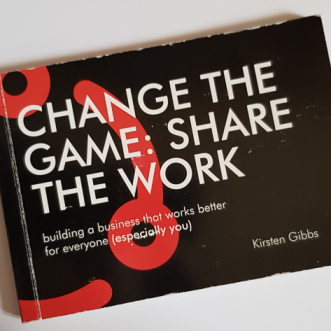
Last October I decided to write a book. In a sense I had already written it – my idea was … Read More “Outsourcing”
It’s been amazing to see how quickly many businesses have been able to switch to some sort of online delivery model over the last week or so.
Continuing my musings on ‘Working Styles’, here’s something to bear in mind though, especially for your sales team.
To be good at sales, or customer service, or support, people need to be get some of their motivation from other people – they need to be externally focused.
So far, so good. But the context of sales can vary, and individuals can have very different working style preferences and still be excellent sales people – as long as the context they are in remains congenial.
For example, a good salesperson can have a reactive preference – that is, they act on things that happen, rather than initiating events. That’s perfect for physical retail, where customers don’t want to be pestered, yet want attentiveness when they ask for it. People with a proactive preference, on the other hand are more suited to a field sales role, where they have to go out and find clients, or for pulling in customers through promotions outside the premises.
Bear these preferences in mind as you switch to online. Working against the grain of their preference will be more difficult for both proactive and reactive people. You could, for example have the reactive people man your chatlines and customer service lines, while the proactive people do online networking and phone calls.
To find out what preferences the people in your business have, I recommend “Words that Change Minds” by Shelle Rose Charvet. I’ve used this approach many times, to help with franchisee recruitment, and to help individuals identify what they should be looking for in a job or career. It can be done in 20 minutes, via a telephone interview.
Now would be a great time to find out what makes your people tick.
I’m fascinated by the way people differ in their ‘working style’ – how they like to operate at work. One … Read More “Going with the grain”
After a stressful and uncertain week, with many things still to be resolved before we can all adjust to the new normal, it will do us good to take a break.
Even if all we can manage is 5 minutes. Even if that 5 minutes is at some strange time of night.
Switch off from the news. Log out of email and social media. They aren’t helping.
Find a place to sit where you can be as near to fresh air as possible. Even if that’s just an open window.
Sit.
Breathe.
That feeling in your stomach? The butterflies? The anxiety? You’ve had it before. And you got through before. You got the job. You learned to drive, swim, ride a bike. You did the parachute jump.
That feeling isn’t only fear. It’s excitement.
Things will never be the same again. They will be better if we dare to make them so.
Like many people, I guess, I’m finding it harder to write every day during this crisis. Who wants to listen to me? What have I got to say that is worth saying? I’m not famous. I’m not powerful. I don’t feel relevant.
But.
I can read, and learn and think, and listen. And I can pass on stuff I think will help.
So here are 3 things I learned this morning that I think are worth sharing:
“Reaction five: Recovery
But the fifth, and crucial stage, is the one we need to already anticipate, however, overwhelmed we now feel. This will be the recovery stage, and although that might seem a long way off at present (and the wait may well seem interminable) it will happen. When it does, there will be at least as many problems as there or now, and in the immediate months to come. These need to be planned for, and good accountants will be doing that very soon.
Picking up a mothballed business and returning it to a thriving state is not easy. It demands a lot of working capital. Many businesses will have almost none. As a result, all the usual problems from overtrading will rear their ugly heads remarkably quickly when the recovery begins, and those businesses that might have made it through the immediate crisis might then discover that they cannot make it to the end of the year unless they begin to plan now.
Many of us are facing enforced time at home, with too much Netflix for company. My suggestion is that anyone with responsibility for a business should use at least some of this time to think about their plans to reopening their activities when this crisis is over.
Deciding what goods, services, outlets and staff are key to that process, and working out how to phase the returns to normal is critical to survival. In particular, new product mixes, ways of delivery, supply chains and customer interactions all need to be thought about if success is to be likely.
This is not the time to sit and do nothing if businesses are to survive. There’s a massive amount to do. And now is the time to do it.”
So that gives me my theme for the next few weeks or months. How to use the unsettlement of the current crisis to think differently about how we do things, and lay the foundations for a more secure, sustainable and profitable future business.
Phew! I can feel useful again.
PS Seth Godin is right. There is no such thing as writer’s block. You just have to write.
With teams suddenly dispersed, all that tacit knowledge of ‘what it is we’re trying to do, and how to do it’, is much harder to access. You can’t simply shout across the office “How do I do X again?”
It will be very tempting to start automating everything. But you need to think about what you’re automating first, else you can get trapped in the software manufacturer’s model of how your business should work.
So here ‘s a quick guide to capturing ‘What we do round here’ that will work over Zoom, Skype etc.
Key Principles:
How to go about it:
Follow the rapid improvement cycle:
Repeat until you have a work instruction/procedure/process that can be run reliably by anyone who needs to.
Automate the bits humans shouldn’t be doing. Then let the humans get on with the rest.
In times of crisis, everything goes out of whack. Work, home, society.
Things we thought were indispensable are jettisoned, things we thought were unthinkable become acceptable, things we believed were impossible become normal.
Some of these will be good things, others not so good, others downright bad.
The important thing will be to keep the changes we found were good after the crisis is over, and reverse those we didn’t.
Which means we need to think and talk about about them during it.
Life will never be the same again. At least let’s change it as far as possible on purpose, in a direction that’s better for everyone.
As a small business, micro-business or self -employed person right now, there is one person you should be talking to, because they can almost certainly help you to get through this situation.
Your accountant.
There’s far more to them than year-end accounts or tax returns.
Give them a call.
Kudos to all those accountants out there who are already showing what they are made of.
Following on again from yesterday’s post, if you know your business is going to be quiet for the next few weeks or months, here are some courses I recommend (I’ve done most of them, some of them more than once).
They could be for you or for your team.
A whole bunch from Akimbo Workshops (Seth Godin and friends)
The Bootstrappers Workshop, ideal if you are still getting your business idea off the ground (which in my case was 5 years after I’d started!)
The Marketing Seminar, will make you think really hard about who you are for, and what you really do for them. Highly recommended.
The Podcasting Workshop, a brilliant thing for graduates to do instead of an internship, and for experts too. (I haven’t done this one, you can probably tell!)
The Freelancers Workshop, Seth calls himself a freelancer, so you’re in good company.
The Story Skills Workshop, with Bernadette Jiwa, a master of daily storytelling.
And if you’re really looking to use this downtime to hit the ground running later, there’s the AltMBA, as it suggests a leadership and management workshop, that is more intense that the others.
You’ll never be the same after any of these workshops. And the brilliant thing about them is that you aren’t doing them alone. The format requires you to interact with your fellow students, to help each other, constructively critique each other and encourage each other. By doing so, you learn far more yourself. And they are not expensive.
If you prefer to work on your own, many of these are also available on Udemy.
Last but by no means least, here’s something a little more local, but equally good: Seeds to Success from Anwen Cooper, of Get Fruitful Marketing starting April. I’ve been working with Anwen for about a year now, and the difference she has helped me to make is enormous.
Following on from yesterday’s post, here are some suggestions for reading when things are quieter. Hopefully the weather will also be fine enough by then to do this out in the fresh air:
Especially though I like today’s post from Corporate Rebels. The Ultimate Remote Work Policy?
Everything above is about supporting and enabling that, on both sides.