Discipline makes Daring possible.

Measuring what matters

Measuring what matters

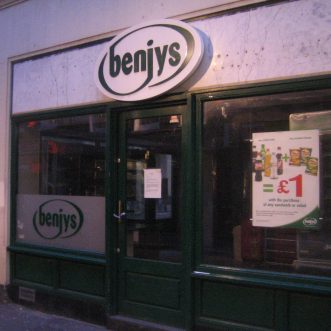
Years ago, on my way to work, I’d call in to the Benjy’s sandwich bar next to Cannon Street Station to pick up breakfast. It was always full of other City workers doing the same thing.

In those days, the hot sandwiches and toast were freshly made, and there were only 2 kinds of coffee – with or without milk. You ordered at the counter, waited for your food, and paid at the till.

So far, the same as every other Benjy’s.

But here’s where it changed, because the manager of this Benjy’s had a system.

He took your hot food order, shouted it to the team in the kitchen behind him, wrote it on a paper bag and stacked that bag on top of the one before. That was it. You mooched around the shop (picking up an extra snack or two), until he called out your order. You picked it up along with a tea or coffee from the ready-made batch at the counter, then paid at lightning speed at the till.

The wait for food was never that long – he had clearly parallelised that, so that bacon, eggs and baguettes were always ready, and the stock of teas and coffees was constantly topped up, at least during the busiest times of breakfast and lunch.

All in all it probably took less time to happen than it’s taken me to write down.

What this manager had realised was that what mattered to his clients was not the wait for hot food, it was the wait to place an order. So he built his system around minimising that.

Once you saw that paper bag go down, you knew you were taken care of and could relax. Once you knew your order was in, you weren’t going to walk out without it. In fact you were likely to spend more, to fill in time while you waited.

I never visited another Benjy’s that worked like this one.

I’m guessing that central management assumed that the volume of business this manager handled was simply down to being next to a busy commuter railway station, so never thought to come and look at how he did it, so they could pass that system on to other franchisees.

I don’t know what they were measuring, but it wasn’t what mattered. Which may be why the chain failed.


Wasted effort

Wasted effort

It’s easy to get very excited about increasing efficiency through digitalisation, automation and AI.

But in the excitement we can forget that by ‘increasing efficiency’ what we are really trying to do is reduce ‘waste’, or to put it better, ‘wasted effort’.

In Lean, ‘wasted effort’ falls under 3 categories:

  1. ‘Mura’ or wasted effort due to variation
  2. ‘Muri’ or wasted effort due to overburdening or stressing the people, equipment or system.
  3. ‘Muda’ also known as the “seven forms of wasted effort”

Muri seems like the kind of wasted effort we should always try to eliminate (and interestingly, is the least talked about).

Otherwise, what makes effort wasted?

Quite simply that the customer is not willing to pay for it.

This seems blindingly obvious. Less obvious is the necessary implication – that if a customer is willing to pay for effort, it is not wasted.

So if a certain type of customer is happy to pay extra to be treated differently, this is not Mura. If a customer is willing to pay to have their papers picked up in person, this is not Muda.

The customer’s perception of value is your source of profit. Don’t throw it out with the bathwater.

Second Nature

Second Nature

Do you remember your first driving lesson?

I do.   At the end of it I wondered how on earth I was going to be able to remember everything – never mind watch out for pedestrians and other traffic!

But after several lessons I got the hang of it, and eventually of course driving became second nature.   To a point where some nights I got home from work almost without realising it.

We humans are able to make a lot of things second nature.  Walking, driving, playing the cello, or rugby, or chess.

We do this by repeating certain combinations of actions until they become habit.   We no longer need to think about them.    That frees us up to to concentrate on the exceptions – those things outside the habitual that are going to prove interesting or dangerous.

But too much reliance on pure habit can also be dangerous.   I bet you’ve had to go back to your car after half an hour of shopping because you can’t remember locking it, even though you’re sure you did.

That’s why pilots have checklists.   To make a habit of the actions that must be done, and then to make sure they perform those actions consciously every time.

What’s the relevance of this for business?   Well, you need to actively create this interesting tension between habit and consciousness:

  • If you want people to develop a particular set of habits (rather than their own), you need to specify what those desired habits are, and get people to practice them.
  • If you want to ensure that certain key actions are always done, you have to find a way to make people aware they are doing them.

Then you can happily let them play with the exceptions.

Discipline makes daring possible.

Delegation

Delegation

A quick trawl of the internet found me these definitions of the verb “to delegate”:

  • to give (part of one’s work, power, etc) to someone else.
  • to send or name someone as a representative, as the one to do a job, etc.
  • to entrust to another.
  • to appoint as one’s representative.
  • to authorize and send (another person) as one’s representative.
  • to commit or entrust to another.
  • to entrust (a task or responsibility) to another person, typically one who is less senior than oneself.
  • send or authorize (someone) to do something as a representative.
  • to give or commit (duties, powers, etc) to another as agent or representative; depute.
  • to send, authorize, or elect (a person) as agent or representative.

In most cases the meaning is not ‘doing your work for you’, but ‘acting on your behalf’.

In other words, the key relationship is not between you and the person you delegate to, but between you and the clients they serve as if they were you.

Not employees. Agents. Or ambassadors.

People you can trust to do the right thing.

Best Practice

Best Practice

One of the challenges in any business, particularly one with a written score, is how to share best practice.

People will continually find better ways to do things and new things to do. And as long as they are congruent with the promise we make, that’s exactly what we want.

But at the same time this is a kind of entropy – a gradual divergence from the original score for the ‘way we do things round here’ that eventually leads to a completely different piece being played – and an irrelevant score.

Not having a score at all doesn’t resolve this issue – it just makes it invisible. On the other hand, updating the score can end up as one of those jobs nobody has time or inclination to do.

How to overcome this challenge?

I think one answer at least might be regular group practice, where everyone gets together and plays out improvements they want to share – backed up by evidence of improved performance.

A ‘scribe’ takes notes and incorporates agreed improvements into the existing score – perhaps based on a vote, or even as alternative options.

Group practice reminds us that we are custodians of a Promise, collaborating to produce an experience that embodies that Promise for our audience – an experience built on the efforts of those who’ve gone before us, enhanced by those we work with, and most importantly, to be carried on by those who come after.

That sounds like a culture doesn’t it?

Exit

Exit

Investors and business angels have a clear exit strategy – grow fast for 3-5 years, sell up and crystallise the gains. Happily, this strategy often coincides with that of the entrepreneur, who wants to get this business idea going, and then move on to the next.

Most small business owners don’t have an exit strategy, or certainly don’t start with one.

Thinking about exit often only happens when some event reminds us of our mortality. If that doesn’t happen, the business simply winds down to nothing alongside its owner.

Partly this is due to our natural tendency to think short-term; partly because we simply can’t imagine ourselves without our business, and partly because we don’t believe our business could survive without us.

Perhaps then, rather than focus on our own exit, we could focus instead on the future life of our business as we would focus on the future life of our child – with the aim of making it independent?

If a business was a child, we would nurture it through the early years, then start giving it more responsibility and autonomy, so that when the time is right, the child leaves us, ready, willing and able to make its own dent in the universe.

This doesn’t mean you exit your business with nothing, it just changes who you might sell it to.

Who better than the people who helped you raise it?

Dismantling the E-myth

Dismantling the E-myth

In his E-myth books, Michael Gerber identifies three key roles in a business: the entrepreneur, who drives the vision for the business; the technician, who does the work, and the manager who acts as a bridge between them, planning and organising the work of technicians to achieve the entrepreneur’s vision.

If the vision is shared by everyone, do you then need managers?

I don’t think so, but you do still need management – a way for the technicians to know what they have to do, and how well they are achieving the vision, so they can work out for themselves how best to move forwards.

This is great news for small business owners, because I’ve only ever met one person who wanted to be a manager.

If the vision is explicit and shared, and technicians manage themselves, do you then need an entrepreneur?

No, but you do need entrepreneurship – a way for technicians to see new ways to deliver the vision profitably.

So, if you can push both management and entrepreneurship down to the people who actually do the work, what happens to the entrepreneurs who founded it?

Their baby will have grown up, to be independent, autonomous with their original vision still in its DNA.

They get to choose what they do next.

Leverage

Leverage

“Give me a lever long enough and a place to stand, and I will move the Earth”.

We tend to focus on the lever, but the ‘place to stand’ is just as important.

Without sure footing, the lever can’t get purchase.

When you know the essentials are being done consistently, you can experiment at the edges to make things better.

Discipline makes daring possible.

Overhead

Overhead

When you add a manager to a business, you add overhead. So the first effect of hiring someone to replace yourself as manager or supervisor – so you can work on your business instead of in it – is to take a real hit in profitability.

What if, instead of appointing someone new to manage your people, you appointed them to manage themselves? You could use the saving in overhead to invest in them instead, building a supporting framework, coaching, mentoring, training, and of course a fair share of the rewards.

When you want to expand to serve more customers or clients, you can simply add more people.

Those who’ve taken this approach have found the return on this kind of investment to be well worth it.

Rules

Rules

It’s often said that Culture eats Strategy for breakfast. That’s true. But what’s the strategy for maintaining Culture?

Here’s mine:

  1. An explicit Promise of Value: principles, behaviours, values, purpose, “the way we do the thing we’re here to do”.
  2. Customer-focused Roles: the parts played in delivering the Promise, “how what we’re doing now relates to our customer”
  3. A floor: the lower bound of what’s acceptable, “the least we should do”.
  4. Process: what has to happen in order to deliver the outcomes that share and keep our Promise, “our score”.

The autonomous enterprise doesn’t need a ruler, but it does need rules.