Discipline makes Daring possible.

Are you building to sell or to last?

Are you building to sell or to last?

Are you building your business to sell or to last?

The answer makes a huge difference to what you do before you leave – even if in the end you sell it.

And if the answer’s ‘Neither‘?

Then your business dies with you.

There’s no right answer.

It just helps to be clear.

Recognised by small boys everywhere.

Recognised by small boys everywhere.

I’m pretty sure you’ll recognise what type of plane this is.

“It’s a Spitfire!”  I hear you yell.

Of course it is.

But not the one that R. J. Mitchell is famous for.   The Spitfire picture here is a Mark XVI, a variant of an earlier variant, the Mark IX.

You see, Mitchell created the Spitfire Promise of Value – a fast, high-performing plane that is easy to fly.

After Mitchell’s premature death in 1937, his colleagues continued to improve and build on Mitchell’s original design, to produce better Spitfires, adapted to different tasks, eventually creating 24 different Marks.  All still fast, high-performing and easy to fly,  and each one clearly recognisable as a Spitfire to small boys everywhere, despite their differences.

That’s what happens when you decide to become a Disappearing Boss.   You may disappear, but your vision won’t.

In fact it might just get bigger.

Side-effects

Side-effects

There’s another bit of feedback we should be using to improve our businesses – our side-effects.

Side effects are not necessarily intentional, but they are real.

They’re not necessarily negative either.

If as business owners, we truly want to ‘make the world a better place’,  our improvement process must include getting feedback on our side-effects, then acting to minimise the damaging ones and maximise the enriching.

Otherwise we’re just not really viable.

Because one day, the negatives come back to bite us.

How people feel about how you do it

How people feel about how you do it

Finding out how people feel about how you do what you do is a bit harder to do than working out costs, because you can’t automate clients.

But if you stick to the idea of making it part of the process, you increase your chances of getting good feedback when you need it.

Remember those events you’re interested in?    When a prospect makes an enquiry; when a prospect becomes a client; when you welcome a client onboard, when the particular promise you made to this client has been kept.

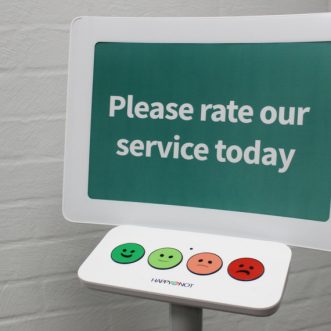
You probably already send an email in response to those events, possibly even several emails along the way.   Why not include a simple satisfaction survey as appropriate?

The important thing here is to keep it really simple – no typing required, just clicks, and no taking the client off to some tedious questionnaire.

Keep the format to a prompt on a dimension that matters to them followed by a simple ‘It’s all good’/’It’s not good’, plus an option to explain if moved to do so.  If people have strong feelings about how you do what you do, they will want to share them.  It’s good customer care to enable that.   Even better, an option to have someone call them to find out more.   Keep the number of prompts down to 2 or 3 if you can.

One more thing.   ‘People’ doesn’t have to just mean clients.   Your team are people, your suppliers are people, your neighbours are people.  Some of your shareholders are people.   Finding out how they feel about how you do what you do might prompt some really interesting improvements.

A little bit of Discipline makes Caring possible.

What it costs you to do

What it costs you to do

An entire industry has grown out of working out what it costs a business to do the things it does.   Along with a panoply of tools and techniques.  When I was studying at London Business School, I loved it.

It turns out that there is a simple measure that’s good enough for most cases.

Time.  Or more accurately, duration.

If you know how many clients you deal with, how long it takes for each client to go through your Share and Keep Promise process, and what your total operating costs are over that time period, then you know what it costs you to do what you do for each client you serve.

If you don’t like the answer you can drill down into Share Promise or Keep Promise to find out where things could work better.  And so on.

So how do you measure duration?

By logging events that are of interest and adding up the time that’s elapsed between them.

I’m sure you already note these events: when a prospect makes an enquiry; when a prospect becomes a client; when you welcome a client onboard, when the particular promise you made to this client has been kept.

You may even collect them automatically – they’re in your CRM, or your accounting system, they might even be in your workflow management system.  String them together for each client and you’ve got some extremely useful data.   Combine this with some other equally simple metrics and you’ve got the kind of process feedback you can use to grow your business efficienty and sustainably if that’s what you want.

A little bit of Discipline makes a lot of Daring possible.

Improvement

Improvement

Improving how you make and keep your promises starts with feedback.

You don’t need to start with the whole thing – just the bit you are currently uneasy about.   So, if you’re attracting plenty of business right now, you can skip Share Promise and concentrate on Keep Promise.  Or if you’re confident you can Keep promise efficiently and effectively, but want to reach more clients, start with Share Promise.  If you’re looking to move into new markets, start with Package Promise.

Wherever you start, there are only really 3 things you need to measure:

  • what it costs you to do
  • how people feel about how you do it
  • and ideally, how much value you create for your client as a result

And if you can measure these as a side-effect of doing the job, so much the better.

That way you don’t even have to be there.

That Question

That Question

What question do you get asked over and over again about your product or service?

What could you do to save people having to ask it?

What could your people do with the time they spend answering it?

My weird habit

My weird habit

I have a weird habit.

If I’m in a loo where the toilet roll holder is empty, and there are toilet rolls around to refill it.  I refill it.

It doesn’t matter whose loo it is.  A client’s, a friend’s, a department store’s, a pub’s.   I’m sat there anyway, the job needs doing, so I do it.

Imagine, if everyone did this, how much more comfortable office life would be?

A small example of what happens when responsible autonomy is paired with direct and immediate feedback.

Now imagine what your business could be like if you took this approach everywhere.

Heretical thoughts on packaging your Promise – Price

Heretical thoughts on packaging your Promise – Price

Price is about ensuring both participants profit from their time together, finding the the right balance between what you need and what represents value to the people you serve.

Questions to ask:

  • How much does it cost you to deliver?  – Work this out on a per package basis, and remember to attribute a share of everything your accountant would normally dump in ‘overhead’.   That way you can be sure of making a profit each time you Keep your Promise.   Keeping your Promise enough times per year to make the living you want is a different problem.


  • How much do you want to earn? – Here’s a quick calculation:
    • Work out how much a year you want to earn before tax.
    • Divide it by 100 (=((365-(weekends, time off and bank holidays))/2) – because you need to spend half your working time running the business).
    • That’s your target ‘daily earnings’
    • Set yourself 2 levels – the least you want to earn, and your ideal.


  • How are the alternatives priced?  – Price is part of the story people tell themselves when they choose, and is often used as an indication of  quality.  You don’t need to be cheaper than the alternatives.  You don’t need to be more expensive either, unless your costs are higher or you want to earn more.

Remember:

  • Being in a category of one puts you in complete control of your price.
  • Pricing is part of the story.
  • Payment is part of the format.
  • As long as you’re charging more than it costs you to Keep your Promise you have the potential to be profitable.   Keeping your Promise enough times per year to make the living you want is a different problem.
  • Price can be a flow control mechanism too.   If you’re inundated with clients, putting your price up will slow demand.   Lowering it may increase flow – but only if enough people already know what great value you offer.
  • If you’re not enrolling enough clients, you’re more likely to be underexplaining the value than overpricing it.
  • A low price can help to enrol early adopters, but make sure they know it’s a special deal for them.  And make sure they will rave about it afterwards.
  • If you get it wrong the first time, you can always put your price up for the next new client.
  • You only really need enough.  And enough is up to you.

Instinct and intention

Instinct and intention

In the late 18th century it was tough to be a sailor in the Royal Navy.   Discipline was harsh, pay was low, the food was terrible and battles were deadly.   Especially if you were part of a gun crew.

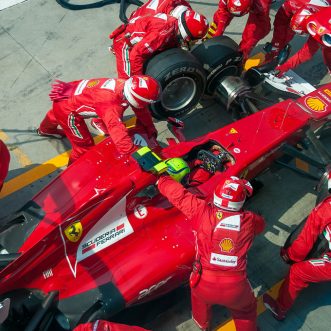
Firing a cannon was far from simple, it took several steps and required good co-ordination and careful timing.   The equivalent of a modern Formula1 pitstop.   Plus of course all the time you were firing, the enemy was firing at you, shattering the hull of your own ship into lethal splinters.

The bosses expected gun crews to work by instinct.  Their thinking was that in the midst of battle, when your life depended on it you would naturally do the best job you could.

A new boss changed all that.   His radical idea was to look at what the best gun crews did, then train every crew to work as they did, practicing until every crew performed the best it could – consistently and on purpose.

“A waste of good ammunition” said his bosses.

Horatio Nelson insisted and got his way.

The rest as they say, is history.

Instinct can get you a long way, but if you want to go further, you need intention.

Discipline makes Daring possible.