Discipline makes Daring possible.

Take back control

Take back control

One of the things that puts business owners off growing, is the fear of losing control.   They’ve handcrafted a customer experience that works well.  They have built up a clientele that loves what they do and the way that they do it.  They are concerned about diluting that.

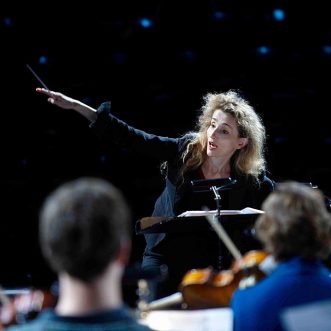
The answer, as every composer knows, is to take the music that is in your head, and write it down, so that others can play it.  Put the control into a score, not a person.

That way, your customer experience lives on through others, not in spite of them.

At first, you will have to conduct this music yourself.  But after a while, your people won’t even need that.  With a good score, they can conduct themselves.

And that removes the real limit to growth – you.

Word for the year 2022

Word for the year 2022

I’m pretty rubbish at selling.  Perhaps because it feels too much like putting a part of myself out there, setting myself up for judgement.  Because many people won’t need what I do, and probably most people won’t like it.

But then I’m letting down the people who would.

An offer can only be accepted if it’s made.

So my word for 2022 is ‘Offer’.

As in: ‘Here, you might like this.  I made it for you.’

It’s called The Disappearing Boss, and it has it’s own website.

The stories we tell others

The stories we tell others

If you visit a National Trust property, every person you meet is likely to be a volunteer.   An individual providing this service in their spare time, for nothing.  Yet the experience is remarkably similar across hundreds of houses and thousands of volunteers.

How do they achieve this?  There are no scripts.  Nothing is prescribed, apart from some simple Covid-19 distancing notices.  Every volunteer performance is unique.

What every National Trust building does have is a story.  The story of the building and the people associated with it – usually the famous one who commissioned it, built it or lived in it.

Every volunteer (whether they are a room guide, a shop assistant or a gardener) is expected to know this story, to research around it and to tell it.  But they can do all of that in their own way, including details and providing context as they see fit, tailored to the visitors in front of them, in their own personal style.

The most basic ‘customer experience score’ is the story everyone can tell.  For a business it’s the story of how you make and keep your promise to the client.

What’s your story?

Can everyone in your business tell it?

How do you help new people learn it?

What is innovation for?

What is innovation for?

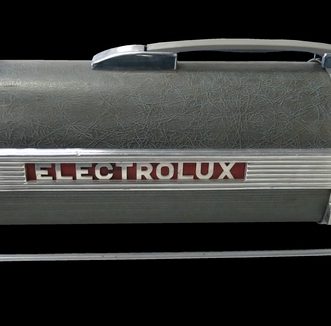
I’ve been through a lot of hoovers in my life, from a massive ‘wet and dry’ suitable for builders through Dyson and any number of supposedly ‘handy’ machines.  Many of which have not lasted long.

The GTech AirRam I inherited from my mum is the only one that’s made hoovering almost enjoyable, and yesterday, it looked like it was about to turn into another relic.

Fortunately, I found on the support site that I can replace virtually every part individually.

That means that unlike every other hoover I’ve owned, I can keep most of this one going indefinitely.

For a long time, hoover innovation was simply about creating new demand – ‘new’ models that superseded the old, so you had to buy all over again if you wanted the status of having the latest.

The trouble with that was that with a proliferation of models, a consumer was just as likely to buy someone else’s new model as yours.

Now it seems that innovation is about creating brand loyalty by making it easier to repair the existing.   Allowing the consumer to preserve their original investment (in my case emotional rather than financial), and send less material to landfill.

What all this tells me is that the purpose of innovation is to change behaviour.

We’re going to need a lot of that to cope with what’s coming.

Get your thinking hats on.

A Relic

A Relic

Years ago, my dad, who was an IT director for a civil engineering firm, said he liked to keep a record of everything a project had tried, even if those things had failed.

It meant that new projects could learn not just what had worked from previous ones, but also what hadn’t.

That didn’t mean all previous experiments would be rejected – after all, technology changes and things that weren’t possible before become possible now.  What it did mean was that nobody walked blindly into repeating the same mistakes.

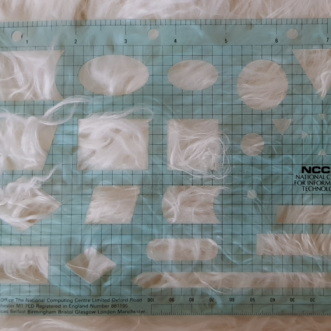
During my January tidy-up, I found this template for drawing out consistent shapes for computer flowcharts.  A relic of a bygone era of hand-drawn flowcharts and a National Computing Centre.

I’ve never used it.  I preferred to think through my programming logic with words, and I’d never dream of using it to capture what a human should do.

I’m trying to make work more human, not less.  I want people to be making the decisions in their dealings with other people.

So I keep it.

As a reminder of what I don’t want to do.

Hello 2022!

Goodbye 2021

Goodbye 2021

This will be my last post for 2021.

It’s been a heck of a year, and 2022 looks like it’s going to carry on this new tradition.

I hope your 2022 will start as your 2021 ends – merrily, with goodwill to all men.

That’s all we really need.

Unfreedom

Unfreedom

If you need to have a job in order to live (and most of us do), then work all too easily becomes a series of power plays, tests of will between worker and supervisor, supervisor and manager, manager and director.  Between subordinate and superior.

Power plays that can get nasty, because there is no way out, no safe word you can say to signal ‘Stop, I’ve had enough‘.

When everyone but the person at the top feels too afraid to disobey, and is unable to walk away in protest, what cascades down is unfreedom.  Or as we might have called it in earlier times, slavery.

How much worse then, if it turns out that what you are in thrall to isn’t even human, but AI.    Statistics generating targets that take no account of actual conditions on the ground – a pandemic, a storm, a tornado – with no possibility of being overidden by an intelligent human.

As a result 6 people died in this Amazon warehouse, picking stuff people don’t need, made using resources that could be better used elsewhere (or not used at all) to make money Bezos doesn’t know what to do with.

Work should not be this way, need not be this way.

Stop.  I’ve had enough.

And I know where and how to change it.

Bullshit Jobs

Bullshit Jobs

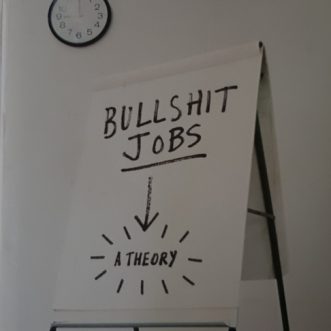
This week, I’ve mostly been re-reading this book by David Graeber, published what seems like a lifetime ago in 2018.

In 2015, YouGov published a poll, showing that when asked whether their job “makes a meaningful contribution to the world?” 37% of respondents said ‘no’, and 13% of people said they didn’t know.  That’s a terrible waste of human potential.

Until recently many of those 37% or 13% will have been furloughed, while many of the other 50% weren’t – their jobs (care workers, nurses, shop workers, bus-drivers etc) were simply too ‘key’ to allow that, or they were self-employed.

I wonder whether furlough gave some of the 37% time to re-think what they wanted from work?   Is that what’s behind ‘The Great Resignation”?

What seems to be fairly clear from my re-reading of this book, is where most of those ‘bullshit jobs’ are.   They’re in corporates, or privatised government agencies.

Where they aren’t is in small businesses.

One more reason why I believe bigger small businesses are the future.

Not worth a candle

Not worth a candle

As usual ‘It’s a Wonderful Life’ will be on TV this Christmas.  I’ll be watching it, again.

And noting, again, that nothing that makes the protagonist’s life worth living has anything to do with scented candles, Amazon orders, or objects of any kind.

Of course not.  We are not what we own, but who we know.   We are the sum and product of our connections with others.

Which makes me even angrier that more than a dozen people died last weekend in Kentucky because a manufacturing or fulfillment target counted for more.

This isn’t ‘legendary customer service’ – I don’t believe any customer would value on-time delivery of their order over the life of the person making or packing it.

In fact it shows that the customer isn’t really important either.  It would have been so easy to let people know ‘We’re sorry, but a storm is on it’s way, and we daren’t risk our people’s lives.  We’ll make arrangements to get your goods to you another way, but they may be later than you expected’.

As you know, I believe a business should be built around making and keeping promises to its customers and clients, but when you can’t, or shouldn’t, due to forces outside your control, say so and do the right thing.  The people you serve will love you more for it, not less.

Nonsense

Nonsense

A long weekend of reading.   Sometimes I like to give my heart and brain a rest with some light, frothy fiction I’ve read many times before.

Or, if I’m honest, some dark and murderous fiction, from someone like Jo Nesbo.

You can’t be thinking all the time, and these are great ways to switch your brain off before bed.

What’s your preferred ‘nonsense’ for giving yourself a break?


PS If you’re looking for something inspirational and non-frothy, I recommend ‘The Daughters of Kobani’.  A true story you’re unlikely to hear anywhere else.