Discipline makes Daring possible.

Nonsense

Nonsense

A long weekend of reading.   Sometimes I like to give my heart and brain a rest with some light, frothy fiction I’ve read many times before.

Or, if I’m honest, some dark and murderous fiction, from someone like Jo Nesbo.

You can’t be thinking all the time, and these are great ways to switch your brain off before bed.

What’s your preferred ‘nonsense’ for giving yourself a break?


PS If you’re looking for something inspirational and non-frothy, I recommend ‘The Daughters of Kobani’.  A true story you’re unlikely to hear anywhere else.

Tired out

Tired out

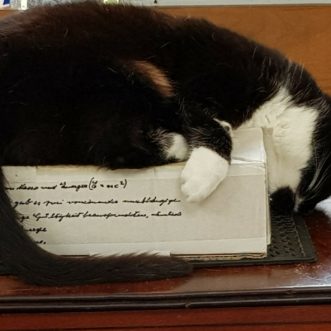
My cat spends almost all her time in our new extension, staring through the big doors into the garden, eyes peeled for squirrels, mice, other cats.  Ready to shoot out and deal with anything that invades her space.

Most of the time, none of these things are actually happening, but still she stares, mistaking any movement of grass, branch or shrub for a potential threat.

Finally, tired out after hours of fretting over imaginary invaders, she takes herself off to somewhere she feels safe and sheltered, and sleeps.

She’s a cat, she’s wired that way.  So to an extent are we.  But we know that.  Which means we can choose to behave differently, and save our energies for dealing with the real predators, not the imaginary ones.

We could start by turning our back on the big windows.

Bollards

Bollards


There are quite a few traffic bollards near where I live.   They are there because in the past, drivers persisted in using the narrow pavements inappropriately, endangering other road users, and damaging the fabric of the public realm.

For at least one set, the need has disappeared.  Lorries delivering to the school across the road used to go up onto the pavement in order to reverse through the gate.  The school has since moved and widened their gate, making this manoeuvre unnecessary.   The bollards remain, narrowing the pavement even further.

Bollards, like rules, are a last resort.  A physical or legal barrier erected to block behaviours that have proved impossible to prevent by other means.

The trouble with this is that most bollards don’t tell you why they were erected.  They seem arbitrary, so they leave behaviour untouched.

But if you design them with a bit of imagination, they can both block undesirable behaviour in the moment, and change it for the future.

In other words, rules, like bollards, are part of a process, not an event in themselves, and if you treat them that way, you’ll make them more effective.

Gratitude

Gratitude

There’s no blog today, because I’ve been submitting slides to support my application for a Women in Innovation Award.   I found out I’d been shortlisted last week, and have my interview on Friday.

Wish me luck!

But most of all, thank you for being there.

Cultivating culture

Cultivating culture

Growing a culture is easy.  You just leave an agar dish open to the air.   The culture you get is a matter of what falls into your dish.

For a business, it’s the same.  As soon as you add people to your business, you get a culture. As new people join, they pick up the norms, the narratives, and the identities of the people already there.  The result of whatever’s fallen into your dish.

But with a framework that attracts the right things into your dish, that’s easy to grow on and around, it’s possible to grow a culture you’ve designed rather than one that happens by chance.   Even if you’ve already got the wrong culture already in place.

What would your business culture look like if you designed it?

It’s me they want

It’s me they want

It’s a trap many founders of service businesses fall into.  You start off as the technician, doing everything, and at first you love it.

Then you grow your client base, and with it a team to help you serve them.   Yet it seems, no matter how much you reassure them that your team is capable, no matter how much extra you charge them for the privilege, clients insist that you are the one that looks after them.  Or, they insist that it’s a particular member of your team that looks after them.    You get overloaded, and your team lose out on the chance to grow.

The answer is to make sure a new client or a new project starts with one of your team, not you.  Perhaps random, perhaps thoughtfully matched to each others’ working styles.   That means making sure everyone knows how to make and keep your business promise as well as or better than you, from start to finish.  And that means articulating what that experience looks like.

There’s nothing wrong with being relationship-based – I’m all for connection between people –  but the deepest relationship you want to forge is one between the client and your business, where the client’s experience will be consistently outstanding, no matter who delivers it.  Not identical, consistent.

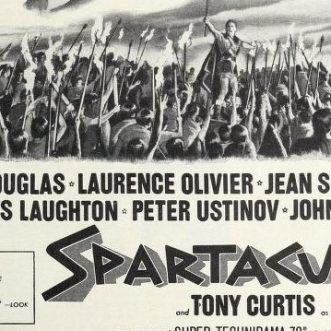
The more you enable your team to stand up and say “I am Spartacus!“, the more clients you’ll be able to delight, without killing yourself or your team in the process.

Saying it better than I can

Saying it better than I can

This post from Seth is so good, I have to give it to you in full:

Customer service is free

Most large organizations would disagree.

They hire cheap labor to answer the phone. They install recordings to mollify people who are on hold for hours. They measure the cost of the call center and put loopholes in the warranty.

When you see customer service as a cost center, all of these steps make sense. Any money spent lowering costs seems to raise profits.

But customer service is actually a profit center, for four reasons:

First, because the customer who calls you or shows up at the adjustments window is fully enrolled. Unlike just about every other moment you’ve had with them, in this moment, they are paying attention, leaning into the situation and on high alert. Everything you do here, unlike just about every other marketing interaction you have, will go on your permanent record.

Second, because your competitors have foolishly decided to treat this interaction as a cost, the chances that you can dramatically overdeliver are pretty good. You can’t make a car that’s ten times better, but you can easily produce customer service for your car customers that’s ten times better than what most manufacturers deliver.

And third, because in our industrialized economy, people love to tell stories about service. And so the word spreads (or doesn’t) based on what you’re about to do.

Finally, it’s been demonstrated again and again that the most valuable customers are the loyal ones. While your promotional team is out there making noise to get you new customers, you’d be much better off turning your existing customers into repeat customers and ambassadors.

And so, the money you spend on customer service isn’t simply free. It actually repays you many times over.”

Customer service is an opportunity to play a different game, an infinite game of connection.

The irony is that when it’s genuine, it leads to more profit, not less.


PS it’s not so different when governments spend money on people at the bottom of the pile instead of the top.   They get more back than they spend.  And their people flourish.

Learning to live with it

Learning to live with it

This morning, an economist told the Today programme that “we are living with COVID”.

As of the 30th November, 2021,  144,969 people have died so far.  The current 7-day average death toll from COVID is 119.

Next week we can expect around 833 more people to die of COVID.

In the UK alone.

This:

Parke O. Yingst (Lieutenant Colonel, United States Army), Public domain, via Wikimedia Commons

is what roughly 50  people look like when you decide they are just statistics, when you decide they don’t matter, when you decide that “there was something wrong with them anyway, so they deserved to die”.

Do we really want to learn to live with this?

Reconciliation

Reconciliation

You run a business with a partner.  One of you hates not knowing what’s going to happen, the other loves that.   One favours planning, the other seeing what happens.  This is a source of much tension.

How could you reconcile these opposites to get the best of both worlds?

Simple.

Give yourself a safety net.  A floor below which things cannot go.  Or as Mr Nassim Taleb would have it, protect yourself against the downside.

Design repeatable processes that ensure ‘the least that should happen’.  The planner will be much more comfortable with possibility when you’ve ruled out the worst.  You can both be open to the upside.

When you find it, move the net up, and repeat.

This doesn’t only work for partners, it can help everyone who works with you to reconcile their individual appetites for risk.