Groupthink
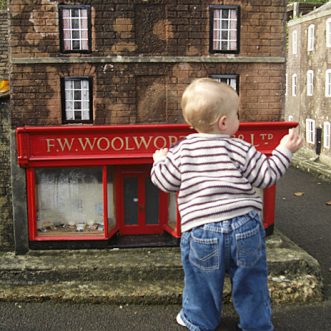
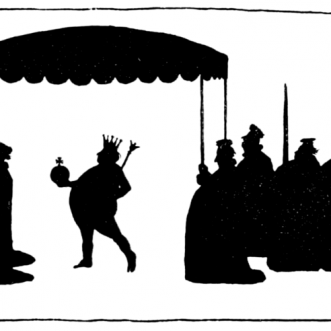
It’s very hard to call out the obvious falsehood when everyone around you wants it to be true. Which is why it’s often the outsider, the uninitiated, the person of no consequence that does.
And why wise leaders keep a Fool close to them.
It’s very hard to call out the obvious falsehood when everyone around you wants it to be true. Which is why it’s often the outsider, the uninitiated, the person of no consequence that does.
And why wise leaders keep a Fool close to them.
Walmart is a planned economy the size of Sweden. It isn’t a republic or a democracy. It’s a complex, strictly controlled, bureaucratic hierarchy, with the Walton family at the top.
That isn’t what most small business owners want, so for them, hierarchy isn’t such a useful model.
One alternative is to think of a business as a system – “a group of interacting or interrelated entities that form a unified whole.”
And since “the system is what the system does”, it also helps to define what a business system is meant to do.
For most business owners I know, that is to make and keep a promise to customers, employees and community, and in the process make enough money to keep doing it well.
This model of a business is wrong. But it might be more useful for you.
We are told all the time (in words and deeds) that ‘there is no alternative’ to the way our current global economic model works. Communism was a disaster, anarchy would be chaos, revolution would be tragic.
And yet as families, villages, schools, clubs, friends – as ordinary people we happily operate all those alternative models, all the time, without even thinking about it. We even do it inside the ultimate capitalist entity, a business. In fact, capitalism depends on us operating like this.
As David Graeber points out: “we’re all already communists when working on a common projects, all already anarchists when we solve problems without recourse to lawyers or police, all revolutionaries when we make something genuinely new.”
We’ve worked like this for at least forty thousand years, getting on for two hundred thousand years. Which begs the question. Which model is the exception?
For over 30 years I did almost all my shopping at my local big-name supermarket.
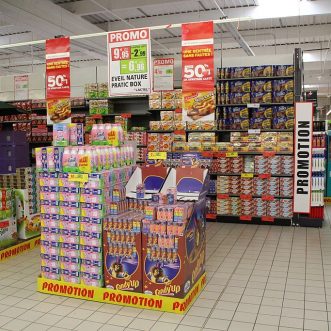
Recently, I stopped. The trigger was the self-checkouts – they finally brought it home to me that in spite of all the personal ‘offers’, I am not a person for them, I am merely a consumer. A number on a loyalty card.
Do they miss me? I doubt it.
Now I buy from street markets, WI markets, farm shops and sail cargo. I shop around. Not for the lowest price, but for the best price/experience combination.
I want to do business with people that will miss me when I’m gone.
Don’t we all?
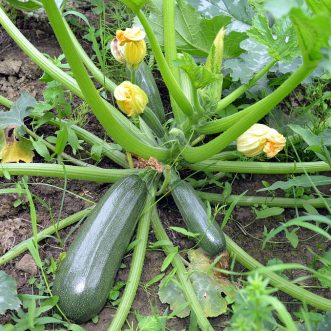
A supermarket gives me courgette security. I can buy courgettes all year round, any day of the week. They’ll always be the same size, ripeness and quality. This comes at a cost of course. Supermarket courgettes are always priced at the out-of-season level, even when there is a glut in my allotment.
My allotment gives me courgette sovereignty. I can grow as few or as many as I like. I can grow whatever varieties I choose, provided I can give them the conditions they need. This comes at a cost of course. I have to spend time preparing the soil, weeding and watering to give them the conditions they need.
Which option you choose depends on how much you value their side-effects.
The supermarket option is convenient, freeing up time to do other things. On the other hand, those all-year-round courgettes are grown under plastic which ends up in the soil; in an arid part of Spain, which depletes the local water supply; and are picked by migrants, who live in virtual slavery.
The allotment option involves exercise, fresh air, and the satisfaction of doing it yourself. On the other hand, I have to pay rent, keep it looking neat, and after all my hard work, I may not get any courgettes.
But when I do, I’ll really enjoy them.
Today is the International Day of the Girl Child.
That might be an understatement.
Go girls!
Yesterday evening I picked up my second ever online grocery order from Greenwich Pier. It was more expensive than buying the same stuff from Ocado, but not eye-wateringly so.
What I bought:
We waited, in the open air for a good 10 minutes before my shopping arrived – far longer than I’ve ever waited at my favourite bugbear, the supermarket checkout – but I didn’t mind. Funny that.
We never buy ‘just stuff’. We buy what we think it means for us. Sometimes what we think it means and what it actually does are the same thing.
And that makes us ‘consumers’ more powerful than we realise.
Jugglers make life difficult for themselves on purpose. For our entertainment. So we can marvel at their coordination and dexterity.
Business owners juggle because they haven’t realised yet that the balls can be self-powered and self-organising.
Or that enabling this is an even more impressive act.
Quiet weeks, when nothing much happens, drag by while we’re in them. Afterwards, they almost disappear from our memories. We tend to remember the last interesting event before that quiet week as if it was only yesterday.
This is understandable. We are constantly bombarded with information, and most of the time what this information is telling us is boring – its OK, everything is normal, no need to worry. The unusual or extreme is what we need to take note of. Up or down, good or bad, high or low.
So while of course we should constantly measure what matters to our business, it makes no sense to report it if everything is normal. Let’s save our energy for dealing with the highs and lows.