Discipline makes Daring possible.

More than meets the eye.

More than meets the eye.

This man looks like the stereotypical accountant.  Formal, old-fashioned, perhaps a bit uncomfortable with people.

Except he is actually one half of the first team to conquer Everest.  Tenzing Norgay.  Who partnered Edmund Hillary to achieve his dream.

If Mr Tenzing can look like an accountant, perhaps it’s time to revise your view of your accountant.   Who knows, they may just be the partner you’ve been looking for to help you achieve your dreams.

There’ll certainly be more to him or her than meets the eye.


PS I’ll be giving a short talk on “How to get the most out of your business accountant” on the 26th September at the Metro Bank in Bexleyheath. 

This is a breakfast networking event that runs from 8am to 9.30am and is free to attend.  

To book your place, RSVP to jo*******@***********lc.uk

Taking chances

Taking chances

It’s impossible to predict every possible scenario.   So instead of trying to plan for every eventuality, it’s much better to simply keep your options open.

The trick is to minimise the possible downside, while allowing the upside to take care of itself.   So, if you can protect your restaurant from the worst effects of a storm, you can stay open, when others around you don’t.  If everyone is evacuated (including you), you’re no worse off than if you had closed anyway.  If they aren’t, you’re going to be popular.

This is what it means to be antifragile – the downside won’t kill you, while the upside benefits you significantly.

The beauty of this idea is that it makes dealing with risk much simpler.  All you really need is to understand what might kill you, and mitigate the effects of that – creating a floor, below which nothing can go, while leaving the ceiling open to the sky.

You can do this with business processes too.  Specify “the least that should happen”, and let humans beings find new ways to add the delight.

Then ratchet up the floor.

Infrastructure

Infrastructure

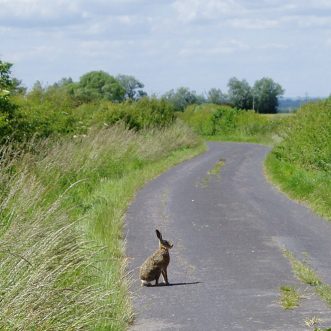
Those country lanes we love to drive down in summer were mostly built back in the 1920s and 1930s.

They were an investment in the future, both as physical infrastructure that opened up the countryside to new markets and as employment for men and their families who would have otherwise starved.

They have lasted much better than most canals and railways, because they are less prescriptive about what can travel on them, or for what purpose, which means they can cope with all kinds of traffic, from milk-cart, to ramblers to country commuters.

They form a network, combining direction and connection with flexibility.  They enable autonomy.

Pretty good characteristics to aim for in a business infrastructure too.  Expensive to build, but well worth the investment.

Good design is honest

Good design is honest

It does not make a product appear more innovative, powerful or valuable than it really is.    It does not attempt to manipulate the consumer with promises that cannot be kept.” Dieter Rams, design principle number 6.

Enough said.

Relics

Relics

Yesterday, I drove across the Peak District, along the Derwent Valley and up through Glossop to Calderdale.

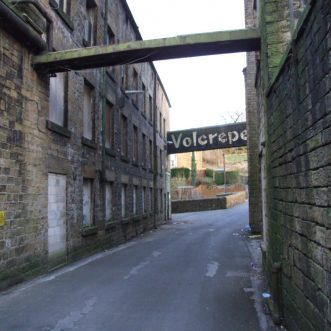
Almost the whole way, wherever there was a river below, the valley was thick with old mill buildings, built to last.  Some famous, like Arkwright’s Cromford and Masson Mills, now world heritage sites.   Most forgotten, derelict, or hidden in the core of industrial estates, or turned into housing.

In the late 18th and early 19th centuries, there were well over 100 cotton mills in this area, their owners rushing to embrace the new business model pioneered by Arkwright – a factory powered by water.

Within 30 years, many of them were out of business.   A new technology shift had taken place, from water power to steam, which meant independence from rivers, and freedom from the size constraints imposed by valleys.   Small factory owners, unable to justify the investment could no longer compete and went under.

Now of course, very little cotton is spun or woven in the UK.  Yet more technology shifts meant that even large factories drifted slowly into obsolescence.

To us now, this is history.  But technology is always shifting, increasingly in people-based service industries like accounting, consulting and law.

You can embrace the latest business model, or make a virtue of keeping to the old.  The trick is to do it consciously, keeping an eye out for whats next.

Embracing variation

Embracing variation

Nature loves variation.

Small errors, mishaps  and mistakes make a species stronger, not weaker.  They make the system antifragile.

Fine china does not love variation.  Even the smallest of mishaps can cause irrecoverable damage.

If you want a business that lasts, its better to design it to be more of a system than a dinner service.   But that doesn’t mean formless.

Build a strong core of values, purpose and ethos, embodied in simple high-level processes that describe ‘what’ not ‘how’, and you too can get to love variation.

And variation is what leads to evolution.

Affiliation

Affiliation

We all have our own way of seeing the world – our own view of how we think it works, what motivates ourselves and others, what’s acceptable and what’s not.  That worldview informs how we act in the world – what we read, what we watch, what we buy, who we are drawn to.

Much of that worldview can be based on fact – physics, for example – but a surprising amount of it is opinion.   That makes everything political, because everything we do is a negotiation between our worldview and the worldviews of the people and organisations we deal with.

Life is easier if those negotiations mostly take place with people and organisations with whom we share important aspects of our worldview.  People and organisations we feel an affiliation with.

But we have to be careful, because some people and some organisations, are willing to pretend to a worldview they don’t really hold, in order to win our affiliation and trust, for their benefit, not ours.  And in our always-on, non-stop, social-media-driven globalised world, that is easier than ever to do.

That means 2 things:

As individuals we have a responsibility to each other as honest human beings, to put some effort into not being conned, by digging a bit deeper, checking that deeds match words, that the ‘person’ we are talking to is who they say they are, so that we can to be true to our own worldview.

And as businesses we need to be absolutely clear that what we promise is true, then fearless about sharing it.

If everything is political, we have more power than we think.

Good design is long-lasting

Good design is long-lasting

“It avoids being fashionable and therefore never appears antiquated.   Unlike fashionable design, it lasts many years – even in today’s throwaway society.” Dieter Rams Design Principle number 7.

When a service process captures the ‘what has to happen’ without getting too bogged down in the ‘how it happens now’, it lasts.  It stays meaningful, and as a result stays useful, and used.

This is possible because human beings are very good at grasping an overall structure, and very good at flexing themselves around it to deal with a specific situation.

So let them.   In a service business, variation is information.

Buying Customers

Buying Customers

Acquisition is a common form of expansion.  Especially where customers buy regularly and repeatedly.  As the buyer, you add a whole bunch of new customers in one go, in bulk.  As the seller you get to cash in on all those years of hard work.

So far, so good.

For employees, takeover or merger often leads to culture shock, as two distinct (and probably inarticulate) Promises of Value clash in the new business.  This is a recognised issue that gets attention and effort from the buyer.

But what about customers?

Often, they don’t even know until after the event, when they call for support and find the rules have changed on them, or see the size of their next bill.

What do you think they feel when they find out?

Perhaps they don’t care, as long as there is no difference in the service they get or the fees they have to pay.  They didn’t have a relationship with the previous company and they don’t with the new one either.   These customers will stay until a significantly better offer comes along, as sooner or later it will.

Perhaps they are delighted – because the new rules make things easier for them, and efficiencies or economies of scale make their bills lower.  These customers will stay, and tell everyone why.

Or perhaps they feel belittled, betrayed and angry.   They had a relationship with the previous company.  They had chosen it because of its values and ethos.  They had bought in to its Promise of Value.  This company and the way it worked had become part of their life, and now you’ve taken that away.  Worse still, you’ve treated them as a commodity.  These customers will leave, and tell everyone why.

What’s the answer?

Aim for delighted, every time.