Discipline makes Daring possible.

Civilisation

Civilisation

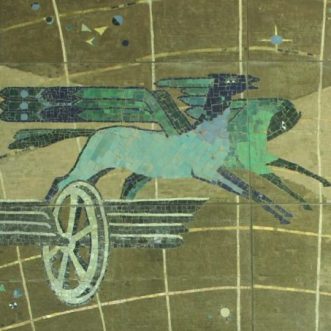
Once people had seen a wheel, they didn’t have to invent it.  They used it to improve a process – moving heavy things, hunting, war, playing.

Once people in England had seen a brick house, they didn’t have to invent it.   They used it as a model for building new, bigger,  more comfortable houses.  Then they used it as a model to build more comfortable and permanent houses for more people.

Once people saw the internet, they didn’t have to invent it.   They used it to re-invigorate old processes – shopping, talking, sharing information.

Once you have a process for doing something, you don’t have to invent it.   You can build on it to regenerate old processes you want to keep, or to create new processes that were not possible before.  You can use it to come up with a much better version.

Our civilisation is built on streamlining processes to make room for inventing new ones.

Many people see ‘process’ as restrictive, stultifying, oppressive.

That’s not because it’s process, it’s because people are inventing the wrong things.

Enrichment

Enrichment

For many in the business world, especially in the financial world, better is simply a synonym for bigger.   Growth of profits is all.   What else could better mean for business?

Well, it could mean making better things, things that are useful as well as profitable.  Things that are not harmful to the people who buy them.

It could mean making things in a better way, with more care for the resources that go into them and the effects, unintended or otherwise, that arise from the use of these resources.  It could mean finding ways of making things that re-use resources, so no further damage is done.   It could mean making things that undo some of the damage already done.   It could even mean creating positive, intended side-effects that make the whole environment better.

It could mean making things that give the people buying more of what they really want – agency, mastery, autonomy, purpose and community – which might mean making fewer things, and more opportunities for people to get together and achieve these ends for themselves.

It could mean giving the people making things more of what they really want – agency, mastery, autonomy, purpose and community, so that they can live richer lives at work, and at home.

This is growth, but not as we know it.  Enrichment, rather than accumulation.  Better, not merely bigger.

The good news is this kind of growth is unlimited.   Better makes bigger sustainable.
Step-wise

Step-wise

Sport has long recognised ‘Muri’ – wasted effort through overburdening people, equipment or systems.    An unrelenting schedule of high-intensity training is counter-productive.     Eustress, the beneficial stress of additional effort that leads to improved performance, is more than offset by injury and exhaustion, or distress.   Athletes burn out, physically and mentally.

The answer they’ve found is simple:  build in short periods of recovery between longer periods of intensity.   That doesn’t mean the athletes do nothing, simply that they are training at a lower level that prevents distress.   These short recovery periods allow bodies and minds to recover, but are not long enough to allow a slide back to the previous performance level.

The result is a series of systematic, and predictable step-wise improvements in performance, that can be planned to coincide with major targets, such as a local, national or international competition, or the Olympics.

It seems to me that businesses could learn a lot from this approach.

Huge thanks to Matthew Cunliffe for this insight.

Share your Promise better

Share your Promise better

Pinpointing who you are for as a business makes it much easier to share your Promise effectively and efficiently.

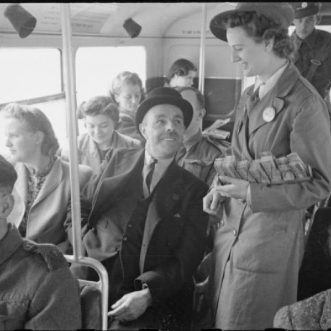
The people you wish to serve become much easier to find when you know who exactly who they are demographically.   If you start a new bus service on a route that is not currently covered, you know exactly where to look for potential passengers.

The people you wish to serve become much easier to find if you know who they are psychographically too.   If your new bus service uses luxury coaches with attendants, snacks and entertainment, you know which subset of potential passengers you need to appeal to, and probably what you need to say.

Of course, you need to find out whether there are enough of these people to make your bus service viable before you start it.

But if you know who you’re looking for, that’s easier too.

Making better promises

Making better promises

Assuming that your Promise of Value is already in the intersection of things profitable and things useful, how do you make it better?

Here are a few ideas:

  1. Make sure you’re absolutely clear about who you are for, and who you are not for.   In psychographic terms first (how they behave, what they believe, what problems they see), then demographic.   The more specific you can make this, the better.   Why?  Because it helps you to really see, touch and actually talk to the kind of people you wish to serve.  And it helps those people to see that you are for them.
  2. Spell out what you really do for these people.   Who do you help them to become?  How do you help them transform?
  3. Surface more about how you behave as a business – your values, style, culture, ‘the way things get done around here’.  Probably the most overlooked part of your Promise, how you do what you do is as important as what.

A simple way to test the result is to try and express it in this form:

“We do X.    Y people do/achieve/become Z because we do.”

Huge thanks to the brilliant Bernadette Jiwa for this format.

Making it better

Making it better

If a business is about making and keeping promises, what does better mean?

Making more promises?  Or keeping more?

Making our promises better?  Or keeping them better?

A good place to start might be to make better promises.   After all, the set of all useful things and the set of all profitable things do not fully correspond.

Better starts with finding our place in the intersection.

Recognition

Recognition

Occasionally, Keith Brymer Jones, a judge on ‘The Great Pottery Throwdown’ will shed a tear over someone’s work.   Making Keith cry is to aspiring potters

To err is human

To err is human

We all make mistakes.   We misjudge, we make assumptions based on prejudice and false knowledge.  We mis-time, we say the wrong thing, the wrong way.   We forget the right things, remember the wrong things.

We are after all human animals, driven by hormones, emotion and primitive responses.

We are complex evolving systems, living inside complex evolving systems.  There are bound to be mismatches.  And mismatches are one way we learn to evolve further.

So mistakes are bound to happen.   You can prevent many of them through process and a ‘golden rule’ that allows anyone to deal with unforeseen scenarios in line with your Promise, but you won’t prevent all of them.

Whether you like it or not, the way you deal with mistakes is part of your Promise.  But there is a way to make errors work for you and actually strengthen your Promise.

Be human.

Gimmicks

Gimmicks

“A gimmick is a novel device or idea designed primarily to attract attention or increase appeal, often with little intrinsic value.  When applied to retail marketing, it is a unique or quirky feature designed to make a product or service “stand out” from its competitors.”

It’s a great idea to aim to delight your clients by giving them more than they paid for.

But it takes careful thought to come up with the right kind of ‘extra’, because unless it is consistent with – comes from your Promise of Value, it will feel like a gimmick – a trick.

And appearing to be insincere is the last thing you want if you’re trying to keep your Promise and your customer.