Discipline makes Daring possible.

I never thought I’d say this…

I never thought I’d say this…

I enjoyed hoovering this morning.”

Perhaps it’s because I’ve had months of things being a bit upside-down, a bit chaotic, not running as smoothly as I’d like.

Of having too much to do.

But then I sorted things out.

And today it was good to get back to low-level but regular interventions.


Perhaps you don’t think you’d ever say this:

“I’m enjoying being away from my business most days.”

If you’ve had years of things being a bit upside-down, a bit chaotic, not running as smoothly as you’d like.

Of being too much in demand by your team.

Of bearing all the responsibility for what your customers experience.


Writing down your Customer Experience Score will get everything sorted out.

So you can get your team running your business alongside you, and move on to low-level but regular interventions.

And enjoy them too.


Discipline makes Daring possible

Ask me how.

Where this blog title came from

Where this blog title came from

Christmas, 2014.  I was listening to The Reith Lectures on Radio 4.

As usual, I hadn’t taken much notice of who was behind what I was listening to (I didn’t find out who played my favourite ever dance record until 30 years later).  Then the speaker said something that galvanised me.

“Discipline makes Daring possible”.

After that I had to follow up on it.

The lecture was the second of a series on “The Future of Medicine”.  The speaker was Dr Atul Gawande and the episode title was “The Century of the System”.

It “tells the story of how a little-known hospital in Austria managed to develop a complex yet highly effective system for dealing with victims of drowning.” – specifically in freezing water.  A system that could be triggered by the receptionist.

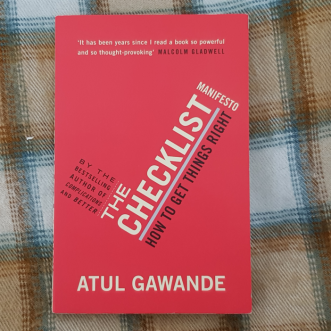
The story came from Gawande’s book, “The Checklist Manifesto“.   I tracked down a copy, bought it and devoured it in one sitting.

I thoroughly recommend it.   Not just because it shows how something as simple as a checklist can save millions of lives, also because it shows how resistant ‘professionals’ are to any kind of systemisation.

Which fed nicely into my fascination with finding that fine balance between systems and humans that makes for consistently rich and evolving customer experiences, as well as consistently rich and evolving employee experiences.

If discipline is what makes daring possible, how little of it can you get away with?

How much daring can it enable?

I don’t know.

But I’m still enjoying finding out.

They are not you

They are not you

There’s a very good reason why, as a Boss, you might balk at writing down your Customer Experience Score.

It’s not your style.

As the founder of your own small business, there’s a good chance you are a proactive, internally motivated, independent, options-oriented person.  You probably hate the idea of following someone else’s instructions.   After all, that may be a good part of why you set up on your own in the first place.  To follow your own rules, do what you think is right, try out different ways of doing things.

Your style is brilliant for setting up a new venture, you’re happy to experiment until you get your offer and your customer experience right.  And as long as its just you delivering it, things are fine.

The problems start to come as you take on new people, not to do the things you probably shouldn’t do, like bookkeeping or HR, or health and safety, but to act as if they were you in looking after prospects and clients.

But they are not you.

They don’t know what you know, they don’t have the history of how you got here, they don’t have your muscle memory of how to do things, and they almost certainly don’t work in your style.

Some of them will be more reactive than proactive.  Some will be more procedures-oriented – they will be more comfortable following a process.  Some will be more externally motivated – they will care more about what others think of them, about what you think of them.

None of this means they can’t do the job of looking after customers as well as you.  Some will do it even better than you.   It just means they won’t do it in exactly the same way as you, and they can’t learn how to in the same way you did – by working through it.

So, since like most of us, you are probably also a ‘my rules for me, my rules for you’ kind of person – what’s good for you is good for them – you assume that your people will just get in on with it.   That having seen you do it, they’ll be able to do it themselves – exactly as you do.   That they won’t want ‘to follow other people’s instructions’.  And at the same time you worry that they will want to put their own spin on it, to do it their own way, not yours.

And that your clients wouldn’t like it if they did.

But that’s just not true.

This is not a judgement on you.  This is just how it is.  People are different, in interesting ways that can enhance or diminish the experience for your clients.

You want to minimise the possibility of diminishing, but with ‘my way or the highway’ you minimise the possibility of enhancing too.

A much more satisfying approach is to get your vision of your ideal customer experience out of your head, and onto ‘paper’, not as ‘instructions’, but as a guide, like music, what I call a ‘Customer Experience Score’.

A Score that doesn’t dot all the i’s and cross all the t’s, or tell people what to do in excruciating detail.   That doesn’t dictate their every move, but tells them clearly and simply, visually, what has to happen, when, for the customer, leaving the details of execution to them.

The good news is that as an options person, you quite like setting up processes, you just don’t like following them.   So this job is perfect for you.

And when you’re done, you can share the work of caring for customers with more of your team, safe in the knowledge that they won’t go wrong, but they can be more right.

You’ll all be happier for it.

And so will your customers.

Discipline makes Daring possible.

Ask me how.

Commodities

Commodities

A commodity is a product that is easily interchangeable with other products that perform the same function.

Soap.

Teaspoons.

Washing machines.

TVs.

Employees.

Customers.

Accountants.

Lawyers.

Management consultants.


Wherever there are many almost indistinguishible options, those things become a commodity.

To a potential buyer, the only thing that matters about them is their price.  Not how they are produced, or where, or who by.


You don’t have to join in.

Discipline makes Daring possible.

Ask me how.
What if it doesn’t work?

What if it doesn’t work?

It’s hard to Disappear from the business you started – although not as hard as you might think.  After all, for a long time, you aren’t ‘gone’, you’ve just blended yourself in.  The disappearance is gradual, so everyone has time to get used to it.  Including you.

It’s probably better to say it’s hard to get started on Disappearing.

Why?

Because it’s  step into the unknown. And what if it doesn’t work?  What if this is the wrong choice?  What if there is something better out there?

To which in all honesty, my answers have to be:  ‘It might not work for you. It might be the wrong choice for you.  There might well be something better out there for you.’

But if you know you want to change your relationship with your business, there’s only one way to find out what the right solution for you is.

And that’s to take a step into the unknown.

My job is to make taking that step as easy and as comfortable as possible.  To show you as quickly as possible that what we do together will give you what you need.   To make sure that even if you decide to stop, you still feel you’ve gained something worthwhile.

I can tell you till I’m blue in the face that it has worked for most of the people who tried it.  In some cases spectacularly. Nobody lost by it.

But me telling you, or even me showing you, isn’t going to be as convincing as you having a go for yourself.

For that reason I’m going to start a club.

It’s called The Disappearing Bosses’ Club.

It will start in September with a 3-month experiment to find out what you really need, and put that in place.

I’m looking for pioneers to help me do that.

Let me know if you’re interested.

Thank you as always for being there.

Discipline makes Daring possible.

Succession

Succession

“My demonic drive to overcome or destroy any barrier certainly helped Riverford up to a point. But since we became employee owned, I’ve come to appreciate that dispersed power & consultation lead to better, safer, less impulsive decisions, & they don’t have to come at the price of bravery & responsiveness. Watching governance develop at Riverford makes me realise we need to give those with emotional balance, who shout less & don’t need power to bolster their fragile egos, a route to leadership & influence.” Guy Singh-Watson.

As the entrepreneur, the original Boss, you are the pebble that got the ripples going, the source of the vision that made the business take off.  But as we know, that doesn’t necessarily make you the best person to take it further.

At least, not on your own.

But for a founder, it can be incredibly scary to cede control, to hand over responsibility for that precious customer experience to someone else.

The answer is to take the ‘governance’ – the way your vision drives what the business does, and how it does it – out of one head (or a few), and build it into the business itself.

So it can be a firm foundation for leadership and influence; a springboard for bravery and responsiveness, accessible to everyone.

A bit of Discipline from you, the original Boss, makes Daring possible.   Everyone can become a Boss.

There’s no better way to ensure that your legacy will ripple on.

Ask me how.


Humanity

Humanity

Today’s recommendation is to read ‘Humanocracy‘ by Gary Hamel and Michele Zanini; to follow them on LinkedIn, and to subscribe to their YouTube channel, ‘The New Human Movement


Yes, they are talking about big organisations.

They are also in many cases old organisations, who have lasted this long often at the top of their industry.

They are also in many cases big, old organisations who have managed to survive by changing how they run themselves.


What they all have in common is that they view the business as a great big collaboration of talented people, rather than a machine.


How big could your business get if you looked at it this way?  How long could it last?


You have an enormous advantage over these organisations – you haven’t gone corporate yet, so you don’t have to undo that first.


Take it.


“This is what is possible when you treat human beings like they are actually human beings”. John Ferriola.


Discipline makes Daring possible.

Ask me how.
De-cluttering

De-cluttering

“Do you really need 10 cake slices?  Let’s get them down to one or two, shall we?”

One of the first things a professional de-clutterer will do is get rid of ‘duplicates’.

This is a strictly utilitarian view, that says one cake-slice is much like another, and ignores all the possible reasons why you might end up with 10 of them.

You might have received one as a gift, or inherited one from a parent or friend. You might have had to rush out and buy new because you couldn’t put your hand on one just when you needed it. You might have just liked the look of it.

Or you might simply be satisfying that very human urge for repetition with variation that encourages us to build collections.

All that makes choosing ‘the one’ that’s going to stay, emotional and just a bit stressful, especially if you’re made to feel judged by your inability to maintain a minimal lifestyle.

Which might be one reason I dislike de-cluttering TV programmes so much.

As you grow your small business, working out what your clients really want, and finding new ways to delight them, you acquire business processes like I acquire cake-slices.

You inherit them from your previous workplace, or maybe even the previous owner. A new employee gifts you a shiny new one.  You cobble a new one together in a rush, because you can’t quite put your hand on the one you did earlier when you need it.

Or, as happens when we’re in the thick of it, it’s simply easier to focus on the differences between cases rather than the similarities.

Luckily, business processes aren’t like cake slices. We don’t have to choose.

We can combine the best features of all of them to create one beautiful and super-useful process, with all the emotion built in, and still with room enough to deal with a new kind of cake.

That means that when I work with clients, I can start by assuming we’re going to keep everything, and work on capturing and streamlining the most salient version – the one that happens most, or is the most difficult to hand over, or the most complicated.

Usually, by the time we’ve worked through that, the owner has realised that they don’t need all the others. This new process covers all the options.

We check to make sure of course. And if, on further inspection, it turns out we do need another version, we put that in place, reusing as much of the newly designed process as we can.

No stress. No agonising over what to keep and what to throw away. No being made to feel like you are in the wrong.

Just the relief of knowing that all that clutter is now out of your head, and out of the business too.  Making it a calmer, clearer place to work for everyone, with added room for innovation.

Discipline makes Daring possible.

I’m Kirsten Gibbs, Boss Disappearer, and I can help you write your Customer Experience Score , to make your business easier to run, easier to grow and easier to build into a legacy you’ll be proud of.

Ask me how.

Making payment part of the experience

Making payment part of the experience

It’s a cliché that small businesses like me don’t like to ask for payment.   That we somehow feel guilty about asking to be paid for the value we deliver – perhaps because we don’t altogether believe in that value ourselves.

The upshot is that either we invoice late, even erratically, or we seek to make the payment aspect invisible to the client, by using a service like GoCardless for example.

But what if there was a better way?

What if you could make payment truly part of the customer experience?  In the way it often is for retail.

What if you could use every invoice to remind your client of how far they’ve come on the journey they enrolled on with you?  Of how much they’ve achieved as a result of working with you?  Of all the ideas and actions you’ve generated together?

To enable them to relive all the reasons they chose you, and the benefits they’ve gained as a result?

That might be a far from unpleasant experience for the client.

Of course to keep invoicing, you’d have to keep delivering value.

But that’s not a bad discipline to put yourself under.

After all, Discipline makes Daring possible.