Discipline makes Daring possible.

What everyone really wants

What everyone really wants

What do your people really want?

The same things you do:

  • Agency – to make their own ‘me-shaped’ dent in the universe.
  • Mastery – to learn and master (even teach) new skills.
  • Autonomy – to be free to choose how they make their dent.
  • Purpose – to do this for something bigger than themselves, with meaning beyond the sale.
  • Community – to do all this with ‘people like us’.
  • Status – to know (and for others to know) where we stand in our communities.

If you escaped corporate life to set up on your own, you’ve almost certainly found that having these things at work didn’t just make you happier, it made your work better too.

Pass it on.   It will be worth it.

Feedback is how we learn

Feedback is how we learn

A complex evolving system, such as a planet, an ecosystem or a business, learns through feedback.

That means at least 4 things:

  • There has to be room within the ‘normal process’ for variation.

  • There has to be a way of recognising repeated variations that should be part of the normal process.

  • There has to be a way of quickly and easily capturing these into the new ‘normal process’.

  • There has to be enough ‘slack’/redundancy in the whole system to make the first 3 possible and practical.

Without these, a system fossilises, becomes irrelevant and ultimately dies.

Thanks to Seth Godin for the prompt.

What this hooey is all about

What this hooey is all about

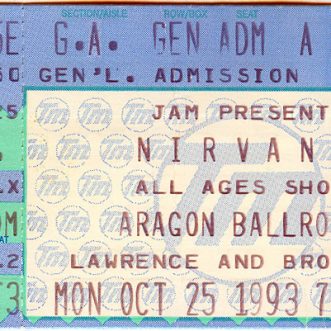
In this letter to Nirvana, pitching to produce their next album, Steve Albini sets out his Promise of Value for them to take or leave.

It’s not 100% applicable to a business like yours, (unless your business is actually a band) but there’s a lot that could be learned from it:

“I’m only interested in working on records that legitimately reflect the band’s own perception of their music and existence. If you will commit yourselves to that as a tenet of the recording methodology, then I will bust my ass for you. I’ll work circles around you. I’ll rap your head with a ratchet…”

“If the record takes a long time, and everyone gets bummed and scrutinizes every step, then the recordings bear little resemblance to the live band, and the end result is seldom flattering.”

“I consider the band the most important thing, as the creative entity that spawned both the band’s personality and style and as the social entity that exists 24 hours out of each day. I do not consider it my place to tell you what to do or how to play.”

“I like to leave room for accidents or chaos. Making a seamless record, where every note and syllable is in place and every bass drum is identical, is no trick. Any idiot with the patience and the budget to allow such foolishness can do it. I prefer to work on records that aspire to greater things, like originality, personality and enthusiasm.”

As the founder of your business, you’re the equivalent of Nirvana.  You’re the live band.   The customer experience you’ve carefully crafted as you grew your business is what your audience buys.

Your team, is like the records you make to get the music to more of those who want to hear it – far into the future.

Only now you are Steve Albini, and it’s your job to make sure the record delivers as if it was you:

“If every element of the music and dynamics of a band is controlled by click tracks, computers, automated mixes, gates, samplers and sequencers, then the record may not be incompetent, but it certainly won’t be exceptional. It will also bear very little relationship to the live band, which is what all this hooey is supposed to be about.”

Write your people a score, make sure they’re familiar with your sound and ethos, then let them play as human beings, not machines.


The entertainers and the sinking cruise ship

The entertainers and the sinking cruise ship

I’ve just caught the last half of ‘Life Changing’ on BBC Radio 4.

It’s a thrilling and hopefully infrequent illustration of why hierarchy sucks and free-playing, experimental and autonomously responsible human beings are the best.

After their cruise ship was holed, the captain hid and the senior managers ran away.

The entertainers worked out something was wrong, then, worried about the customers and the rest of the crew, did something about it.   They initiated processes that saved all 581 people left on board, including themselves.

Maybe they were able to do that precisely because they weren’t on the org chart?

Doh!

Doh!

I’ve been wondering why my blog posts have not been going out.

Doh!

It was because I’d paused the campaign to check something over the weekend, and forgot to unpause it.

Apologies.

I hope you missed me.

Thank you for putting up with me.

What capitalism wants

What capitalism wants

All capitalism wants is a money-machine.

Machines aren’t good places for humans (or anything that truly lives) to thrive.

One of them has to give.

The equality of unequals

The equality of unequals

You know your clients are individuals.  With individual personalities, character traits and preferences.   You know that what delights one won’t delight another.

You also know that you want them all to be delighted by your service.   You want an equality of result, and you recognise that using exactly equal means won’t deliver that.

In the same way, you know that your people are individuals, with individual personalities, character traits and preferences.   That what delights one won’t delight another.   Yet you want all of them to be delighted to work here, because that’s how they are motivated to delight your clients.   You want an equality of result, and you recognise that using exactly equal means won’t deliver that.

“But how do I keep things consistent?” 

By setting boundaries for behaviour, a floor for what has to be done, then giving your people free play to experiment and explore what delight means to them and to clients.

Doing exactly the same thing every time is what machines do.   Cookie-cutting is an efficient way to produce to a minimum standard at scale, but it’s rarely a delightful experience.

Equality doesn’t have to mean treating everyone the same, it can be about doing whatever it takes to produce the same outcome.  And if a delighted human is your desired outcome, delighted, free-playing humans are your best means of achieving it.

The next step

The next step

Just because you’ve got someone over the threshold, doesn’t mean you stop guiding.   The destination may be obvious to you, but is it to your client?

The next step is difficult to take if you don’t where it is, or where it leads.

Almost impossible

Almost impossible

I loved Seth Godin’s blog post yesterday.

In it he talks about the gap in customer service between one person in your team and another – or even between the same person on a good day and a bad day – and how you might address it.

One approach is to nail everything down so much that delivery of the experience is exactly the same, no matter who is giving it.   Another is to leave it to a great person doing the job, giving them “room to shine. With all the variability that entails.”

“It’s almost impossible to have both.”

Almost, but not impossible.

Hire great people, give them a Promise of Value and a Customer Experience Score, that creates a floor, but no ceiling, then set them free to interpret it in their own way.

Variations on a theme.   The best of both worlds.