Discipline makes Daring possible.

Who do you know that’s suffering from ‘Founder’s Syndrome’?

Who do you know that’s suffering from ‘Founder’s Syndrome’?

‘Founder’s syndrome’ – some extracts from the Wikipedia definition:

“The organization is strongly identified with the founder”.

“Obsessive leadership style”.

“Founders tend to make all decisions without a formal process or feedback from others.”

“little meaningful strategic development, limited professional development. little organizational infrastructure in place”

“Higher levels of micromanagement”

“no succession plan.”

“recruits find that they are not able to contribute in an effective and professional way.””

“The founder becomes increasingly paranoid as delegation is required, or business management needs are greater than their training or experience.”


To me, much of this looks like the classic, painful transition from one-person-band, to few-person-band, to full-blown company.

Which in the rather smug and contemptuous view of the writers of this Wikipedia entry, is all too often the transition from a small, personal, impact-driven, human-scaled business to a large, impersonal, money-focused capitalist corporation.

The founder wants to keep things personal and true to their original vision.

New owners or new management want to make things efficient, corporate money-oriented, and therefore impersonal.

In other words, as far as the founder is concerned, they want to make it ‘someone else’s business’. (https://gibbsandpartners.com/blog/2021/09/design-your-business-or-it-will-be-designed-for-you/)

Of course the founder resists.

So would I.


There is a preventive for ‘Founder’s syndrome’:


Become a Disappearing Boss.


Embed the founding vision and personality into the operating processes of your business before you try to scale, with a Customer Experience Score .

You’ll be able to scale without managers, without investors – other than the people you serve. Without going corporate.

The best of both worlds: personal, true to the original vision and magnifying your impact.

Even better, once its built into the way your business works, your Score takes on a life of it’s own, nurtured and improved by everyone in the business.

It becomes harder for anyone to interfere – even you.

Discipline makes Daring possible.


The Disappearing Boss is currently available as a ‘done for you’ option and a 1:1 coaching programme.

From next month it will also be available as a DIY option as The Disappearing Bosses Club.

I’m looking for 7 founders of unique and amazing impact-focused businesses, employing between 3 and 9 people, who want to magnify their impact without losing what makes them unique, to help me test and refine my design for this part of my business.

It will be a 3 month committment, at a pioneer price, that will add value to your business, or your money back.

DM me if you want to know more.

All in it together

All in it together

Mintzberg’s continuum of management

Of course the fundamental problem with adopting any of these ‘nicer’ forms of management, is that the underlying asymmetries of power, earnings and value productivity are all still there.

And when push comes to shove, it most often turns out that we’re not ‘all in it together’.

Workers are not ‘family’.

We can be thrown out on our ear.

So it’s no surprise that many people distrust the language of ‘nice’ management.

No surprise that I’m a firm believer in employee ownership.

No surprise that I think the best way to prepare your team to own your business is to get them running it alongside you first.

And that the best time to start is while you’re still small enough to adapt.


Discipline makes Daring possible.
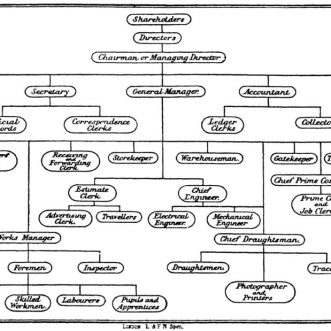
Getting people to do what needs doing

Getting people to do what needs doing

When I was in infant school, I used to play with my friends.  We’d pretend to be characters in a story, then play-act the story, making it up as we went along.    We’d decide who was going to be who, then start with a scenario from our story.  We never knew how the story was going to end, or even where it would go next.   We’d discuss that between ourselves as we play-acted – ‘what if you do this, then I’ll do this, and she can do that’.  We always agreed on something mutually satisfying to all parties, and so ended up with a very satisfying play, that would often extend over multiple playtimes.

We played other, more formal games too – skipping – with two people turning the rope, and everyone taking a turn to jump in and do tricks; or French skipping, where we each took turns to make a kind of cat’s cradle out elastic held taut between two people’s ankles.

Whether though consultation and improvisation, or by using a shared set of rules, we collaborated to produce a shared outcome we were all happy with.

What we didn’t realise, couldn’t realise at that age, was that what we were actually doing was getting each other to do what needed doing.

In other words, management.

Nowadays we tend to think of management as a mostly top-down affair.   Imposed in the belief that people a) won’t work unless they’re made to, and b) need to be surveilled to make sure they do. “Getting [other] people to do what needs doing”.

That’s a very 18th century view, based on a fundamental and very apparent asymmetry of power.

The asymmetry is still there, but many organisations have found more equitable ways to get people to do what needs to be done:

And seems that the further to the right, the better the performance as a whole.  Although most organisations I’ve worked in, have barely made it past a ‘participative’ style.

Personally, I think this diagram should look more like this:

Which is why The Disappearing Boss is actually about making everyone a Boss.

But then, I never did like games where someone was ‘in charge’.

Not even when it was meant to be me.


Discipline makes Daring possible.

Ask me how.


HT to Seth Godin for the prompt.

I never thought I’d say this…

I never thought I’d say this…

I enjoyed hoovering this morning.”

Perhaps it’s because I’ve had months of things being a bit upside-down, a bit chaotic, not running as smoothly as I’d like.

Of having too much to do.

But then I sorted things out.

And today it was good to get back to low-level but regular interventions.


Perhaps you don’t think you’d ever say this:

“I’m enjoying being away from my business most days.”

If you’ve had years of things being a bit upside-down, a bit chaotic, not running as smoothly as you’d like.

Of being too much in demand by your team.

Of bearing all the responsibility for what your customers experience.


Writing down your Customer Experience Score will get everything sorted out.

So you can get your team running your business alongside you, and move on to low-level but regular interventions.

And enjoy them too.


Discipline makes Daring possible

Ask me how.

Where this blog title came from

Where this blog title came from

Christmas, 2014.  I was listening to The Reith Lectures on Radio 4.

As usual, I hadn’t taken much notice of who was behind what I was listening to (I didn’t find out who played my favourite ever dance record until 30 years later).  Then the speaker said something that galvanised me.

“Discipline makes Daring possible”.

After that I had to follow up on it.

The lecture was the second of a series on “The Future of Medicine”.  The speaker was Dr Atul Gawande and the episode title was “The Century of the System”.

It “tells the story of how a little-known hospital in Austria managed to develop a complex yet highly effective system for dealing with victims of drowning.” – specifically in freezing water.  A system that could be triggered by the receptionist.

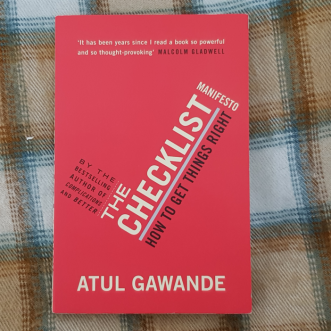
The story came from Gawande’s book, “The Checklist Manifesto“.   I tracked down a copy, bought it and devoured it in one sitting.

I thoroughly recommend it.   Not just because it shows how something as simple as a checklist can save millions of lives, also because it shows how resistant ‘professionals’ are to any kind of systemisation.

Which fed nicely into my fascination with finding that fine balance between systems and humans that makes for consistently rich and evolving customer experiences, as well as consistently rich and evolving employee experiences.

If discipline is what makes daring possible, how little of it can you get away with?

How much daring can it enable?

I don’t know.

But I’m still enjoying finding out.

Express yourself

Express yourself

Starting a business is largely about you.  Expressing your passions, your purpose, your vision.

But it can’t be only about you.

The secret is to express yourself in a way that resonates with other people.   That allows them to express something about themselves too.

Some will want to be customers, others will want to help you do more of it, still others will want to bask in the glow of your success.

Your business starts with you.  But it mustn’t end there.

Building it as a system for making and keeping promises is an excellent way to remind yourself of this.


Discipline makes daring Possible

They are not you

They are not you

There’s a very good reason why, as a Boss, you might balk at writing down your Customer Experience Score.

It’s not your style.

As the founder of your own small business, there’s a good chance you are a proactive, internally motivated, independent, options-oriented person.  You probably hate the idea of following someone else’s instructions.   After all, that may be a good part of why you set up on your own in the first place.  To follow your own rules, do what you think is right, try out different ways of doing things.

Your style is brilliant for setting up a new venture, you’re happy to experiment until you get your offer and your customer experience right.  And as long as its just you delivering it, things are fine.

The problems start to come as you take on new people, not to do the things you probably shouldn’t do, like bookkeeping or HR, or health and safety, but to act as if they were you in looking after prospects and clients.

But they are not you.

They don’t know what you know, they don’t have the history of how you got here, they don’t have your muscle memory of how to do things, and they almost certainly don’t work in your style.

Some of them will be more reactive than proactive.  Some will be more procedures-oriented – they will be more comfortable following a process.  Some will be more externally motivated – they will care more about what others think of them, about what you think of them.

None of this means they can’t do the job of looking after customers as well as you.  Some will do it even better than you.   It just means they won’t do it in exactly the same way as you, and they can’t learn how to in the same way you did – by working through it.

So, since like most of us, you are probably also a ‘my rules for me, my rules for you’ kind of person – what’s good for you is good for them – you assume that your people will just get in on with it.   That having seen you do it, they’ll be able to do it themselves – exactly as you do.   That they won’t want ‘to follow other people’s instructions’.  And at the same time you worry that they will want to put their own spin on it, to do it their own way, not yours.

And that your clients wouldn’t like it if they did.

But that’s just not true.

This is not a judgement on you.  This is just how it is.  People are different, in interesting ways that can enhance or diminish the experience for your clients.

You want to minimise the possibility of diminishing, but with ‘my way or the highway’ you minimise the possibility of enhancing too.

A much more satisfying approach is to get your vision of your ideal customer experience out of your head, and onto ‘paper’, not as ‘instructions’, but as a guide, like music, what I call a ‘Customer Experience Score’.

A Score that doesn’t dot all the i’s and cross all the t’s, or tell people what to do in excruciating detail.   That doesn’t dictate their every move, but tells them clearly and simply, visually, what has to happen, when, for the customer, leaving the details of execution to them.

The good news is that as an options person, you quite like setting up processes, you just don’t like following them.   So this job is perfect for you.

And when you’re done, you can share the work of caring for customers with more of your team, safe in the knowledge that they won’t go wrong, but they can be more right.

You’ll all be happier for it.

And so will your customers.

Discipline makes Daring possible.

Ask me how.

Commodities

Commodities

A commodity is a product that is easily interchangeable with other products that perform the same function.

Soap.

Teaspoons.

Washing machines.

TVs.

Employees.

Customers.

Accountants.

Lawyers.

Management consultants.


Wherever there are many almost indistinguishible options, those things become a commodity.

To a potential buyer, the only thing that matters about them is their price.  Not how they are produced, or where, or who by.


You don’t have to join in.

Discipline makes Daring possible.
Ask me how.