You might like this excellent podcast series from Gary Hamel and Michele Zanini, authors of ‘Humanocracy’.
In ‘The New Human Movement‘ they tell fascinating stories of how huge companies have been able to re-invent themselves simply by giving everyone who works for them a bit more of what they really want:
Agency – to make their own ‘me-shaped’ dent in the universe.
Mastery – to learn and master (even teach) new skills.
Autonomy – to be free to choose how they make their dent.
Purpose – to do this for something bigger than themselves, that has meaning beyond the sale.
Community – to do all this with ‘people like us’.
Status – to know (and for others to know) where we stand in our communities.
Thereby unleashing the ‘everyday genius’ of everyone, instead of relying on that of a chosen few.
Imagine the impact you could have if you started from here in the first place?
I’m hungry, and I want lunch delivered to me at home, I can choose from at least a dozen food delivery apps, each of whom will offer me dozens of local take-aways, each of whom will offer me dozens of menu items, plus additional special menu combinations. Or I go out to my regular restaurant, which will offer me dozens of menu items, plus additional special menu combinations.
How do I choose?
I’m looking for curtain rails, and I need them soon. I can choose from several brands online, through dozens of suppliers on Amazon, e-bay, big-box retailers and individual shops. Most brands and several suppliers are in all of these places.
How do I choose?
My bet is that most often, people choose what’s familiar, the dish they had for lunch yesterday, or the same day last week. The brand they’ve heard of, or the retailer they recognise. Or the cheapest.
Because selecting what is really going to be right for me, right now, among so many choices is exhausting.
There are reasons small restaurants thrive in the centre of Paris. One is that they serve a working population who still value a proper lunch break. The other is that they don’t waste their customers’ valuable time making them choose what to eat. There are only two options on the menu.
If you aren’t well known yet, and you’re not the cheapest, but you know you might be just what the people you seek to serve need, right now, don’t make them work too hard.
Fewer options makes it easier for them to try something new.
the power to influence or direct [other] people’s behaviour or the course of events.
the ability to manage a machine, vehicle, or other moving object.
the restriction of an activity, tendency, or phenomenon.
the ability to restrain one’s own emotions or actions.
a means of limiting or regulating something.
verb:
determine the behaviour or supervise the running of.
maintain influence or authority over.
limit the level, intensity, or numbers of.
remain calm and reasonable despite provocation.
regulate (a mechanical or scientific process).
hierarchy (ˈhʌɪərɑːki)
noun:
a system in which members of an organization or society are ranked according to relative status or authority.
the clergy of the Catholic Church or of an episcopal Church.
the upper echelons of a hierarchical system.
an arrangement or classification of things according to relative importance or inclusiveness.
the traditional system of orders of angels and other heavenly beings.
chaos (ˈkeɪɒs)
noun:
complete disorder and confusion.
the property of a complex system whose behaviour is so unpredictable as to appear random, owing to great sensitivity to small changes in conditions.
the formless matter supposed to have existed before the creation of the universe.
the first created being, from which came the primeval deities Gaia, Tartarus, Erebus, and Nyx.
anarchy (ˈanəki)
noun:
a state of disorder due to absence or non-recognition of authority or other controlling systems.
the organization of society on the basis of voluntary cooperation, without political institutions or hierarchical government; anarchism.
The interesting thing about all of these definitions (from Oxford Languages), is that all but one are descriptions.
That odd one out is an opinion. From someone further up the hierarchy, used to being in control of people other than themselves.
Voluntary cooperation is a form of control. It’s just that each participant gets a say in in defining what it means (sometimes as they go along), and agrees to join in.
I must apologise to regular readers. I’m about to mention, yet again, one of my favourite business books.
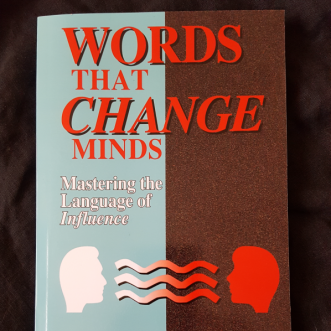
The brilliant “Words That Change Minds”, by Shelle Rose Charvet is both a guide to the different ‘working styles’ people bring to a given context (in this case work), and a guide for using what you learn about these to communicate appropriately.
Some of the dozen dimensions she explores are familiar, such as whether people are motivated ‘towards’ a goal, or ‘away from’ a situation, but others are a bit more unusual, such as how much people are motivated by change, and what kind of change they enjoy; or how people get convinced.
Another interesting dimension is how motivated people are by having a procedure to follow (Procedures) vs making up their own way of doing things (Options).
At the extremes, both styles are difficult – an extreme ‘Procedures’ person needs something they can follow like white lines on a road, and will be completely thrown by missing steps or exceptions. An extreme ‘Options’ person will get nothing achieved, because they are forever reinventing the wheel before they use it.
As you might expect, entrepreneurs are, almost by definition, towards the ‘Options’ end of the scale. After all they’ve identified a better way of doing things, and experimented with that untill they’ve turned it into a successful business.
What they may not realise is that the people they employ aren’t necessarily the same. Which can lead to frustrations on both sides:
“Why don’t you just do it?”, “Why am I the only one that thinks of these things?”, “Why am I re-doing everyone else’s job?”
“Because you’ve never told me what it is you trying to do.”, “Because you never told me how it should be done.”, “Whatever I do, you’ll change it, so why should I bother?”.
Fortunately, most of us fall somewhere in the middle of these extremes, so it’s possible to accommodate everyone’s individual working style without having to delve too far into what they are (although I do recommend using this book to create a ‘brief’ for a role, and recruiting for the critical dimensions).
Here’s how you do that:
Create a high-level map of how your business makes and keeps its Promise to the people it serves. A Customer Experience Score, that tells people what has to happen when, but leaves the details of how to do it to them.
Document important detailed techniques separately, in a kind of ‘Enquire Within upon Everything’, so it’s available anyone who needs it, either as a day-to-day guide, or an occasional memory-refresher.
Where it’s really useful, signpost relevant techniques from the Score.
For example:
Images copyright DogKnows Ltd.
With a score like this, people know the outcome they are aiming for, and can be given full responsibility and autonomy to achieve it (or over-achieve it), in their own unique style. Or to simply follow the process, if that’s how they roll.
Discipline makes work more enjoyable for everyone. Including you.
We humans are apt to shout ‘Eureka!’ at our first inkling of understanding.
And then rush to apply our new bit of knowledge, without thinking about what else might be true, or what the consequences might be.
We grow our understanding literally bit by bit, and fail to see the systems those bits are part of.
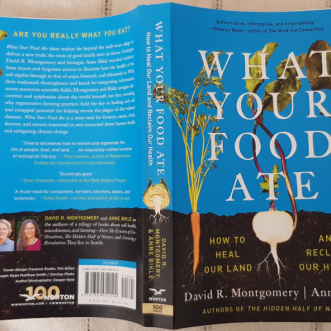
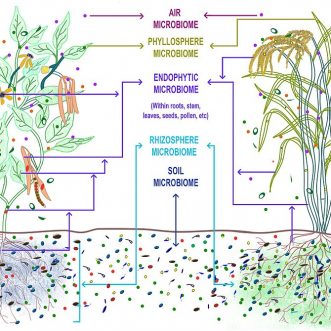
In our farms, we miss that microbes, plants and fungi have evolved to work together over aeons. That animals evolved to work with microbes, plants and fungi over aeons.
So we see a thing like artificial fertiliser, or ploughing, or pesticides, or herbicides, and say “That’s the answer, let’s apply more if it. Now! More! Faster!”
Soon we’ve destroyed the finely balanced systems that were there before. And made ourselves more dependent on our crude and artificial methods than before.
In industry, we miss that humans have evolved to care for, play and work together over millenia.
So we come up with a theory that people are selfish and lazy and say “That’s the answer, let’s apply more if it. Now! More! Faster!”. By force if necessary.
Soon we’ve destroyed the finely balanced systems that were there before. And made life miserable for billions.
The good news for our soils is that microbe generations are short, so with the right treatment, our soil microbiome can recover within just a few years.
The good news for our people is that human generations are long, so we haven’t forgetten any of our co-operative, playful and caring traits. They are there already, just waiting to be released.
It’s not too late.
The way to regenerate our soils is through many more smaller farms, growing a wide variety of high-value vegetable crops, with no-digging, plenty of organic matter and lots of rotation.
The way to regenerate our industry is through many more smaller firms, offering a wide-variety of high-value services, with employee ownership, responsible autonomy, plenty of human interaction and lots of rotation.
I can’t help with farming, but business? That’s what I’m here to do.
It seems to me that our besetting sin as human beings is that we are always looking for silver bullets, the simple solution, the one true answer to everything.
We blind ourselves to the systems that surround us, and in so doing, destroy them.
Why?
Because it’s impossible to monopolise complexity.
So we reduce the world to silver bullets, and destroy the systems that actually enable our lives and others, to maintain a system we created and imposed upon the world.
A system we imagined and could easily re-imagine.
Capitalism.
Not markets, or making and selling things, or money.
Capitalism – ever-increasing profit for profit’s sake, regardless of the damage done along the way.
The people ‘growing on’ these corals don’t know what the reefs they end up will look like.
The corals will decide that.
What they do know is that they are aiming to restore as many coral reefs as they can, and that coral can grow, more safely and reliably when it is supported by an appropriate structure, that leaves it free to grow its own way, until its ready to be ‘transplanted’.
Man-made structure can be incredibly helpful when you’re trying to grow for a visionary outcome.
Growing your small business from you, to a few and then a few more people can feel like riding a tiger. Unpredictable, challenging, dangerous even.
New customers, new employees, new ideas, new ways of doing things that don’t match the customer experience you carefully crafted on your own. Trying to match increased costs with an increase in income. It can feel like everything just gets wilder.
The answer isn’t to cage the tiger, or to beat her into submission.
Instead, make sure she shares the values you value, tell her what you want her to do to make and keep your promises, give her a safe enclosure to roam in, and let her get on with it.
Get off her back.
Because she’s not actually a tiger.
She’s a team of people like you, who want to do the best they can, like you, in a space that gives them agency, mastery, autonomy, purpose and a feeling of community, like you.
How do you help the climate anxious (terrified!), overwhelmed by the enormity of what they see coming?
Here’s one way:
– Help them to see the system they are in.
– Enable them to find their own way into an examination of it’s structure.
– Connect the dots, so they can find their best place to take action.
– Show them where others are already making a difference.
– Enrol them into a growing web of actors changing the system.
In other words, give them an opportunity to exercise the agency, mastery and autonomy they crave, for a mighty purpose, in a growing community of like-minded, like-hearted people.