July 13, 2023
Orange Oakleaf Butterflies confuse their predators on purpose, hiding in plain sight.
In the dry season, they pretend to be a dried out dead leaf. In the rainy season they pretend to be a damp dead leaf. The birds, ants, spiders and wasps that eat them, already have a mental model of what a dead leaf is. That model doesn’t include being edible. So they ignore this leaf and carry on looking for their next meal.
We humans are the apex predator par-excellence. We don’t have to pretend to be anything other than we are to survive.
Still, we confuse other people all the time. Sometimes on purpose, most often by accident. Because we constantly assume that our mental models are the same as everyone else’s. We think everyone knows what we know, believes what we believe and wants what we want.
Take a small business:
For a shareholder or investor it’s a machine for generating dividends on their capital.
For founders it’s a way to make their unique dent in the universe.
For their accountant it’s a set of connected accounts that need to balance.
For their operations manager it’s a set of loosely related functions, one of which they probably consider to be more important than the others.
For some employees it’s simply a means to enjoy life outside work. For others it’s means to survive. For others still, play.
For customers it’s a solution to a problem, a status enhancer, a community they value or a purpose they believe in.
All these different mental models can pull a business in different directions, leading to confusion.
And as we know, a confused mind says ‘no’.
The answer is to get clear about what your business is here to do as soon as you can, and to present that as an explicit model everywhere.
Choose a model that is simple, easy to communicate and effective in delivering what everyone wants.
Design your business around that model, so that the way it works clearly reflects the concept behind it.
Share that model in your marketing materials, shareholder reports, filed accounts, operations manual, help guides and status reports, so that it becomes utterly familiar, whatever your role or relationship to the business.
That way, nobody’s confused.
Some may not like it, but they will leave you alone. The ones that do like it will be more than happy to help you bring it to life.
If you’re a small business employer, looking for a model to adopt, you’ll be pleased to know that you already have one, hiding in plain sight.
And I can help you reveal it.
Discipline makes Daring possible.
Ask me how.
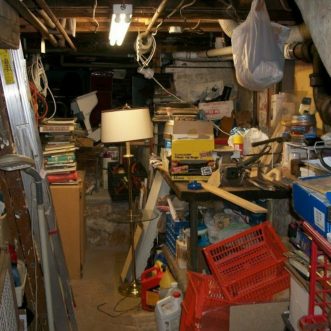




One of the first things a professional de-clutterer will do is get rid of ‘duplicates’.
This is a strictly utilitarian view, that says one cake-slice is much like another, and ignores all the possible reasons why you might end up with 10 of them.
You might have received one as a gift, or inherited one from a parent or friend. You might have had to rush out and buy new because you couldn’t put your hand on one just when you needed it. You might have just liked the look of it.
Or you might simply be satisfying that very human urge for repetition with variation that encourages us to build collections.
All that makes choosing ‘the one’ that’s going to stay, emotional and just a bit stressful, especially if you’re made to feel judged by your inability to maintain a minimal lifestyle.
Which might be one reason I dislike de-cluttering TV programmes so much.
As you grow your small business, working out what your clients really want, and finding new ways to delight them, you acquire business processes like I acquire cake-slices.
You inherit them from your previous workplace, or maybe even the previous owner. A new employee gifts you a shiny new one. You cobble a new one together in a rush, because you can’t quite put your hand on the one you did earlier when you need it.
Or, as happens when we’re in the thick of it, it’s simply easier to focus on the differences between cases rather than the similarities.
Luckily, business processes aren’t like cake slices. We don’t have to choose.
We can combine the best features of all of them to create one beautiful and super-useful process, with all the emotion built in, and still with room enough to deal with a new kind of cake.
That means that when I work with clients, I can start by assuming we’re going to keep everything, and work on capturing and streamlining the most salient version – the one that happens most, or is the most difficult to hand over, or the most complicated.
Usually, by the time we’ve worked through that, the owner has realised that they don’t need all the others. This new process covers all the options.
We check to make sure of course. And if, on further inspection, it turns out we do need another version, we put that in place, reusing as much of the newly designed process as we can.
No stress. No agonising over what to keep and what to throw away. No being made to feel like you are in the wrong.
Just the relief of knowing that all that clutter is now out of your head, and out of the business too. Making it a calmer, clearer place to work for everyone, with added room for innovation.
Discipline makes Daring possible.
I’m Kirsten Gibbs, Boss Disappearer, and I can help you write your Customer Experience Score , to make your business easier to run, easier to grow and easier to build into a legacy you’ll be proud of.
Ask me how.