Discipline makes Daring possible.

News

News

A system of any kind survives through feedback.   What feels/sounds/smells/tastes/looks right.  Or wrong.   Or not particularly either way.   Feedback helps us to learn, evolve and interact safely with the world around us.  That means that getting good quality feedback about what’s actually going on is crucial.   In fact, much of what concerns us as business owners is how to gather feedback effectively and act on it appropriately.

Marketing isn’t feedback.  Although you can use it that way.   I don’t wear fashion, but I do like to know ‘what’s going on’.  A twice-yearly trawl through marketing materials – magazines, shop windows, a look at what’s around and at what people are actually wearing – keeps me up to date.

Social media isn’t feedback.  It’s marketing.  Increasingly it’s geared to tell us what we want to hear, to entrench us in our worldviews, intensify our outrage, because that keeps us on the platform, there to see the marketing that pays for it.

‘The news’ as we mostly know it isn’t really feedback either.  It’s also marketing.  Designed to sell a newspaper or a news channel, or a worldview.   And it gets more like social media every day.

But it could be feedback, if we wanted it to be.

Rearranging deckchairs

Rearranging deckchairs

Before you cut costs in your central department of government or business by removing a job it currently does, here’s a good question to ask:

  • Can we remove the need for this job completely?

If the answer to that is ‘No’, then ask these:

  • Who is best placed to do this job effectively and efficiently?
  • What resources do we need to shift along with the responsibility?
  • What resources will they need to set themselves up to do this job?

I’m all for devolution.  The closer to the front line the better, but too often ‘devolution’ merely means shifting where the work is accounted for without shifting the resources needed to get it done.

When you’re looking for real efficiency gains, shuffling deckchairs is rarely the best answer.

Improvising

Improvising

The last year or so has forced us all to improvise.

Faced with extreme uncertainty, this is a rational response.  Improvisation enables us to quickly learn what works and what doesn’t in a rapidly shifting world.   It helps us to try new things, change direction, discover new opportunities.

In effect, the last year turned us all back into new businesses.

If your new new business was able to improvise its way into growth, now might be a good time to pause, take stock and reconfigure it into something more intentional.   Make the experiment that paid off repeatable and scaleable.  So you can carry on growing on purpose.

Remember to leave some room for improvisation though – it’s how you’ll see the next challenge coming.

Empathy comes before logic

Empathy comes before logic

When you’re on the receiving end of a complaint about your product or service, it’s tempting to rush into fixing the ‘problem’ through the use of logic.  “Nobody else has complained about that.”; “That can’t have happened.”; “Ok, let’s replace it.”, or “Here’s your money back.”

What you’re missing when you do this is an amazing chance to create a stronger connection with the customer or client in front of you.

If you start with empathy, acknowledging how they feel, aiming to understand how their real needs have been let down by the perceived failure, you’ll show them that you truly care about them as a person.

That enables you both to collaborate constructively on how best to meet those needs, and address that failure in a way that is often less damaging or expensive for you business, and more positive for the customer.

In other words, empathy is more efficient than logic.

Good tools

Good tools

A good process is like a favourite tool.

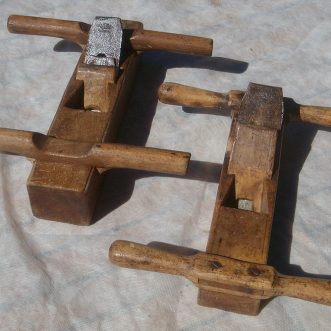
You know the kind of thing I mean – that ladle you reach for first because it feels right, holds plenty, pours without dripping and washes up easily.  Or that favourite saw, that is somehow just easier to work with, even though it’s old and a bit battered.

Often, what makes a good tool work brilliantly is exactly what makes it beautiful.  It’s obvious what it’s for, and how it should be used.  It’s comfortable to work with, easy to maintain.

Good tool designs are timeless, yet it’s often clear that an individual has crafted them and/or worked with them.   They allow for a little personal finessing.

A good tool, like a good process, is one you’re happy to use every day.

It’s one you’re willing to keep in good order, so you can have it to hand always.  It’s a tool you’re proud to share, and proud to pass on when your work is done.

Good processes, like good tools, don’t make work, they enhance it.

Everything’s a process

Everything’s a process

My grandmother was obsessed with spotlessness, which meant my mother grew up under an extreme housekeeping regime: shoes had to be taken off at the door; books weren’t allowed to be seen (too untidy); everything, from picture rail to chair rail had to be dusted every day.  And of course at that time, as the only girl of three children, it was my mother’s job to do it.

When she had a family of her own (7 children), my mother had to come to an accommodation with housework.   It was pointless spending all day dusting chair rails, when a horde arrived back every afternoon bearing a new cloud of dirt, but to leave it to a once a week blitz would mean living in what felt like squalor to her (and ruin a precious weekend day).

So every day, once we were out at school, she’d spend an hour on housework, using a weekly rota to keep on top of everything.   That freed up the rest of her day to read, see friends, shop, whatever, knowing that if a visitor dropped by the house would be, if not spotless, respectable.

The thing that makes housework depressing (if you let it) is that it is never ‘done’.   It’s a continuous process.   For my mother, the answer wasn’t to avoid it, or even to outsource it.  It was to embrace it as a process, enjoy it as part of life, without letting it take over.   She knew her house would never be perfect, she preferred to enjoy living in it.

That’s an approach worth learning from.

After all, everything we do (and are) is a process.  We’re never ‘done’.

So instead of fretting about a stasis that’s impossible to achieve, let’s make sure we all enjoy doing what might get us there.

Comfort

Comfort

I recommend this Vittles article by Dr Andrea Oskis:  Different Food, Same Blanket.

I loved it.  It warmed my heart, made my mouth water and gave me food for thought.

It also made me wonder – could we apply some of this thinking to how we explore familiarity and innovation at work?

Rescuing babies

Rescuing babies

Sometimes, all it takes to solve a new problem is to revisit an old technology, applying the best of the new technologies we’ve developed since we last used it, to make it work far better than last time.

Sail Cargo is one such solution, using ancient technologies in a 21st century way.

Another is Homespun/Homegrown – where the old textile town of Blackburn will grow and make it’s own jeans using the even more ancient technologies of flax and woad, alongside some thoroughly modern manufacturing, marketing and distribution methods.

Babies don’t have to be thrown out with bathwater.

You can fish them out first, and help them grow up gracefully.

Keeping it simple

Keeping it simple

I needed to consult my GP, and I wasn’t looking forward to spending hours on the phone to get an appointment. Imagine how pleased I was that in response to

Freedom Rules

Freedom Rules

“Freedom … is the tension of the free play of human creativity against the rules it is constantly generating”  ‘The Utopia of Rules’, David Graeber 2015

Without rules, we get nothing done.

With only rules, we get nothing done.

The interesting challenge is to create a set of rules that enable the creativity that will in turn makes new rules necessary, while at the same time ensuring that each cycle of new rules never becomes stifling.

It seems to me that’s only possible when everyone shares in the work of creating the rules and breaking them.