Discipline makes Daring possible.

How I learned Italian

How I learned Italian

I was trying to think of another example as good as Katerina’s for how to look at something and turn it into a repeatable pattern – a process if you like.   This is one I remembered:

Many years ago I was in Italy, having hitch-hiked there with a boyfriend.   We wanted to go to Pisa, by bus.  One of the frustrating things about being a foreigner anywhere is the knowledge that’s so taken for granted that it remains completely hidden.   If you know it, you know it.  If you don’t – hard luck.

In this case, frustratingly, we couldn’t work out how to buy a bus ticket.   Remember, this was a very long time ago, so there was no ‘online’.  In the UK, you could buy a ticket from the driver.  Not here.  If you didn’t have a ticket, you couldn’t get on the bus.   There were no ticket machines we could find – at bus stops, the railway station, anywhere.  Where did people get a ticket from?   We couldn’t even ask, because neither of us spoke Italian, and we hadn’t thought of bringing a phrase book.

I did speak Spanish and French though, so many nouns were sort of familiar, plus I’d already started to spot a pattern of how words changed between Spanish and Italian.   For example,  ‘-ado’ in Spanish becomes ‘-ato’ in Italian.  So the English ‘passed’ was ‘pasado’/’pasada’) in Spanish, and ‘passato’/’passata’ in Italian.   I’d worked out from the notice on the bus that you needed a ticket (‘biglietto’ c.f. Spanish ‘billete’, French ‘billet’).  So far so good.   But how to work out how to ask where to buy it?

I could read the similarities easier than I could hear them.  So I looked at advertising posters, shop signs, notices.  I worked out that Italian frequently uses a reflexive sentence pattern in much the same way as Spanish, so that a sentence like ‘Where can I buy a bus ticket?’ could become ‘Where does a bus ticket get itself bought?’.

All I needed now was the word for ‘buy’.  I hit lucky with the ad on the side of a building – which contained the line ‘XXX gets itself bought here’

Bingo! (did you know that was Italian?).  I could create a new sentence from the pattern I already had

“Dove se acquista un biglietto para el autobus?”

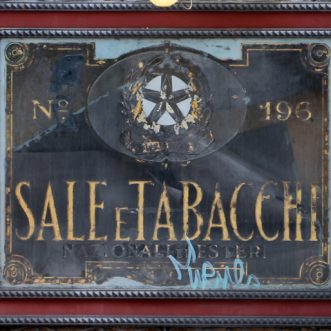
It wasn’t correct – the last bit was pure Spanish.  But the person I asked understood exactly what I meant and directed me to the nearest tobacconist.   We got our tickets to Pisa, and walked around the outside of the leaning tower at every single level.

I never really learned Italian, but I get by in Italy.  Because I recognise patterns from Spanish and French, I can understand what people are saying, and I can construct a sentence that communicates what I mean, even if the details aren’t quite right.

This is no big deal.  We all make patterns from the world around us, so we can predict big things and spend more time on the interesting details.  It’s just that sometimes you have to do it on purpose.  Like when you’re trying to explain a process to someone who’s never done it before.

The joy of sameness.

The joy of sameness.

Patterns are a shortcut to previous experience.   They enable us to see similarities beyond a mass of detailed differences.  We enjoy repetition and sameness – as long as there are enough differences to stimulate us, and keep our eye moving.

The same goes for processes.    Sameness is good.  A pattern is easy to grasp and easy to remember.   That gives us freedom to fill in the details differently when needed.

The trouble is, when we try to communicate a process to other people, we tend to focus on the detail, not the pattern.   We feel we have to capture every exception, every flourish and curlicue, every nuance.   The result is a mess, that takes too long to untangle and so languishes unused and ignored.  Or an unwieldy encyclopedia of micro-patterns – forms, checklists, procedures that makes it impossible to see the patterns that matter.

So if you’re trying to capture process in your business, try looking for the pattern first.   Imagine you’re up a level from the process you’re trying to describe, above it, rather than in it, seeing the path through the woods rather than the immediate undergrowth.

Here’s a brilliant example of someone doing that in a completely different context, to free people from the tyranny of recipes or ready-prepared meals.

The Discipline of pattern is what makes Daring possible in execution.


Thanks to The Intuitive Cook for the inspiration.


Word for 2021

Word for 2021

Last year, my watchword for the year was ‘Out’.  Look where that got me!

This year, it has to be ‘Teach’.   By which I really mean ‘Empower Learning’.   That’s what I’m aiming to do this year, inspired by Richard Feynman.

What will your watchword be?

A bit of R and R – and R

A bit of R and R – and R

2020 has been a year that has forced us all to adapt, sometimes painfully.

These books are already helping me to head into next year ready, willing and able to adapt consciously and on purpose:

  • To work a level or two up from recipes and procedures, but still with intention and process.
  • To create space to make and take offers with generosity and gratitude.
  • To respond with ‘Yes and…’ instead of ‘Yes but…’
  • To play with change instead of resisting it.
  • To act before I know everything.

I think you might like them too.

Happy Christmas, and here’s to an interesting 2021!

I’ll be back on the 4th of January.

Thank you for being there. How can I be more there for you next year?

Order without control

Order without control

“Improvisation is what life does.  Nothing living, from a bacterium to a blue whale, has a script for their life.  This includes you.  Somehow or other every living being copes with untold complexity without a plan, and always has.” Robert Poynton ‘DO/IMPROVISE’

‘The counter argument to that’, my husband replies, ‘is that these are the result of millions of generations of evolution and dead-ends.   You and I don’t have that much time, which is why we plan and design’.

I agree, and to be fair, Poynton isn’t recommending that we improvise our way through life and business (although it would be interesting to explore how far we could go with that, like lilies of the field). And living things aren’t improvising randomly.   That ‘somehow or other’ is underpinned by a set of simple rules for responding to things you can’t control.  The driver is a process that leads to a single outcome, reproduction.   The result is ‘order without control’, a self-organising system for delivering an outcome.

But without the capacity to improvise, all you have is a machine.  Inflexible, slow to change and ultimately fragile.

You don’t need to build a business as a machine, with every thing designed precisely down to the nth degree.  Get the driver right, then let improvisation keep it relevant.   Create a process for delivering the right customer experience, driven by your unique Promise of Value.  Use the process as a framework for action, that empowers your people to see the offer in the unexpected or exceptional and act accordingly.

The discipline that makes daring possible leads to order without control and a business that truly lives.

Forever if you want it to.

Actually, it’s not quite as simple as that

Actually, it’s not quite as simple as that

Of course life isn’t really an improv show.

In business and sometimes in life we have an idea of where we want to go, where we want to end up.   What ‘Everything’s An Offer’ really means is that you should take things that happen outside your control (Covid-19, Brexit, losing a client or prospect, that unexpected pregnancy) as a potential gift, rather than a threat or a thwart.

You probably already do this on holiday, when you’re playing.  A few years ago my husband and I were in Graz, having a few days off.   We were headed to a particular part of town to see something, but we decided to wander ‘in the general direction’ and see what we found.

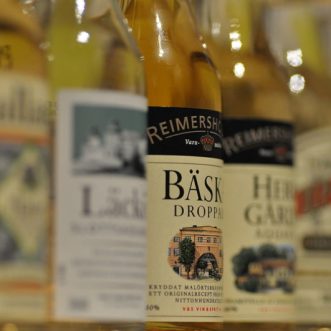
We smelt the offer first – a lovely, fruity, alcoholic whiff from what what looked like a garage at the bottom of a block of flats.  Then we saw the stills it was coming from.   We stopped and looked into the door of the ‘garage’ to see if we could make sense of it; spoke to the guy loading up a van.   He pointed us across the road to the distillery shop.   Hazelnut schnapps (among several delicious flavours).  An offer we couldn’t refuse.   We bought a bottle, then carried on wandering towards our destination.

Nassim Taleb calls this being a ‘flâneur‘, someone who walks, not aimlessly, but open to deviation that has no downside and might lead to an upside.  Its a crucial element of being antifragile.

You don’t have to to take up an offer, unless it helps you get to where you want to be, or to somewhere more interesting that you hadn’t foreseen, but it helps to tell yourself “Here’s an offer.  Could it help or hinder?” before you decide.  The answer isn’t always obvious.

Everything’s an offer

Everything’s an offer

Yesterday I started reading ‘DO/IMPROVISE’ by Robert Poynton.   It starts with another of those lovely diagrams that you only have to see to be changed by:


It’s the bit in the middle that’s powerful.  ‘EAO’ stands for ‘Everything’s An Offer’.

An improv term, an ‘offer’ is what a fellow actor or audience member gives you to build on as you improvise a scene or story together.   It doesn’t matter what it is, or how random it is, your job is to take it and use it to build your next offer, so that everyone can keep the scene going to a satisfactory conclusion for all.  None of you know what that conclusion is until you find it.

The only part of the process you control is your own ability to spot offers, see their potential and react in a way that increases that potential for someone else.

After what 2020’s thrown at us, that might just be the attitude to cultivate for 2021.


Taken as read

Taken as read

Clearing out my inbox today, I found an email I’d missed from Dale Carnegie with this headline:

“Research reveals importance of honest leaders to UK workforce  – Read the full report!”

What else needs to be asked that we used to take as read?

She changes

She changes

“Good Services” principle number 13: “A good service should respond to change quickly”

The key here is ‘respond to’.   This is about reflecting relevant changes in the user and understanding the implications of those changes for the user.

A simple example: I’ve just had a call from my insurance broker.  They wanted to speak to my husband about renewing his car insurance.   He was insured with them, until he got rid of the car a couple of years ago.   Somewhere that change has not been propagated through the system.   Of course that doesn’t mean that they should never call him – he may have bought a new car since – but it would be a different, more appropriate call, that doesn’t start with “We see your renewal is coming up…”.

Automatic propagation isn’t always appropriate of course, so the best option might be to let the user notify a change then let them also specify where it should propagate to, perhaps with the least contentious options pre-checked to make the ‘usual route’ easier.

This could have an interesting side-effect of making people more conscious of where their data is held and for what purposes, putting them even more in control.

Giving back control – there’s a thought.