“The trouble with the sunshine” laughed the shop assistant, “is that it shows up how dirty the windows are.”“Tell me about it! What’s your secret for cleaning them?” I replied.
“I bring in my own e-cloths from home. I use one wet – just water- then the other to dry off. Works perfectly every time.”
That was a great tip (I tried it, it does work perfectly), but the thing that really struck me was the “I bring my own e-cloths in from home.”
People want to take pride in their work.
If you think they don’t, you might be what’s stopping them.
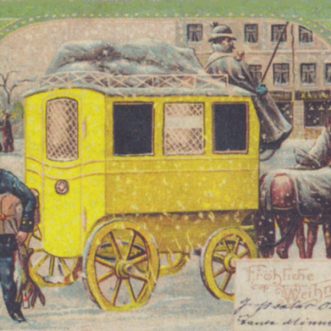
There seems to be a trend at the moment for deliveries to arrive sooner than expected. I think this comes from an assumption that over-delivering on a promise is always good (something Royal Mail cleary don’t subscribe to). But what if I need to prepare for delivery beforehand? Arriving early messes up my schedule, makes my life more difficult.
Early delivery might be good – if you ask me first, and give me the option of sticking to the original plan.
Otherwise, it’s probably not my delight you’re seeking, but your convenience.
I was tidying up my digital desktop today, and came across an old article by Umair Haque, written for HBR magaizine.
6 years after it was published, Haque’s message seems more important than ever.
If you want customers that come back to your business regularly, freely, joyfully, “focus on giving people what matters most to them — but what they feel cheated of, stymied from, and suffocated by at every turn. Improve their lives. Deliver lasting gains in their quality of life. Don’t just carrot-and-stick them into “loyalty.” Be loyal to them. Don’t win their attention — give them your attention. And one tiny interaction at a time, help them live lives richer with meaning, happiness, and purpose.”
And always be asking this question: “How loyal can we be to our customers?”
Sometimes you can’t just do, you have to think about what you’re doing.
Sometimes you can’t just think, you have to think about what you’re thinking.
Sometimes you can’t just think about what you’re doing or thinking, you have to think about how you’re thinking or doing it.
Sometimes you can’t just think about how, you have to think about why.
It would be exhausting to operate like this all the time, but every now and then, it pays to take yourself up a level or two, perhaps with the help of other people, or a book, or a video, or a podcast or a tool.
Because once you are aware of what, how and why, you can repeat your best doing or thinking, on purpose.
I like to ask big questions of accountants in my podcast.
Professor Richard Murphy has some interesting answers.
This video of his proposes a new way of financial reporting for ‘public interest entities’ – the big corporates we all depend on for infrastructure, food supply etc., that looks at the interest of all stakeholders, not just shareholders.
I think reporting this way, even if you aren’t legally required to, could give a real advantage to some smaller, more forward-thinking businesses.
If they dared to take it.
I’d love to know what you think, especially if you’re an accountant.
Recently I’ve been thinking about (and remembering) why being ‘The Boss’ is no fun. Or at least not for me.
It’s not the hard graft, or the long hours, or the uncertainty of income. Nor is it the responsibility to clients, or the need to exceed expectations. We knew this was part of starting a business, it’s actually what we wanted – the possibility to get more out of work than the means to live.
Being your own boss is fine. It’s being boss of others, directly or indirectly, that’s difficult. Because although you can now share the physical or mental work involved in delivery, you’ve at least doubled the emotional labour, and emotional labour is harder to share out.
The first step is to recognise that it’s a big part of what gets done. Probably the most important part too.
The next step is to make it explicit, and cover it in the manual.
I’m a big fan of ‘The Lean Startup’, which I’d sum up as follows:
“The job of a startup is not to make money. It’s to find out what the market really wants.”
In other words, starting a business is about testing, refining and re-testing until you find what delivers real value, and so makes you money.
The trouble is, this can take years. There’s no shame in that. It’s just that most of us do this in an undocumented and somewhat unconscious way, internalising our findings as we go.
This means that when the time comes to expand our capacity, to meet the demand we’ve identified and finally start making the money, we struggle to communicate this vital information – who we are for, what we promise them, and how we deliver on that – to the people we need to work with, and that can lead to stunted growth.
The first step to remedying that is consciousness, which is why The Lean Startup is such a help. But what about after startup?
Here’s my solution:
Purposely design your business as a system for making and keeping promises, and improving how you do that:
That way, everyone involved in your business can stay conscious. Even after you’ve gone.