Questioning
When you’re stuck, questions can be more helpful than answers.
As I found at Like Hearted Leaders this morning.
Why not give them a try?
When you’re stuck, questions can be more helpful than answers.
As I found at Like Hearted Leaders this morning.
Why not give them a try?
When we think of innovation, we tend to think of physical or digital technologies embodied in products or apps.
Management is a technology too.
And as Michele Zanini, co-author with Gary Hamel of ‘Humanocracy‘ observed only last Friday:
“Our research suggests that the longest-lasting competitive advantages come from innovation in management systems and practices, not from business or operating model innovation. So diligently pursuing management innovation pays off handsomely.”
And the good news is that small businesses on the cusp of scaling are best placed to take advantage of this.
I learned a new concept this morning: ‘Founder’s syndrome’. Here’s the Wikipedia definition:
The founder responds to increasingly challenging issues by accentuating the above, leading to further difficulties.[29] Anyone who challenges this cycle will be treated as a disruptive influence and will be ignored, ridiculed or removed. The working environment will be increasingly difficult with decreasing trust. The organization becomes increasingly reactive, rather than proactive. Alternatively, the founder or the board may recognize the issue and take effective action.[30]
A lot of this looks to me like the classic painful transition from one-person-band, to few-person-band, to full-blown company. Which is really the transition from a small, personal, human-scaled business to a large, impersonal capitalist corporation. The founder wants to keep things personal and true to their original vision. New owners or new management want to make things efficient, corporate and therefore impersonal. As far as the founder is concerned, they want to make it ‘someone else’s business‘. Of course the founder resists.
There is a preventive for ‘Founder’s syndrome’.
Embed the founding vision and personality into the operating processes of your business before you try to scale, with a Customer Experience Score. You’ll be able to scale without managers, even without investors other than the people you serve. The best of both worlds: personal, true to the original vision and magnifying your impact.
Even better, once it’s built into the way your business works, your Score takes on a life of it’s own, nurtured and improved by everyone in the business. It becomes harder for anyone to interfere – even you.
“Design your business or it will be designed for you.” It’s one of my favourite sayings, spoken by Brian Chesky of AirBnB.
But what does it actually mean? How can others design your business for you, when you’re the boss?
When you started out as a one-person band, you did everything. You tried different things to market and sell your services, and to deliver them in such a way that customers came back, or told their friends. You designed the business.
Once demand grows beyond what you can personally deliver, you have to add capacity. And every time you do that, you bring in someone else’s idea and experience of what a business looks like.
You might add capacity by automating some of what you do with software. That job management software, quote generator or CRM tool was designed by someone else, according to their vision of what a business is and how a business works. A vision that is necessarily generic, otherwise they couldn’t sell enough to be viable.
You might outsource some of what you do, your accounts, or your HR for example. Your accountant or sales agent will have their own idea of what a business is and how it works. If they’re any good they’ll try to find out more about yours, but often they’ll fall back on a generic design to fit all industries, or a design learned working elsewhere, or their own design. It’s not your area of expertise, so even though you don’t love it, you put up with it.
You might work with other small businesses like yourself, sub-contracting some of the delivery. But like yourself, they will have designed their own small business, and that design probably won’t match yours. That can prove exasperating and stressful, unless you decide it doesn’t matter that much, and accept the differences.
You might recruit a business partner, co-director, manager or experienced staff to take on some of the work you do. Almost certainly you’ll want them to have experience of business in general and your industry in particular. In other words, they’ll bring with them the design of those other businesses they’ve worked in, plus their own ideas of how to do things. If you’re very lucky, those ideas will chime with yours. If you’re not, you’ll be fighting to maintain your business design, or running through several cycles before you find ‘the right person’.
You might recruit juniors, school-leavers or graduates even, who you can ‘mould’ to suit your business design. But moulding takes time, and even they will have their own ideas of how things should be done. They need almost constant supervision and just don’t seem to get it.
You might hire a business coach or consultant to help you deal with all these problems. They too, come with baggage of what a business ‘should’ look like, learned at the Bank, or at business school, or from building their own successful businesses. They will try and shape your business to fit.
In the face of all this, you have a choice. You can supervise closely, re-do work, fight to correct what everyone else is doing ‘wrong’, or you can accept other people’s designs for your business. The first is exhausting, the second feels like it’s not your business any more.
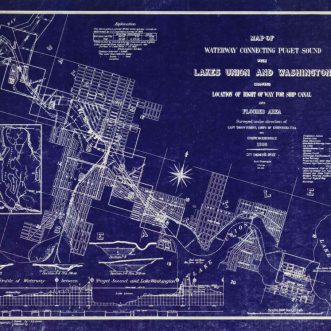
There’s a step you can take, which can solve all of these potential problems before they happen, which is to take your business design out of your head and get it down as a shareable ‘blueprint’ everyone can work from. The Customer Experience Score for your business. That captures your unique way of making and keeping promises to the people you serve.
Your Score becomes a specification for software, an operations manual for new staff, suppliers and contractors at all levels. Above all it becomes a permanent record of your design for your business, that enables your unique creation to scale, evolve and persist through time.
Design your business, or sooner or later, you’ll be back to working in someone else’s business.
When, as kids, we had scoffed our own sweetie allowance, and wanted more, we’d have a go at appropriating the shares of our younger siblings. This rarely took the form of outright theft. We knew that was wrong. So we’d find other less obvious ways to achieve the same result.
We cajoled, we pleaded, we promised swaps. When that failed we bullied.
My parents called this behaviour ‘greeding’ – manipulating others into giving up their share, so you can have more.
We grew out of it, but it feels like an awful lot of greeding goes on in the grown-up world – beyond the obvious thefts, ponzi schemes and cons.
Banks put small businesses into debt with ‘recovery programmes’, taking over their assets once they’ve gone bankrupt. Firms force individuals to sell their homes for needed healthcare, raid pension funds to pay private equity loans.
Seed companies patent f1 hybrid seeds, forcing small farmers around the world into destitution. Soft drinks manufacturers negotiate first call on local water supplies, leaving ordinary people to pay more for less.
Manufacturers shut their eyes to child labour, slavery, invasion and habitat destruction in their supply-chains.
All so they can build up the means to do more of the same.
It’s called accumulation by dispossession. It’s happened throughout human history, of course. But not everywhere, not all the time. For the last 500 years we’ve relied on a system that can’t work without it.
And that can only end in tears.
When we are trying to package our Promise of Value into products and services, it’s easy to think in terms of adding things. Making the list of features and benefits so long that a prospect will have to scroll through pages of copy to get to the ‘and all this for just ££££!‘ line.
What if, when you reached this point, you went away, had a cup of tea, and on your return started taking things away again.
All those bells and whistles and extras are there to justify to yourself the fees you want to charge. Or a response to your perceived competition. Just because everyone else does, doesn’t have to mean that you should.
They don’t really add value to the client. In fact they obscure the real value you can offer.
Be brave, pare away the unnecessary embellishments. Reveal the truth of your Promise. As simple as possible, but no simpler.
So that the right people – your people – will recognise it. And welcome it.
Letting ‘art’ into a business feels wrong somehow. Surely the point of business is predictability, conformity, delivering to specification? How can you let people ‘do art’ on this without losing these things?
The kind of precision we usually think of when we think about ‘predictability, conformity, delivering to specification’, is really only necessary for manufacturing. Even then, the manufacturing part is only a fraction of what makes up the customer experience.
If art happens in that tense space between rules and license, restriction and freedom, certainty and uncertainty, you can at least control what happens on one side of the space. You can specify ‘the least we should do’, with as much precision as you like. That means there is no downside to the art that can take place, only upside. You can predict that specification will be met at least, perhaps exceeded.
The output of artists constantly evolves, as they explore that space of tension between the rules they’ve set themselves and whatever it is that they wish to express. Each individual work is a specific response to that tension, different from every other, but taken together, the whole body of work is coherent. You can tell it’s all from the same artist.
The thing your business exists to express is your Promise of Value. Everyone in the business is trying to create art in the tense space between your Promise of Value and the floor you’ve defined. Each individual making and keeping of your Promise – or customer experience – is a specific response to that tension, different from each other, but coherent, taken as a whole. You can tell they’re all from the same studio. You can predict that every response will conform to your Promise of Value.
Looked at this way, your job as business owner is not to control individual output, but to define the space – the studio if you like – where your people, your artists, can create output that delights the people you serve.
Why would you do this? Because art commands higher prices than factory-made. People value human.
Of course, inspiration on its own isn’t enough. Inspiration needs a starting point, a constraint, something to bounce off, spark to or rebel against.
The maker of this ‘crazy’ quilt was already constrained by the assortment of odd-shaped leftovers they had. Perhaps also by the limited colours they’d been given. They decided to impose another constraint – the nine square layout. The result isn’t random. Nor is it purely functional. It satisfies more than the need to keep warm at night.
Why would someone do this?
We humans like order as much as we like wildness. We desire both certainty and uncertainty, rules and license. Pulled by these opposites, we find the tension between them uncomfortable.
So we turn it into the most delightful thing of all – art. Capturing a fleeting, but satisfying moment of balance between the two. The ‘right’ balance is elusive, every time we try, the result is different. That’s what keeps artists in practice. The ‘right’ balance is also personal. That’s what gives each artist their own style.
If you want your business to feel human, it needs to be a place where art can happen.
You can’t dictate the artistic solutions. But you can create the required level of tension, by imposing rules, order and constraints.
If those constraints are designed around making and keeping your promise to the people you serve – if they define a floor, but no ceiling – you’ll have created a safe, exciting and human space for everyone.
Especially you.
Over the long weekend, I had a good rummage through some of my quilting books. It was interesting to come back to them after a gap of a few years as they’ve been in storage while we built the extension.
What struck me going through them now, was just how prescriptive some of the project instructions are – specifying exactly which fabrics to use – down to the manufacturer, designer, range and colourway – exactly how to cut the fabric up to get the required number of pieces, and exactly how to sew them together to make a quilt top. They are instructions for making a replica of a particular quilt.
I don’t know why, but I find this approach quite disturbing. Perhaps because it feels like it isn’t really creative. If I follow the instructions to the letter I’ll get a carbon copy of the quilt in the picture. There’ll be nothing of me in it. There’s no real learning in it either. I learn to follow instructions to replicate a particular quilt, that’s it.
By contrast other books – generally the older ones, are quite freestyle – specifying only ‘light’ or ‘dark’ fabrics together with the number of different shapes needed – assuming that you know how to cut a square or a triangle (or that you’ll refer to the ‘how-to’ section at the beginning of the book). Some even include pictures of different versions of the same patchwork pattern, so you can see how the look changes with different fabrics. These are recipes for making a kind of quilt. Recipes I am encouraged to make my own, right from the beginning. I learn to think about colours and how they work together, I learn how to think about cutting. Most importantly, I learn about my own taste. I learn a process I can apply to different starting materials to generate my own unique results.
For me, the difference between these approaches shows the difference between workflow and process. Workflow turns human beings into mindless replicators. Process frees them to be creative.
Imitation or inspiration. Which would you rather encourage in your team?
What’s the difference between a good stew and a great stew?
Time.
Sometimes, leaving things alone for several hours is the best thing you can do. And as of course you know, the very best stews are tasted the day after you cooked them.
Time is an ingredient we frequently forget to add, and not just to our cooking. If you’ve got something knotty you’re working hard on or thinking really deeply about, a long bank holiday weekend is an excellent opportunity to add time.
Over the next 3 days, let whatever it is do its thing. Let it braise, brew, tenderise, meld. By Tuesday you’ll find yourself with something really tasty.
Till then, enjoy the break.