Discipline makes Daring possible.

Indispensable

Indispensable

It feels nice to be wanted.  To be the fount of all knowledge .  To be the one everyone turns to when they have a question.  To be deferred to in all day-to-day decision-making.  To be the person every client or prospect enquiry is referred to.

But beware.  Making yourself indispensable is the passive form of being a control freak.   An indispensable boss may not actively seek to control what others do, and how they do it, but somehow nothing much happens without being run past them first.  The approach is different, but the result is the same.

It isn’t productive.  It isn’t very liberating for the people with day-to-day decisions to make.  It can easily become a trap for you.  And it soon becomes a constraint on the growth of your business.

The solution is to enable people to answer their own questions, make their own decisions.  Not from scratch, but with all the benefit of what you already know.  As a Customer Experience Composer, not the boss.

Write them a score.  Let them rehearse their part before they have to perform in front of a live audience.  Get everyone together for regular practice at playing together.  Review the score.  Adjust if necessary.


Free your team to bring more of themselves to the job, free yourself up to deal with everything that isn’t day-to-day, free your business up to fly.

The music in your head is the start, not the end.  Get it out there.

Three Freedoms

Three Freedoms

What is freedom, really?

Here’s a possible definition, not mine*.  Three freedoms, each building on the one before.

  1. The freedom to walk away, knowing that you will be taken in elsewhere by other people who see you as one of them.
  2. The freedom to disobey, knowing that you can ‘vote with your feet’.
  3. The freedom to create new and different forms of social reality.

The third can’t happen without the first two.  Not without becoming tyranny, anyway.

These are big ideas, but since our businesses can be anything we want, we can practise them small.


*In the sense that I didn’t think of them.  They come from “The Dawn of Everything” by David Wengrow and David Graeber.

The world turned upside down

The world turned upside down

Until a couple of years ago, I throught cleaning your teeth was about cleaning your teeth.

It turns out I was wrong.  It’s about cleaning your gumline.  Because it’s not so much about getting rid of food debris, as cleaning up after the bacteria that live in your mouth.  Who breed and create debris (plaque) whether you eat or not.

There are lots of things we think we know, that actually turn out to be wrong, or at least capable of alternative interpretations.   The more alternatives we see, the more we can imagine even better ones.

If you’re up for it, here are a few of the books that have turned my world of ideas upside down:

Of course, every book does this to some extent – even the ones you’ve read before, because you can’t step into the same river twice.

Which books would you recommend?

Going further

Going further

As Seth said in his blog about pushing, pulling and leading yesterday: “One bird at the head of the flock can lead 100 others if they’re enrolled in the journey.”

And because all are enrolled in the journey, any member of the flock can and does take a turn at leading.   They are literally all in it together.

That’s what enables them to go so far.

Pinning things down

Pinning things down

When we want to examine something closely, it helps to take a snapshot of it, to capture it at a point in time, to pin it down and look at it as a specimen.   This makes it easier for us to analyse its composition and construction.

This is a useful way to gather some information, as long as we remember that for all systems, including our businesses, the natural state is to be moving, changing and renewing.

For most things worth investigating, static means dead.

Making

Making

You may think a business is simply a matter of creating, manufacturing and selling products or services.

It’s also about creating people.   We spend most of our lives at work.   So the way we work together to make, sell and deliver those products and services has a significant impact on our capabilities, capacities and beliefs.  Work changes us, forms us.

That means that a business is also about making society.  Because although ‘society’ often feels like something that’s just ‘there’ outside of us, actually it’s made by us, in the way we work, in the way we live and play outside work, in the way we think about our relationships with others.

Now you know this, you can choose to consciously create, through your business, the kind of society you want to see.  Starting with the little society of prospects, customers, suppliers and employees immediately around you.

That’s why for me, a business is not a machine for making money.  It’s a system for making and keeping promises.

Because it’s the relationships between people that are really important, not the things we make.

Gifts

Gifts

What’s your gift?  The thing you can do better than anyone else.  The thing you can’t help but do, even … Read More “Gifts”

Creating bandwidth

Creating bandwidth

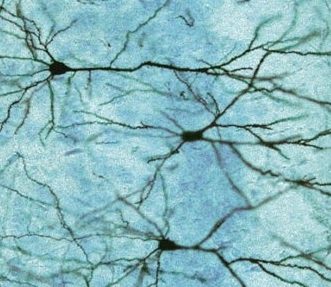
Apparently human neurons are strikingly different from those of other mammals.   Neurons are the building blocks of our nervous system – our internal communiactions system by which we percieve and react to the world.

All neurons communicate with each other and with other cells through electrical impulses, produced by ‘ion channels’.   In general, the larger the neuron, the more ion channels it has.   Until we get to humans.

Our neurons have far fewer ion channels than expected.   We still need ion channels, but somehow we are able to get by perfectly well with less of them.

The hypothesis is that by evolving a ‘lean’ neuron model, human brains became more efficient, able to spend less energy on the basics, freeing some up to spend on more interesting things that other mammals don’t do, such as imagining.

That makes sense.  The less communication you have to do to support the usual, the more bandwidth you leave to deal with the unusual.   Or to imagine a new usual.

Our businesses could learn something from our neurons.

Seeing straight

Seeing straight

I’m lucky, my eyesight has always been good.  Apart from one little thing.  I don’t always see straight.

Sometimes, I reach for a book on the bookshelf, and come back with the one that was next to it.  I’ve got used to this, so now I purposely reach for the book next to the one I really want.  It works every time.

You don’t need dodgy eyes to take advantage of this simple technique.   As John Kay writes in ‘Obliquity: why our goals are best achieved indirectly‘ aiming for something next to the thing we want is actually the best way to get the thing we want.

What do you really want for your business?  What could you focus on that might actually deliver it?

Standards

Standards

I’m not sure the plumber appreciated me hanging around to watch.  Not to begin with anyway.

But by the end of the afternoon, he was glad of it.   Because by then I’d seen for myself how everything went wrong, and more importantly, I knew he was not to blame.

It wasn’t his fault the ducting wouldn’t go through the hole.   That was my fault for buying the wrong size – to fit the cooker hood, but not a ‘standard’ hole.  Although to be fair I didn’t know that a) there was a standard hole size and b) that my cooker hood had been built to a different standard.

It wasn’t the plumber’s fault that the old tap was so hard to remove.  That was because for some reason the old tap fixings couldn’t accommodate a standard worktop depth, so the previous fitting had been slightly bodged.

It wasn’t his fault that the new tap would have to be slightly bodged in the same way, since it was identical, and it certainly wasn’t his fault that the lever came off in his hand as soon as he tested it.  That was down to tap manufacturers observing no quality standards at all.

So all in all, what should have been a straightforward job, turned into a bit of a nightmare, involving the purchase of yet another (different) tap, some new hose, plus additional reducers and fixings, and of course more of the plumber’s time and skill (not least that of being a contortionist).

Will, the plumber, is only young, but even he complained that ‘in the old days’, everything was manufactured or imported to a British standard, which meant you could rely on the fact that one thing would work seamlessly with another.  You could get most jobs done easily, only the really unusual was tricky.

That’s what standards are for.  To make the usual easy, so you can have imagination and energy to spare to deal with the unusual.

Having a choice of standards opens up different possibilities.  That’s great, as long as everyone states which standard(s) they are working to at any one time.  Otherwise, all you’ve done is turn the usual into the unusual.

No wonder we have a productivity problem.