
Discipline makes Daring possible.

A disappearing act

A disappearing act

You don’t have to lose your business to be able to leave it.

You just have to take yourself out of the day-to-day.

To do this, make everyone a boss.   Get the music that’s in your head written down so that other people can play it.  Give your people the responsibility and the autonomy to deliver your business’s unique customer experience consistently, in their own style.

The sooner you do this, the sooner you get to choose how much time you want to spend in your business, the sooner you free the business to grow and the sooner you’ll free your people to grow too.

Best of all, you get to keep everything that makes your business uniquely yours.

In the end, you’ll have built a community, not just a business.  A community centred around the promises you make and keep for the people you serve.  A community that becomes your legacy.

Ask me how.

The irony is that all this makes it an even more attractive buy.

But of course by then you won’t want to sell.
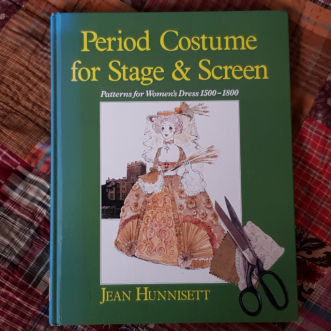
On the shoulders of giants

On the shoulders of giants

Jean Hunnisett was a costume designer.   Someone whose job it is not just to recreate ‘the look’ of a particular period, but to recreate it in a way that is comfortable and practical for the actor to perform in.

People have changed over the centuries, becoming fuller and taller.   Clothes have become lighter and less constricting.  Women are no longer used to re-configuring their bodies to suit the current trend by wearing corsets from childhood.   So a costume designer’s job is never to simply reproduce historical examples, it is to re-interpret, re-measure and re-size those historical examples to produce the desired effect on screen without crippling the actor.

That’s hard work.  And Jean Hunnisett did it.   Once it was done, she put it out there for the world to share in her costumes and her books.  For people like me and Vivienne Westwood to find.

No matter how unique our genius, how brilliant our vision, we achieve nothing alone.   We build on the free gifts of human nature left by those who came before and those who work around us now.

That by no means diminishes our achievements.

But it seems only fair to acknowledge the gifts that enable us.

What do you really want?

What do you really want?

What do you really want?

I’m willing to bet that it’s something like this:

  • Agency – to make your own ‘me-shaped’ dent in the universe.
  • Mastery – to learn and master (even teach) new capabilities and skills.  So you can grow as a human being.
  • Autonomy – to be free to choose how you make your dent.  To do it your way.
  • Purpose – to do this for something bigger than yourself.  Otherwise it doesn’t feel like much of a dent.
  • Community – to do all this with ‘people like me’.
  • Status – to know (and for others to know) where you stand in your communities.   That doesn’t by any means have to be at the top.  What you really want is recognition.


You can build a successful business by delivering this for your clients through what you give them and the way you do it.

You can build a sustainable business by delivering this for your people through the way that you enable them to deliver to clients on your behalf.

Do both, and you’ve sorted yourself out too.

Fake progress

Fake progress

The Mechanical Turk was hailed as a miracle, a step forward in progress, the bleeding edge of innovation.  But at it’s heart was a big, fat exploitative lie.

The same is true of many of our current everyday miracles – free delivery,  just-in-time manufacturing, ultra-cheap food, computers that fit in our hand.

As yet we have not discovered a way to get something from nothing.  Which means that always, someone, somewhere has to do the actual work to make that everyday ‘miracle’ happen.  Wearing out their own car at 50p a parcel.  Sewing designer clothes in a sweatshop somewhere.  Getting paid to vet Facebook posts in a refugee camp – one at a time.  Destroying unusable PPS in a prison, or down a poisonous mine extracting the cobalt for your phone.

Just because they’re hidden away in the bowels of the machine doesn’t mean they’re not there.

They shouldn’t be.   We don’t need these everyday miracles.

We can work much better ones.

Merry Christmas.

See you in the New Year.

Lessons from a project with no managers, no boss and where everyone’s a leader.

Lessons from a project with no managers, no boss and where everyone’s a leader.

“In six months, 300 volunteers from 41 countries worked asynchronously to produce a best-selling book. The Carbon Almanac is now in ten languages. The almanac for kids, Generation Carbon is in 17 languages. There are more than 88 podcasts, a photobook, and a daily e-newsletter.”  From Fast Company: “Lessons from a project with no managers, no boss, and everyone’s a leader.

And dozens more spin-offs too.  The enterprise is still going strong, and still growing.

The Carbon Almanac was created this way.

With no managers, no boss.  Everyone’s a leader.

Maybe that’s also how Stonehenge was built?  And Çatalhöyük or Knossos?

Maybe that’s naturally how we build worthwhile things?

Maybe you could take the load off your own shoulders and reframe your small business into something longer-lasting that way?

Making everyone a boss unleashes amazing energy.  Especially when you also give them a lovely firm but springy floor to bounce off.*

Discipline makes Daring possible.


*That’s where I can help.

I’m an anarchist. I’m in good company.

I’m an anarchist. I’m in good company.

“My strongly held belief is that we do not need to operate our organizations with a single strong all-powerful leader perched precariously at the top of a pyramid or power operating in politically-minded ways. Instead we can create a setting in which everyone is expected to think and act like a leader.

Can this work? Commonly held beliefs in most companies would say “no!” Many would argue that having “too many bosses” will inevitably create chaos. It’s often, inaccurately, called “anarchy.” Ironically, the idea that everyone thinks and acts like a caring collaborative leader is exactly what anarchism is all about. Anarchism, despite the popular misconception, is all about organization.

When we do get people to think like leaders, to engage in the difficult work of collaboratively figuring out the right things to do, they begin to choose freely to participate in creating the organization of their future.”

That’s Ari Weinzweig, CEO and co-founding partner of Zingerman’s Community of Businesses.

A man after my own heart. Who helped Zingerman’s to scale from a single deli to a $65 million Community of Businesses by applying anarchist principles to capitalism.

Check out the Zingerman’s Press website.  Or get a taste from this article from Corporate Rebels.

Their newsletter is well worth subscribing to.

If you’d like a little more ‘anarchy’ in your business – whether that’s to enable it to scale or simply to make it a happier place to be, give me a call.

Discipline makes Daring possible.

Sceptic

Sceptic

Somewhere in my loft, I have a copy of this book: “The Sceptical Feminist. A philosophical enquiry.” By Janet Radcliffe-Richards.

I bought it in 1982, when the paperback came out, and one thing from it has lived with me ever since:

If a person’s or organisation’s given reason for promoting a particular policy or course of action is shown to be false, you can’t know what the real reason is, but you are entitled to publicly speculate what it might be.  And to raise that as a further question.  Repeat until you’ve got somewhere near the truth.

The ‘five whys’ approach isn’t just for business problem solving.  It’s a habit we should all get into when dealing with those who govern us.

Discipline makes Daring possible.


How to build the business of your dreams

How to build the business of your dreams

How to build the business of your dreams:

  • Start by handcrafting the product or service of your customer’s dreams.
  • Then help them live that dream so they will tell you more.
  • Grow customer by customer until it hurts.
  • Then work out which parts you need to automate to get big AND keep the handcrafted feel.

This is my TL:DR of the first episode of Reid Hoffman’s ‘Masters of Scale’ podcast.  “Do things that don’t scale”.

I love it because it focusses on the ‘handcrafted’ nature of extraordinary customer experience.   It takes time to do this as a startup.  It takes hard work.  It takes getting your hands dirty.  It hurts.

I also love it because of the way it talks about automation and scaling.

To scale, automate the bits that make delivering the customer experience hard.   Automate the admin, not the experience.   So, for example, Airbnb makes it easy for a host to be an extraordinary host, not by taking them out of the equation, but by making everything else in the equation disappear into the background.

It’s well worth a listen – or a read of the transcript if you’re in a hurry.

I’d love to know what you think of it.

Of course I would add:  Share how to create the handcrafted part of the experience with your team through a Customer Experience Score – and make sure that’s a floor. With no ceiling. A springboard, not a ball and chain.

Discipline makes Daring possible

Ask me how.

Execution

Execution

12 Dec 2022 — 

Majid reza  Rahnavard was hanged in public today. He was sentenced to death because he was one of the protesters of the Islamic regime in Iran.

How long before the executions start here in the UK?

Don’t say “It’ll never happen here

You can already be imprisoned for protesting peacefully, and the government is making it harder for the young to vote in elections.

We didn’t think that could happen here either.


Here’s the petition started by Raheleh Behzadi in Sweden.  Please sign while you can.

Recycling

Recycling

The reason we pay tolls on estuary crossings like Dartford, Humber and Cardiff, is because until very recently, most freight got shipped along our coasts.  Anyone who could afford a carriage and later a car, could also afford to go the long way round.

There’s no reason we couldn’t transport most of our freight coastally again, except that we tend to assume that progress only takes one route.  That we must ditch everything we ever did before, and use only new things.

That’s not true of course, we can recycle ideas, methods and technologies from the past.

And knowing what we know now, make them work better.