Discipline makes Daring possible.

Opportunity wasted

Opportunity wasted

“The proof print didn’t work.”, my publisher told me.  “The glue wouldn’t stick to the inside spine, because it was red, so I’ve adjusted the files and sent them back again.  But I’m afraid it’ll be another week before we get your proof copy.” 

“Oh.”

“Apparently this always happens if you don’t keep the inside spine white.  I don’t know why didn’t they tell us when they received the files a month ago.”

I know why.

Because what’s been systemised and automated, at great capital expense no doubt,  is the technical part of what needs to happen, not the customer experience part.    A wasted opportunity to add huge value to the customer.   A wasted opportunity to make the machine minder’s job much more fulfilling.

And unfortunately a common scenario.

Growth

Growth

For the last 260 years or so we’ve behaved as if we live in a world of infinite physical resources.  We don’t, obviously.

But that doesn’t necessarily mean a ‘no-growth’ future.  It just means finding a different, less damaging kind of growth.

If the things people really want, beyond food, shelter and family are agency, mastery, autonomy, purpose and community – personal growth and development – then we will never run out of opportunities to grow these things, just as we will never run out of opportunities to ensure everyone is fed, sheltered and cared for properly.

Plenty of scope for human ingenuity I would have thought.

Externalities

Externalities

Wikipedia tells me that “an externality is a cost or benefit that affects a third party who did not choose to incur that cost or benefit.”

If I have a flu jab, to protect myself from flu.  I decrease the chances of the people around me catching flu.  That’s a benefit.

If I go to work full of cold, I increase the chances of my colleagues getting a cold, that’s a cost.  If I stay at home, that’s a benefit.

The point about externalities is that they aren’t measured.  They are literally not accounted for in a business.   We metaphorically shrug our shoulders and say “Not my problem.  I’m just trying to make a profit.”

Yet the consequences don’t go away, just because we ignore them.    If I go to work with a cold, and my colleagues catch it, everyone’s productivity is lowered.

We live in a series of systems, and ultimately a closed system – planet Earth, and sooner or later the consequences will come back to bite us.

Time then to take responsibility for all the results of our actions, not just those we choose to see.

Climate change needs to be on the balance sheet.

Triage

Triage

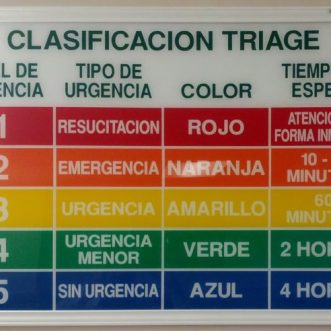
One reason why we can feel overwhelmed at work, is that we don’t use triage enough.

Simple triage for unexpected client phone calls and emails:

  1. If you can answer their question or address their issue in 5 minutes, deal with it now, preferably by phone.
  2. If it is urgent deal with it now.   Have a clear, tangible definition of what ‘urgent’ means.  Don’t rely on the client’s perception.
  3. If it’s not urgent and you genuinely have time to deal with it now (i.e. doing so won’t delay any other client’s work or eat into your rest time), deal with it now, preferably by phone.
  4. Otherwise, schedule time to deal with it and schedule a call with them to give your response.   It helps to keep an hour or so set aside every day to schedule these into.  That way you can keep on top of the work generated, and be clear with your client when they can expect an answer.

Every customer has top priority.  That needs managing.

Outbound Triage

Outbound Triage

One key way to reduce the volume of interruptions you receive, is to consider before you interrupt others.

Following on from yesterday’s post, here is another simple triage:

  • Is this something you could find out yourself with a little research?  Could you look it up rather than asking someone else?   If people are constantly asking each other the same questions, you’ve got something missing – FAQs, or a system that holds frequently referenced information, or what you do have isn’t easy enough to use.
  • Could you phone rather than email/text/whatsapp?   Talking is often quicker than typing.  And you have to be sure the other person will see it.  It’s easy to think you’ve dealt with it because you’ve sent your message.  But it isn’t dealt with till you’ve arrived at an answer.
  • If you’re dealing with a colleague, could you go to their desk and talk to them?  That way you get the benefit of whole communication.
  • Could you use a message to schedule a call or a meet?  Then you know its convenient for both of you.

Respecting other people’s time helps them to respect yours.

Why this? Why you? Why now?

Why this? Why you? Why now?

Bernadette Jiwa has a real gift for encapsulating the essence of a problem in few words.    I’ve had these 3 questions from a hypothetical customer running round my head for a couple of weeks now, as I work out how to apply them to what I doing.

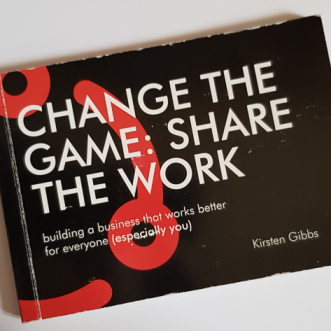
My new book is out soon, so I thought I’d give answering them a go:

Why this?

Because all the small business owners I’ve met want 3 things:

  • to do a great job for their customers or clients.
  • to do right by the people who work for them and with them.
  • to build a better life for themselves, their families and their communities.

They need to make profit to do that effectively.  This book gives ideas for how to approach the first two in a systematically different way, to get more of the third.

Why you?

Because I’ve used this approach to help businesses achieve all 3 of their goals, and I want to teach more business owners how to do it for themselves.

Why now?

Because if we want a better world for everyone (if we want a world we can live in at all), we have to find a better way of doing business.  This won’t come from the top, so we small business owners must make it happen from the bottom up.

That was an interesting exercise.  What would you answer?

Beware the black box.

Beware the black box.

The great thing about a musical score is that it tells you what to play, not how.   It tells you which notes, in which order and at what speed.  It can also give you hints about the mood you’ll be trying to create.

What it doesn’t tell you is how to play those notes.   It assumes you know.   Neither does the score dictate what instrument is used.   As long as you produce the right notes, in the right order and at the right speed to produce the required mood, you can play them on anything – from a crumhorn, to an electric guitar, to a computer – and the listener will probably recognise the music.

This is what gives a musical score longevity.  It can be picked up centuries after it was originally written, played with completely different instruments by completely different people, yet sound broadly the same as when it was first performed.

Imagine what would have happened if Mozart had simply taught his musicians their parts by rote, tightly coupling the ‘what must happen’ with the ‘how we make it happen at the moment’.

He would have created a black box, that could make music only for as long as the specific players he taught could remember it, or the instruments they used were available.  A black box limited by the number of people Mozart could physically teach; that would be impossible to interrogate, update or re-interpret; that would quickly become obsolete.

If you seek longevity or scale for your enterprise, keep ‘what must happen’ separate from ‘how we make it happen at the moment’.  Given the ‘what’, future generations will be able to work out ‘how’ for themselves.

Playing with change

Playing with change

Aversion to new kinds of food is an instinct that kicks in for humans at around 2 years old.  It’s a safety mechanism, evolved to protect the species.   Just when they start toddling about, beyond the immediate reach of adults, children become extremely wary of whatever goes into their mouth.

As all parents know, this causes huge problems, when you’re just trying to get them all fed properly.  This wariness can fossilise into a refusal to try anything new, leading to a choice between becoming what my mum used to call ‘A Marks and Spencer cafeteria’, or turning mealtimes into battles.

A non-stressful way to handle this wariness, is to give it its due attention, and give children time to overcome it themselves.   Instead of putting new foods in front of them and expecting them to try them immediately, you introduce new foods as part of play.

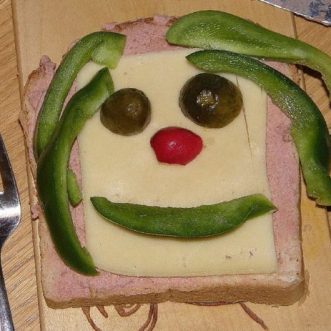
Playing with carrots, broccoli, blueberries, with no expectation of having to eat them seems to release a child’s natural curiosity, and from painting with beetroot, it’s a small step to tasting it.   Before you know it, your children are happy to try new things, mealtimes are enjoyable again, and you’re cooking the same meal for everyone.

Once you understand why children get fussy about what they eat and take it seriously, the right approach becomes obvious.

As I was watching this on TV, I wondered whether a similar approach might work with adults and work.  Perhaps, if we can find ways of letting people play with changes, with no obligation to make them, we might unleash their natural curiosity and creativity and so not only end up with  happier people, but better changes too.

Sanity

Sanity

Listening to Start the Week on Monday, I heard Grayson Perry give a brilliant definition of sanity:

“Sanity is being all of yourself, to everyone, all of the time.  Not schizophrenic or chameleon-like.”

Authenticity follows on from this: “Authenticity means bringing all of yourself to bear on a topic” – in other words, bringing your whole self to the work.

So, if it feels like your job might be driving you insane, you could be right.