Discipline makes Daring possible.

Participation

Participation

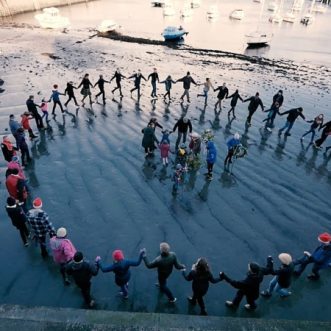
Last week I heard of some interesting research about consumers.   Which is that people don’t like to be thought of as consumers.

They want to be participants.   They don’t want to be one side of a transaction, they want to be pulled into a dance; enrolled on a journey.   They want to connect and create a bond between themselves and the people they buy from.

That’s good news for ventures like Sail Cargo Alliance, who are in the business of building communities of producers, shippers and consumers.

Even better news for accountancy firms, because that’s just the change that’s needed to build a thriving practice and a thriving community of small businesses.

A long slog

A long slog

This week I’ve mostly been getting a marketing campaign together.

I have a great tool, which lets me create and assemble content for all the social media channels in one place, so that when it’s all ready, I can metaphorically press a button, and off it goes.

Oh, but its a long slog!   I feel like I’m wading through treacle, learning the tool, finding images and coming up with the messages all at the same time.  More than once I’ve thought of giving up, and just posting more often in my usual way.

But I haven’t, because I know that once I’ve mastered this process, I can repeat it, and it will get faster and better every time.  Which means I will be able to do much more marketing for the same amount of effort – I will be able to scale my marketing and still have room to deliver my promises.

I’ll have a better business, even if it’s not bigger.

Out of touch

Out of touch

Before mobile phones, you had no choice about being out of touch outside working hours.   You either got everything done during the working day or you didn’t.   Even if you worked late, you could properly relax at home.

If you knew you were going to be away from your desk for a few days, you left it so that someone else in the office could pick up a call and handle things in your absence.  You could concentrate on the job you were actually doing.

If you needed to get a report written or a complex spreadsheet set up, you deliberately took yourself out of reach of the banter, ‘quick questions’ and interruptions.  You could give the job the attention it deserved.

All of this made us more productive, not less.  And we were probably less anxious and stressed too.

Now, putting yourself out of touch has to be intentional.

And it’s a skill worth learning, for everyone’s sake.

Silver lining?

Silver lining?

I wonder how many people will be working from home over the next few months?   And how many of the professional service businesses they work for, like accountants, solicitors, surveyors, architects, will realise that this is a completely practicable way of working?

Of course, it will focus the minds of everyone in the business on what really matters on measuring performance – deliverables and results rather than attendance or time spent, and it may require support tools to be put in place (nowadays easily and cheaply available on the cloud).

But if they do this, many businesses will realise that they can trust their teams to do what’s needed, when it’s needed, without surveillance, and that may mean they start looking at how they can support responsible autonomy even more effectively.

That could be a deep silver lining to the coronavirus cloud.

Be more mushroom

Be more mushroom

A mushroom is a metaphor for a short-lived momentary thing, that springs up quickly and dies just as quickly.

Yet this mushroom behaviour is deceptive, because the mushroom is founded on something much bigger and more durable.  A mycelium.

A mycelium is a wonderful thing.   It connects each and every mushroom within its network to every other, across space and  time.  They share a common genesis, even through they may pop up in very different habitats.

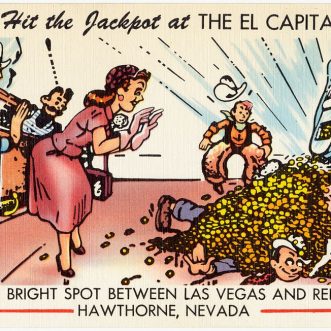
What’s more, each mushroom (if not picked early) throws out spores, also invisible, that spreads the network even further, until you have something like the mycelium in Nevada that covers over 800 hectares of ground, and is over 2,000 years old.

Not a bad model for a movement, or for a business that aspires to become a movement.

Be more mycelium.

It’s easier to do than you think.

Huge thanks to the open food network UK for letting me borrow their metaphor.

Cheap Labour

Cheap Labour

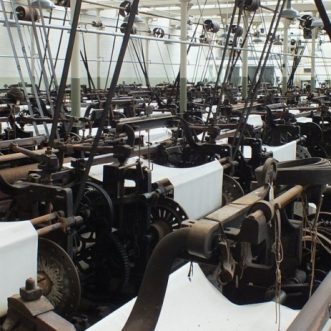
Over the last 4 decades I’ve visited quite a few cotton mills that have been preserved as museums.  The thing that always struck me was how old the machinery was.   Often it had been in place for 90 -100 years.   Had nobody invented better machines during that time?

Yes they had.  But if you can find cheaper labour to mind your old machines, you can get away without upgrading them.   And that had worked for a good while on our textile industry.  But sooner or later a more efficient business (or one with access to even cheaper labour) will take you out.

In a service industry value is generated by people rather than machines.  If you’re in it for the long term, its going to pay to invest in them, to support them with more efficient tools and processes, to upgrade, re-equip and refresh the source of your profits.

Or are you planning to keep the same ones for 100 years?

Working to a pattern

Working to a pattern

It’s hard to imagine making any garment successfully without having a pattern to work to and a picture of what the finished product should look like.

Yet we expect our teams to do exactly that every day.

With predictably ill-fitting results.

For the want of a nail

For the want of a nail

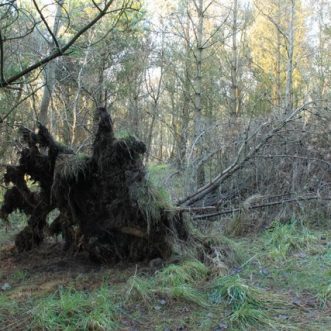
We like to blame disasters on the failure of equipment – the horseshoe nail, the cladding, the electrical wiring.   Or we like to blame people – the farrier, the cladding manufacturer, the maintenance department.

But neither of those things are really to blame when things go disastrously wrong.   It’s the processes that have failed, and often much further back than the site of the problem.    The rider didn’t check his horse’s shoes (or maybe the farrier ran out?), the specifier chose inappropriate cladding (or maybe the budget was too low?), management reduced the capacity of the maintenance department (or maybe the maintenance team had caught coronavirus?).

It’s what we do – the processes we run – that delivers results, good or bad.  If we want to minimise the bad and maximise the good, we all need to see them clearly and take responsibility for keeping the whole in good working order.