Discipline makes Daring possible.

A three-booker

A three-booker

This weekend was a 3-booker.

I learned some things:

  1. I don’t know enough about feminism.
  2. Remember those tabloid headlines from the ’70’s, screaming about GLC money being wasted on ‘one-legged, black, lesbian, women’s groups’?   What they were actually objecting to was probably a co-operative of female architects collaborating with the mostly female clients of a new GLC funded community centre to design how it should work.  ‘Making Space‘ is an interesting set of essays from that time that may well revise your memories.
  3. The system isn’t what I thought it was.  It turns out capitalism has been hijacked.   Read ‘Kleptopia’ while you can.  It’s scary, but a lot of things make sense afterwards.
Sending and receiving

Sending and receiving

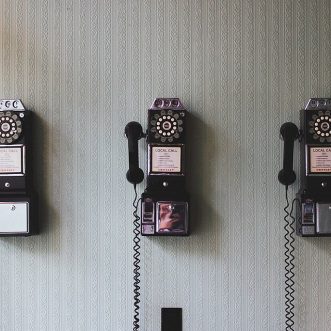
When sending and receiving, asking and getting an answer, happens asynchronously, it takes more work to get to a point  where things can move forward.

This work is often invisible until you try and capture it in a Customer Experience Score.

At which point, it’s a good idea to ask: “How much of this can I make synchronous instead?”

Over the last 10 years or so, we’ve got so used to tech that allows us to operate asynchronously that we default to it.

Now we have tech that makes it much easier to operate synchronously too – even across time-zones.   Perhaps that should be our new default?

Getting paid is part of the process

Getting paid is part of the process

If you make getting paid part of the process of delivering your service, its easier to make sure it happens, on time.

Remember though, to also make it part of the customer experience.

There’s no reason why your customer shouldn’t enjoy it too.

Never done

Never done

Another thing to keep in mind as you design your Customer Experience Score:

You’re never done.

You will be wrong sometimes, you will be right more often, but you will never be finished.

Because there is no right answer.

Only the best answer for now.

That’s what makes it human, sustainable and uniquely beautiful.

How low should you go?

How low should you go?

When you’re trying to capture your Customer Experience Score, it’s easy to get yourself bogged down in detail, trying to nail down every step of every activity to the nth degree.

You can avoid this by reminding yourself who you’re writing the process for – a competent human being, not a machine.   One of the great things about humans is that you don’t need to tell them everything.  They can fill in the gaps from their experience, using their skill and judgement.

So if you find yourself documenting the equivalent of ‘make a cup of tea’ in excruciating detail, you’ve gone too low.  On the other hand, if everyone following your Score has to stop and ask you “What am I supposed to do here?“, you’ve stayed too high.   If some of your players are too new to know already, by all means, document ‘how to make a cup of tea’.   As part of their training, not part of the Score.

The only way you’ll know how near you are to the sweet spot is to do it, find out and adjust accordingly.

Untangling

Untangling

One of the hardest things to get your head around when you first start thinking about your Customer Experience Score, is working out how what you do splits into different activities.   When you’ve always done a bunch of tasks together, it can be hard to see how they don’t necessarily belong together in your Score.

Why does this matter?

Because the last thing you want your people to have to do is to ask themselves the equivalent of  “Hang on, do I play this note or skip it?” every time they play your music.

A musical score doesn’t usually contain optional notes.  You play what you see.   You want your Score to work the same way.

Good questions to ask yourself to disentangle tasks and place them sensibly in your Score are:

“Does this Activity get repeated for the same client?”

“If so, do I do this task every time I do this activity?”   If not, it probably belongs somewhere else, either as a step in another Activity or as an Activity in its own right.

“Where could I put it that would mean it does happen every time?”  Often that’s the next Activity along in the process.

Let’s look at a simple example, setting up a new client.

When I set up a new client, I create a folder for them on my storage system.   That folder contains general information about the client that is going to be useful however many times I work with them in future.

So, my ‘Set Up Client’ activity will involve creating that folder, then populating it with the information I want to keep for that client.

Whenever I start a new project, I set up a subfolder inside the client’s folder to hold information that’s specific to this project.

The only reason I’m setting up a new client is because I’m doing a project with them.  So, at first glance it would be tempting to include setting up the project stuff as part of the ‘Set Up Client’ activity.

But what happens if we do a second project with this client?  Does the person (who is not me) playing this Score start at Set Up Client and repeat unnecessary tasks?   Or have to check whether they have been done already before they carry them out?

It would be better to have a separate ‘Set Up Project’ activity that includes the tasks that apply to setting up each and every project, and restrict ‘Set Up Client’ to only those tasks that are relevant to it.

Now, as a player, I can move from ‘Set Up Client’ to ‘Set Up Project’ seamlessly for the first project, and repeat from ‘Set Up Project’ if we work together again.

I don’t have to think about it, I can just play the notes, without getting into a tangle.

And then what?

And then what?

Following on from yesterday’s post

To create the story of the Customer Experience Score you are trying to capture, start with a question:

“What happens when a client buys this product/starts this programme/signs up for this service…?”.

Make notes of the answer, until there’s a pause.

“And then what?”

Keep asking this question until you get an answer something like: “Nothing, that’s it. That’s the end.”

It will probably take longer than you think, but you’ll have your first draft. And lots more questions.

Picture © Yann Forget / Wikimedia Commons

How to capture a business process: Step 6

How to capture a business process: Step 6

I’ve written quite a bit elsewhere on how to capture a business process. But I left out a step.

After you’ve thought about what the point of your business process is; where it starts; where it ends; what happens through this process; what Roles are involved; what Props are needed and how exceptions should be handled, there is one more crucial thing you need to do:

Have a go.

Your first draft will be wrong.  Mine always are.

Your second draft may well be wrong.  Mine frequently are.

Your third draft may not be quite right.  That often happens to me.

But you can’t find any of that out unless you have a first, second, or third draft to work with.  It’s very hard to follow a process that’s in your head.  Much easier when you see it spelt out as a map in front of you.  That’s true for you and for your colleagues.

This is how great artists work. They sketch, tentatively and hairily at first. to get the idea out of their head into a form they can work on.

I’d even go as far to say feel free to start at Step 3, with the story and just get something down.  Then review it in the light of Steps 1 to 5 to refine what you have in your own head before you present it to others.

When it comes to capturing how things should work for your business, the most important step is to get it out of your head, and into a form that you and others can reason about, re-design and improve.

It will never be perfect, but it will be visible.  Therefore capable of being made better

Like a great artist, keep practicing, keep sketching.

In time, your sketches will look more like finished works.   But they’ll always be valuable.

Friends

Friends

Our modern world is built on treating people like strangers.  That means we can concentrate on things, on the transactions through which we acquire things, ignoring the human being(s) behind them.

That makes life very convenient, but it also makes it unsatisfying.

It also makes it dangerous.   It’s easier to attack a stranger than a friend.  And when you’re used to ‘unseeing’ people, even those you’ve lived among for decades can easily become strangers.

How lovely then to be working with clients who want to build a global enterprise based on mutual benefit and trust.  On people, not on things. Between friends, not strangers.

How lucky I am to be their friend too.