Discipline makes Daring possible.

Earworms

Earworms

My husband works best when there is background noise.  Mostly talk radio, but often music.   I’m the opposite.  I find talking and songs incredibly distracting.  I end up listening to the words instead of paying attention to what’s in my head.  It’s a good job we can work in separate rooms.

The thing I find worst of all though, is catching earworms – those snatches of song that run through your head repeatedly and with annoying frequency, sometimes recurring for weeks after I’ve heard the original.

I don’t always have to hear the whole song to get an earworm.   A few notes will do, or seeing a word that reminds me of it, or feeling an emotion I associate with it.

I find earworms intensely annoying, and avoid catching them if I can.  I play only instrumental music in my car, work in a quiet room, avoid radios.

But maybe earworms could be useful?  Even desirable?

The vision you have for how your business makes and keeps its promise to the people it serves, is like music – your music that you’ve created.   For others to play it, you need to get it out of your own head.   So you write it down in a Customer Experience Score.

But where you really want it is in your team’s heads.   So they don’t have to constantly refer to the score.  So they can create a personal interpretation of it that suits the human being in front of them right now.

Finding a way to generate earworms from your Promise of Value might be the answer.

A Day Off

A Day Off

Yesterday, I submitted an application for a Women in Innovation grant.   It was a heck of a lot of work, but worth it, even if I don’t win.

And somewhere along the line, I caught a cold.  The first (and worst)  I’ve had for ages.  Not Covid, but unpleasant.

Today my brain is empty and my head is full.

So I’m having a day off.

Back tomorrow.

As always, thank you for reading.

Down with management

Down with management

I’ve talked before about the application of pin-factory thinking to work that requires empathy, creativity, imagination, judgement and flair.   This kind of thinking reduces management to supervision, control, and reporting.   Activities that are easily automated, but add little value.

No wonder we have an employee engagement problem, an innovation problem and a productivity problem.

Because we have a management problem.

People don’t need managing.  We are perfectly capable of managing ourselves, and do so every day.

We don’t need supervision and reporting.  We need communication – a vision, a score to follow, feedback on how we’re doing.

We don’t need to be controlled.   We need freedom – to make mistakes, learn from them, correct ourselves, improve how we do things.

We don’t even need to be led.   We can lead each other – the right leader, at the right time to deliver what’s required.

Down with management!

Long live responsible autonomy!

Intersections

Intersections

“Who am I the ideal solution for right now?”

A way to think about the answer is to think about 3 sets of people:

  • Who needs what you can do for them?  Why?
  • Who is motivated to actually do it?  Why?
  • Who has the ability to do it (including the ability to pay you for it)? Why?

The intersection of these three, tells you the answer, because all three are needed to prompt action.

And if there is no intersection, maybe you can create one, by increasing their ability?

Ideals

Ideals

The answer to the question “Who is your ideal client?” is often “The one who pays well, on time.”

It’s flippant, and usually followed by a sheepish laugh, but also revealing.  No matter how much depth you go into on the psychographics and demographics of your ‘ideal client’, the chances are you’re thinking more about your needs and abilities than you are of theirs.

A bigger and better question to ask is “Who am I the ideal solution for right now?”

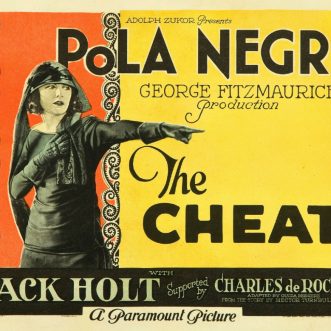
Cheating on your best clients

Cheating on your best clients

Turning clients into fans, champions and advocates of your business is brilliant.    And not without ongoing cost.   If you want to keep them as fans, you have to pay more attention to them than you might think.

For example if your loyal clients have been among the first to buy your ‘one-off, limited edition, short-run, never-to-be-repeated’ thing, don’t give them a free copy in the goody-bag at the next live event they attend.   And certainly don’t repeat that mistake at the next one.

As you know, I’m a big fan of consistency, but consistency doesn’t have to mean treating everyone the same.  If you have the data – who bought the thing, who’s attending previous events, who’s attending this one, it doesn’t take much effort to find the intersections and tailor your goody-bags accordingly.  In fact, giving everyone a named goody-bag only makes things better.

Another example.   It’s good to repackage and repurpose content to reach a slightly different segment of your community.   Perhaps not so good to sell it to everyone, including those who’ve seen it before.  Removing them from your mailout is not hard.   Creating an experience that rhymes and reinforces is an even better solution.

Loving your loyal clients back has to be genuine, or the illusion perfectly maintained.

Otherwise, your best fans will feel cheated.   And that doesn’t end well for the cheater.

A plea for sparrows

A plea for sparrows

Just round the corner from me, a builder has grubbed up around 30 metres of privet hedge that used to surround the plot.   It was a lovely hedge, even when it got untidy, but more than that, it was home for dozens of house sparrows.

You might not think that’s a problem, but homebody house sparrows don’t move when their home habitat is destroyed, they just die out.

That’s why house sparrows are now on the red list of conservation concern.    London lost 60% of its sparrows over just 10 years from 1994 to 2004.  Gardens are still being paved over, hedges and shrubs grubbed up.

Sparrows aren’t exotic, or glamorous, but they’re becoming rare.  I for one would hate to lose them.

Sharing the work

Sharing the work

George Stephenson built his steam engines without drawings.  He didn’t need them.  As both designer and maker, he could keep everything in his head, using rules of thumb, jigs and tools to speed up the making.   Every engine was hand-crafted and unique.

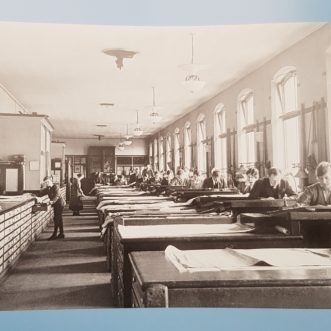
His son, Robert Stephenson, set up the first railway drawing office.  He separated production from design so that both activities could be scaled.  The drawings communicate the design to the people who build.

When we first set up in business, we behave like George Stephenson.  We hand-craft each and every user experience.  We learn from each iteration what customers really want.

And when we scale, we expect our team to be able to use the rules of thumb, jigs and tools we created along the way.  We assume that they have in their heads what we have in ours.   So we get frustrated that they don’t do things ‘the way they should be done.

That’s unfair.   They don’t know what we know, haven’t learned what we learned, didn’t design the jig, tools and rules of thumb we expect them to use, don’t know to get the most from them.

We forget to give them the equivalent of drawings – our design for a customer experience, on paper, for them to deliver.

The good news is that most of us aren’t generating thousands of designs, but a few.   Even better, because we’re dealing with human interactions, a certain amount of sketchiness makes things more effective, not less.   The best news is that once our initial designs are out there, everyone in the business can improve on them.

Before you share the work, share the design behind it.

P.S. I thoroughly recommend the book this picture came from.

Supply chains

Supply chains

Do you remember the last CAPTCHA you filled in?  The one that asked you to click every square that had bicycles in?   How long did it take you? A few seconds? A minute?

Of course, you know that every time you do that you’re cleaning data for an AI project, or training an AI machine to get better at bicycle recognition.

To you, that piece of microwork was a distraction.  To others it’s a project.  A minute’s worth of work for an unknown customer with an unknown purpose, often far less innocuous than bicycles, paid for in cents.

These ‘projects’ are not even tasks, only tiny slices of a task.  Like the complex calculations performed by the Lyons Corner House ‘computers’, only without the employment contract, the shared office or the necessary equipment.  Without even knowing who or where the ‘computer’ before you is, nor the one after you, because actually you’re spread across continents and time-zones, in refugee camps, prisons and slums.

Now imagine trying to build any kind of working life around ‘projects’ like these.

If you thought bodged-up fire-trap factories in Bangladesh was bad, welcome to the supply chain for the software behind driverless cars, voice-assistants, smart bikes and fitness-trackers.  The supply chain of the future.  Unless we’re careful.

I recommend this book.  It’s not comfortable reading, but I think it is essential.

Certainty/Uncertainty

Certainty/Uncertainty

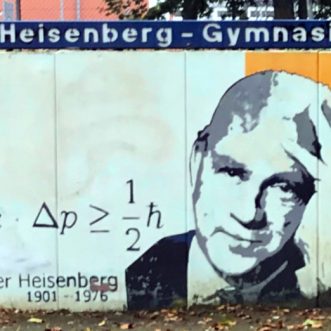
We humans live our whole lives in a Heisenberg gymnasium – dancing between poles of certainty and uncertainty.   Craving first one, then having got it, craving the other.

The truth is we can never rest, only find a way of creatively using the tension between those poles to move ourselves, our businesses, humanity and our world forwards.

Tying ourselves to one or the other can only end in tears.