June 14, 2019
Persuasion
All marketing is designed to invoke action.
The difference between persuasion and manipulation is who really benefits.
All marketing is designed to invoke action.
The difference between persuasion and manipulation is who really benefits.

“It’s not what you do, it’s the way that you do it. That’s what gets results.”
I disagree.
“The way we do things round here” clearly reflects the culture of an organisation or institution. So does “What we do around here” – the things an organisation or institution chooses to do, and the things it decides to leave out.
So what really gets results is to be clear about the promises that are being made, and intentionally design the ‘what’ to deliver on that in a way that embodies the ‘way’.
Not to be a straightjacket or monorail, just so it isn’t only in the heads of the people who happen to be around right now.
Thanks to Radio 4’s Thought for the Day for inspiring this one.
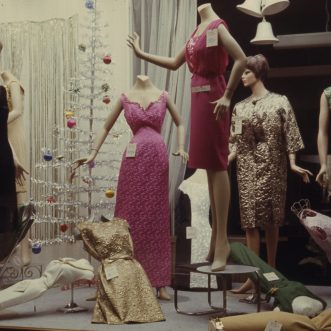
I’m old enough (just) to remember when you weren’t really supposed to go into a shop unless you were serious about buying.
You couldn’t just see what they had. As soon as you were through the door an assistant pounced on you.
Soon, retailers realised that letting people browse increased sales. Times had changed. People had spare cash. They were no longer buying to fill a need, but to fill a mood.
Today, of course, browsing is always welcome.
Only now, online retailers do the equivalent of chasing you down the street with stuff you browsed – “Hey, you looked at this and didn’t buy it! Why don’t you buy it? Go on, you know you want to really!”.
Desperation is not a good look. It’s not healthy either – especially if it works.

We bought a new sofa on Saturday. We visited the Soho showroom and spent a good hour or so trying various models out, measuring them, discussing how we would get them into the room, and then ordered one.
We were helped by a very pleasant assistant who took us through creating an account so we could track our order, then placing the order for the sofa we wanted. All this was done via a large tablet – so essentially, we could have been anywhere – except that we got to print a postcard of our sofa, so we could look at it while we waited the 14 weeks for delivery.
All good. We left the showroom and went off to have a celebratory pint and a proper sit-down in the pub across the road.
That’s when they spoiled it.
The first thing I saw when I looked at my phone was an email from the sofa company, triggered by creating the account: “£10 off your first purchase with this code.”, followed by another email “Thank you for your order.”
Now, I am very happy with the sofa I’ve ordered, I liked the showroom experience, and found every person we spoke to extremely helpful. And £10 is no big deal given the price of the sofa.
But still I felt cheated. Because the way ordering worked in the showroom meant I couldn’t see that discount offer until it was too late. Better then, not to have made it, or to have applied it automatically.
As the money being poured into emotional AI shows, companies are very aware that humans are feeling beings, who can easily shift and be shifted between emotions.
It would be a pity for all that money to be thrown into making promises, not at keeping them.
This morning I read that a London-based firm has just announced $12.4 million worth of investment in its “emotion AI” – software “to help machines detect the intricate and finely balanced emotions of a flesh-and-bones homo sapiens.”
According to the article, the company “targets its technology at marketing campaigns, including videos and other creative assets such as photos or GIFs”
I wonder if their customers will also use it on self-checkouts, ‘contact us’ pages or customer service call lines?
Thanks to Frank Pasquale for sharing the article.
If processes are like pipes, it certainly pays to make them flexible, and capable of local configuration and re-configuration.
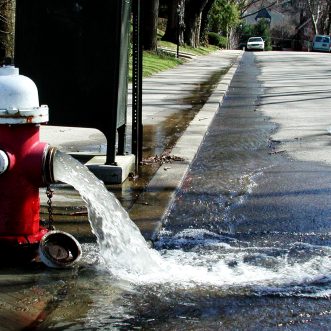
We’re familiar with the idea of flows in business – people flow through a sales pipeline, and add to our stock of customers and our stock of cash. Often though, that’s where the metaphor ends for us.
It doesn’t end for the business though – the promises we make to those customers flow through our delivery system and add to our stocks of promises kept.
Promises kept may in turn result in repeat business and/or referrals, which also add to our stocks of customers and cash. The promises we don’t keep drains our stock of customers, and another valuable resource, our credibility or ‘reputation’.
A business is a system, and every resource in a business, whether tangible like cash or equipment, or intangible like reputation or staff morale is continuously being topped up or drained through flows, and in turn influences other flows.
It makes sense then, to design our pipes to maximise the resources we want to build and minimise the leaks.

It’s easy to count or measure our resources, the things we have, in business as well as in our personal and public lives.
It’s harder to see how those resources arrive, or how they leave – necessary though, because its not what we have that creates value, but what we do with it.
At the beginning of last year there were just under 5.7 million private sector businesses in the UK. Of these, … Read More “In defence of ‘lifestyle’ businesses”
‘Stuff’ is just a poor substitute for what people really want – autonomy, mastery, agency, purpose and above all connection.
With that in mind, the questions any business, new or established should be asking are these:
“What do the people I serve want to become?”
and
“How can I help them get there together?”
not,
“How can I play that to get them to buy my stuff”.