September 20, 2021
700
This is my 700th blog post. The idea of writing it was a little daunting, I have to say, although … Read More “700”
This is my 700th blog post. The idea of writing it was a little daunting, I have to say, although … Read More “700”

Starting from where they are isn’t only for prospects.
Your team will appreciate this treatment too.

Decades ago, I rescued my mother from a tiny rock, in a shallow sea. No big deal you might think, but she had poor eyesight, vertigo, and couldn’t swim. She was used to staying on the sand. She was panicking, hiding it because she’s our mum, and supposed to be in charge.
I might have been tempted to shout from my place halfway up the beach: “Just step in, it’s not deep, you’ll be fine!”
But I didn’t. I paddled out to her, took her by the hand, and helped her to put one foot down and the water and see just how shallow it was. I got her to put her next foot down, letting her lean on me until she felt steady on her feet.
Then I let her walk by herself the rest of the way.
When what you offer is new, it is also scary. It doesn’t matter that you know the rock is tiny and the sea is shallow. Your prospect doesn’t know that, not emotionally, where it matters.
Don’t just shout from a distance, move to where they are, accompany them on the first steps of their journey. Then let them move forward with dignity.
They’ll remember that for the rest of their life.
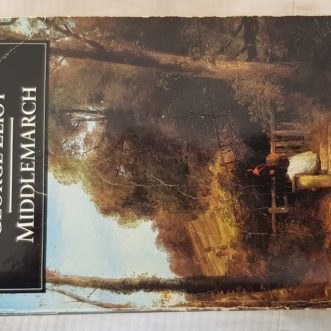
Middlemarch is my favourite work of fiction precisely because George Eliot (Mary Ann Evans) succeeds so well in this endeavour.
Not everyone in the book is good, or beautiful, or admirable or likeable, but by the end you feel they are all worthy of the investment of your attention. Even the ‘villains’. You may not approve of everything they do, but you at least understand how they got there. Not through being ‘good’ or ‘evil’, but through being human, by the choices they take at each little fork in the road, how they justify those choices to themselves and how that leads to the route taken at the next fork, and the next.
Reading fiction is one of the most effective ways I know to expand my horizons. I’ve ‘met’ far more people through fiction than I could ever hope to meet in the flesh, from all sorts of backgrounds, times and places. Practising empathy for these characters, written by and about people outside my comfort zone is great practice towards doing it for real.
I know quite a few businesses who keep a library of business books for their team. Perhaps its time to add some fiction.

Management – the co-ordination of activities executed by many people – is expensive. Managers don’t contribute directly to the bottom line, and good managers cost good money to hire. So it’s no surprise that firms around the world have been looking for a way to get rid of managers.
One solution is to automate – management by algorithm, as used by Uber, deliveroo and the like, and increasingly applied to fields such as home-care. This is hideously expensive to set up, of course, and it depends on creating an effective monopoly. Plus it effectively turns humans into mindless robots, paid accordingly.
The other solution is to devolve responsibility out and down to the front-line – radical de-centralisation, where teams on the front line manage themselves. An extreme (and very successful) example of this is Haier Industries, essentially what Corporate Rebels call ‘the biggest startup factory in the world’.
At Haier, ‘teams’ are startups, consisting of internal and external people (such as suppliers), all working to create value for customers, sharing the risks and the rewards along the way. They are monitored and supported, but not controlled. Haier doesn’t decide what will work and what won’t, the market does.
In contrast to Uber and the like, Haier has created a highly profitable solution to getting rid of managers – by creating an ecosystem that enables self-managing people to do what only humans can do – create value for other humans – supported and rewarded by systems that help them to keep growing.
In the future, there will be no managers, only management. What kind of management do you want for your business? Uber? or Haier?
I know which I’d prefer.
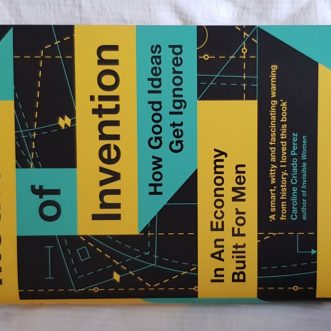
I received this book on Friday and finished it on Saturday. It is, as one (female) reviewer put it “equal parts informative and infuriating”, what I call ‘a gnasher’ – where men decide that woman ‘can’t do’ something because of their biology, then make a law to prevent them doing it anyway, just in case.
Gnashing aside, this is well worth a read, if only to help us think about what the world could look like if businesses founded by women received more than 1% of UK venture capital, or if ideas that come from the old, the differently-abled or the ‘lower classes’ were taken seriously.
If ‘innovation’ wasn’t just about disruption, creative destruction and domination, but also about care, repair and contribution.
Or if we just acknowledged that we’re human animals, with bodies as well as brains.
I recommend it.
We need more mothers of invention.

When you’re stuck, questions can be more helpful than answers.
As I found at Like Hearted Leaders this morning.
Why not give them a try?

When we think of innovation, we tend to think of physical or digital technologies embodied in products or apps.
Management is a technology too.
And as Michele Zanini, co-author with Gary Hamel of ‘Humanocracy‘ observed only last Friday:
“Our research suggests that the longest-lasting competitive advantages come from innovation in management systems and practices, not from business or operating model innovation. So diligently pursuing management innovation pays off handsomely.”
And the good news is that small businesses on the cusp of scaling are best placed to take advantage of this.

I learned a new concept this morning: ‘Founder’s syndrome’. Here’s the Wikipedia definition:
The founder responds to increasingly challenging issues by accentuating the above, leading to further difficulties.[29] Anyone who challenges this cycle will be treated as a disruptive influence and will be ignored, ridiculed or removed. The working environment will be increasingly difficult with decreasing trust. The organization becomes increasingly reactive, rather than proactive. Alternatively, the founder or the board may recognize the issue and take effective action.[30]
A lot of this looks to me like the classic painful transition from one-person-band, to few-person-band, to full-blown company. Which is really the transition from a small, personal, human-scaled business to a large, impersonal capitalist corporation. The founder wants to keep things personal and true to their original vision. New owners or new management want to make things efficient, corporate and therefore impersonal. As far as the founder is concerned, they want to make it ‘someone else’s business‘. Of course the founder resists.
There is a preventive for ‘Founder’s syndrome’.
Embed the founding vision and personality into the operating processes of your business before you try to scale, with a Customer Experience Score. You’ll be able to scale without managers, even without investors other than the people you serve. The best of both worlds: personal, true to the original vision and magnifying your impact.
Even better, once it’s built into the way your business works, your Score takes on a life of it’s own, nurtured and improved by everyone in the business. It becomes harder for anyone to interfere – even you.

“Design your business or it will be designed for you.” It’s one of my favourite sayings, spoken by Brian Chesky of AirBnB.
But what does it actually mean? How can others design your business for you, when you’re the boss?
When you started out as a one-person band, you did everything. You tried different things to market and sell your services, and to deliver them in such a way that customers came back, or told their friends. You designed the business.
Once demand grows beyond what you can personally deliver, you have to add capacity. And every time you do that, you bring in someone else’s idea and experience of what a business looks like.
You might add capacity by automating some of what you do with software. That job management software, quote generator or CRM tool was designed by someone else, according to their vision of what a business is and how a business works. A vision that is necessarily generic, otherwise they couldn’t sell enough to be viable.
You might outsource some of what you do, your accounts, or your HR for example. Your accountant or sales agent will have their own idea of what a business is and how it works. If they’re any good they’ll try to find out more about yours, but often they’ll fall back on a generic design to fit all industries, or a design learned working elsewhere, or their own design. It’s not your area of expertise, so even though you don’t love it, you put up with it.
You might work with other small businesses like yourself, sub-contracting some of the delivery. But like yourself, they will have designed their own small business, and that design probably won’t match yours. That can prove exasperating and stressful, unless you decide it doesn’t matter that much, and accept the differences.
You might recruit a business partner, co-director, manager or experienced staff to take on some of the work you do. Almost certainly you’ll want them to have experience of business in general and your industry in particular. In other words, they’ll bring with them the design of those other businesses they’ve worked in, plus their own ideas of how to do things. If you’re very lucky, those ideas will chime with yours. If you’re not, you’ll be fighting to maintain your business design, or running through several cycles before you find ‘the right person’.
You might recruit juniors, school-leavers or graduates even, who you can ‘mould’ to suit your business design. But moulding takes time, and even they will have their own ideas of how things should be done. They need almost constant supervision and just don’t seem to get it.
You might hire a business coach or consultant to help you deal with all these problems. They too, come with baggage of what a business ‘should’ look like, learned at the Bank, or at business school, or from building their own successful businesses. They will try and shape your business to fit.
In the face of all this, you have a choice. You can supervise closely, re-do work, fight to correct what everyone else is doing ‘wrong’, or you can accept other people’s designs for your business. The first is exhausting, the second feels like it’s not your business any more.
There’s a step you can take, which can solve all of these potential problems before they happen, which is to take your business design out of your head and get it down as a shareable ‘blueprint’ everyone can work from. The Customer Experience Score for your business. That captures your unique way of making and keeping promises to the people you serve.
Your Score becomes a specification for software, an operations manual for new staff, suppliers and contractors at all levels. Above all it becomes a permanent record of your design for your business, that enables your unique creation to scale, evolve and persist through time.
Design your business, or sooner or later, you’ll be back to working in someone else’s business.