Discipline makes Daring possible.

News

News

A system of any kind survives through feedback.   What feels/sounds/smells/tastes/looks right.  Or wrong.   Or not particularly either way.   Feedback helps us to learn, evolve and interact safely with the world around us.  That means that getting good quality feedback about what’s actually going on is crucial.   In fact, much of what concerns us as business owners is how to gather feedback effectively and act on it appropriately.

Marketing isn’t feedback.  Although you can use it that way.   I don’t wear fashion, but I do like to know ‘what’s going on’.  A twice-yearly trawl through marketing materials – magazines, shop windows, a look at what’s around and at what people are actually wearing – keeps me up to date.

Social media isn’t feedback.  It’s marketing.  Increasingly it’s geared to tell us what we want to hear, to entrench us in our worldviews, intensify our outrage, because that keeps us on the platform, there to see the marketing that pays for it.

‘The news’ as we mostly know it isn’t really feedback either.  It’s also marketing.  Designed to sell a newspaper or a news channel, or a worldview.   And it gets more like social media every day.

But it could be feedback, if we wanted it to be.

Bank Holiday thinking

Bank Holiday thinking

One of the things I love about Bank Holidays is that I get to spend a whole day reading.   I’m halfway through this book and there’s already interesting stuff in it.

One of the ideas I  particularly like is that of ‘pure procedural justice’, where a process inevitably leads to the desired result (in this case, a ‘fair’ one), and where the desired result can be projected beforehand according to criteria that are independent of the process applied.

Pure procedural justice is rare, unless you are dealing with a simple outcome, such as dividing a cake up equally, but it does seem to be a useful way of approaching process design:

  • What outcome do I want?
  • How could I define it before I run any process designed to achieve it?
  • How can I design a process so that I will inevitably achieve the outcome I want?
  • How could I measure the outcome independently of the process?

For processes that involve human beings, part of the answer is to abstract the desired outcome.  Rather than trying to list out every possible acceptable outcome, instead you define the characteristics of a set of possible outcomes each of which would be acceptable, even though you have no way of knowing what they are, or which you will actually get as a result of any particular run-through of the process.

That’s what your Promise of Value is for, to help you define those characteristics.

Shuhari

Shuhari

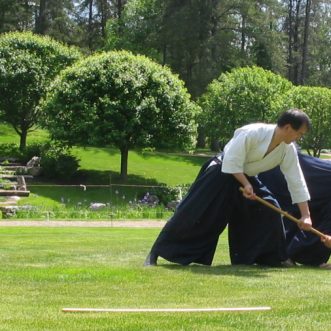
“It is known that, when we learn or train in something, we pass through the stages of shu, ha, and ri. These stages are explained as follows. In shu, we repeat the forms and discipline ourselves so that our bodies absorb the forms that our forebears created. We remain faithful to these forms with no deviation. Next, in the stage of ha, once we have disciplined ourselves to acquire the forms and movements, we make innovations. In this process the forms may be broken and discarded. Finally, in ri, we completely depart from the forms, open the door to creative technique, and arrive in a place where we act in accordance with what our heart/mind desires, unhindered while not overstepping laws.”  Endō Seishirō

You want your entire team to get to ri.

That’s impossible while the shu is only in your head.

Discipline makes Daring possible.


HT to Carlos Saba for the thought. And to Claire Perry-Louise for creating the space where it can be shared.

Markets

Markets

When Adam Smith wrote “It is not from the benevolence of the butcher, the brewer, or the baker that we expect our dinner, but from their regard to their own interest.”, he wasn’t thinking of JBS S.A, or Anheuser-Busch InBev, or Grupo Bimbo, S.A.B. de C.V..

He was thinking of Mr Jameson, Mr Paterson and Mr McDermid – people his mother knew and spoke to regularly, trying to make a decent living.   Who knew that if they tried to short-change customers or cheat their suppliers they’d be found out, word would spread and business would be lost.

But as Adam Smith also wrote “The interest of the dealers, however, in any particular branch of trade or manufactures, is always in some respects different from, and even opposite to, that of the public. To widen the market and to narrow the competition, is always the interest of the dealers. Monopoly of one kind or another, indeed, seems to be the sole engine of the mercantile system.

There’s a reason marketeers talk about ‘brands’.   Brands aren’t people, or even companies, they’re more often monopolies masquerading as humans.

As consumers (and human beings) we should at least keep ourselves aware of that.

The invisible hand can’t work without a market.

Rearranging deckchairs

Rearranging deckchairs

Before you cut costs in your central department of government or business by removing a job it currently does, here’s a good question to ask:

  • Can we remove the need for this job completely?

If the answer to that is ‘No’, then ask these:

  • Who is best placed to do this job effectively and efficiently?
  • What resources do we need to shift along with the responsibility?
  • What resources will they need to set themselves up to do this job?

I’m all for devolution.  The closer to the front line the better, but too often ‘devolution’ merely means shifting where the work is accounted for without shifting the resources needed to get it done.

When you’re looking for real efficiency gains, shuffling deckchairs is rarely the best answer.

Improvising

Improvising

The last year or so has forced us all to improvise.

Faced with extreme uncertainty, this is a rational response.  Improvisation enables us to quickly learn what works and what doesn’t in a rapidly shifting world.   It helps us to try new things, change direction, discover new opportunities.

In effect, the last year turned us all back into new businesses.

If your new new business was able to improvise its way into growth, now might be a good time to pause, take stock and reconfigure it into something more intentional.   Make the experiment that paid off repeatable and scaleable.  So you can carry on growing on purpose.

Remember to leave some room for improvisation though – it’s how you’ll see the next challenge coming.

Empathy comes before logic

Empathy comes before logic

When you’re on the receiving end of a complaint about your product or service, it’s tempting to rush into fixing the ‘problem’ through the use of logic.  “Nobody else has complained about that.”; “That can’t have happened.”; “Ok, let’s replace it.”, or “Here’s your money back.”

What you’re missing when you do this is an amazing chance to create a stronger connection with the customer or client in front of you.

If you start with empathy, acknowledging how they feel, aiming to understand how their real needs have been let down by the perceived failure, you’ll show them that you truly care about them as a person.

That enables you both to collaborate constructively on how best to meet those needs, and address that failure in a way that is often less damaging or expensive for you business, and more positive for the customer.

In other words, empathy is more efficient than logic.

Just a blip

Just a blip

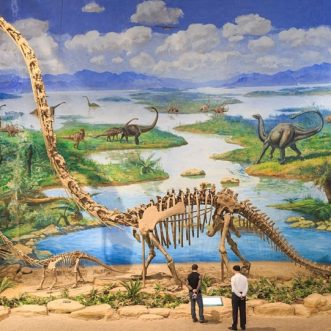
Dinosaurs were at the top of Earth’s food chains for around 180 million years.

They died out because they were unable to adapt through evolution to changes in their environments – first rapid climate change caused by volcanic activity, then of course the famous meteorite.

Homo Sapiens has only been around about half a million years.   We’ve arrived at the top of Earth’s food chains by making the Earth adapt to us, driven by models of the world that we make up.  Models that turn out to be at best only partly true and often are disastrously misleading.

Will we be the first species to go extinct, not because we can’t adapt, but because we won’t?  Because we refuse to change our minds?

That might just make us the stupidest blip in Earth’s history.

Contrasts

Contrasts

When we put our minds to it, we humans can be pretty brilliant.

Yesterday, I heard about porous molecular cages for the first time.  These cages are made up individual molecules that have been designed to imprison another type of molecule – effectively creating a molecular sieve for separating chemicals.   As if that wasn’t brilliant enough, the team at Imperial College have been using machine learning and evolutionary models to screen potential molecules for stability, ease of production and scalability.

Also yesterday, I saw a 10-year old Palestinian girl describing how she had grown up amid constant bombings.  “Why are you doing this to us?” she asked, “How are we supposed to fix it?”

When we refuse to put our minds to it, we humans can be pretty dumb.

Let’s at least try.