Of course, if you embed your unique promise of value into the way your business works well before you decide to exit, you get all the benefits of exit, without actually having to do it.
You can even continue to grow your business at the same time.
Applied at the right time, Discipline really does make Daring possible.
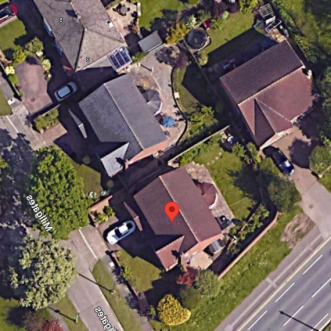
When my mother sold her architect-designed corner-plot bungalow, the buyers told her they were aiming to set up their son in it. They quibbled over everything, nibbled away at the asking price until in the end, she sold for much less than she’d hoped.
Then they knocked it down and built 3 new executive homes on the plot.
There are many reasons why a trade buyer would want your business.
If you care about what happens to it, to your staff and to your clients after you’ve exited, it’s worth knowing what those reasons could be, because buyers are not necessarily going to tell you:
They want your client list, but not your staff, offices or name.
They want your brand, but not the effort that goes into maintaining it.
They want your market share, to add to theirs, so they look good to potential investors or buyers, but not your staff, or your products and services.
They want to take you out as a competitor.
They want your business as part of a portfolio.
They want to run it themselves as a going concern.
Whatever the reason, they’ll usually want you to stay on as a consultant, and the final price will be dependent on performance during the transition. And all too often that transition destroys value, while you have to watch it happen.
Just as it’s easier to protect the value of your house by making sure it’s in tip-top condition with everything working like clockwork, it’s easier to protect your business’s value if you’ve systemised it. Even easier if you’ve also documented that system in a Customer Experience Score.
Doing so also opens up other exit opportunities:
Pass it on to family, who already know it runs profitably without you.
Sell it to your employees, who already know how to run it profitably without you.
Sell it to one or more of your fans, who already know that your team can run it profitably without you.
Sell it to a like-minded entrepreneur, who wants to see your legacy carry on.
License it to any one of the above, on condition that is run the way you’ve designed it to run, in return for a percentage of the profits.
Build your unique promise of value into the way your business works before you sell, that way you’ll get to realise it all and leave a legacy other will recognise as yours.
Big businesses (or perhaps just their shareholders) crave nothing more than the certainty of increasing profits. That’s what capitalism means.
To that end, they put a hard boundary around their businesses, turning them into closed systems, where everything is rigidly controlled, organised to maximise profit and nothing else.
The trouble is that a closed system cannot learn. So when the life around that business changes (as it certainly will) the only way for a closed-system business to deliver the certainty it promises to shareholders is first, to eat itself, generating ‘shareholder value’ by shrivelling it’s own organs, or selling them; or, worse, to seek to impose control onto its surroundings, turning them as rigid and sterile as itself.
Good businesses, the ones that get to stay big and profitable without financial or geopolitical engineering, are those that put a border around themselves instead.
Borders are permeable. They allow new ideas in, act as an early warning system for change, create a safe space for experimentation. They turn a closed system into an open one, yet retain enough control to allow a business to choose which changes they adopt, on purpose.
The best businesses add a twist to this.
They create themselves as an open system for making and keeping promises – not to shareholders, but to their customers. Profits become a side-effect of the system’s purpose. And ironically, become more certain.
They stick to their promise, always learning from their customers and their team what the world outside wants, and re-package their promise to meet that demand, adjusting the way the share and keep it along the way.
Great businesses constantly balance order with openness to get the best of both worlds, a business that can thrive forever, whatever the circumstances.
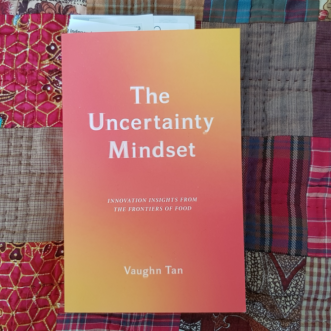
In ‘The Uncertainty Mindset’, Vaughn Tan describes an interesting situation:
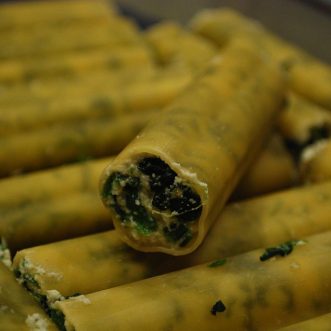
The assistant chef responsible for the popular lunchtime canelloni dish can’t keep up, and despite following instructions can’t consistently get the finished dish to look as it should, so some are sent back. This goes on for weeks.
It takes the owner walking past one lunchtime to spot the problem, discuss the problem with the assistant chef, then take the problem off to the experimental kitchen team for fixing.
It makes some sense for an innovative, high-end kitchen, operating at the cutting edge of dining to separate innovation from the everyday. A busy restaurant needs to run like clockwork, there’s no room during service for experimentation.
But not every problem needs a separate crack team to solve it. Given a bit of space and time outside normal service (more staff working shorter shifts), the assistant chef and their peers could probably have arrived at the same solution, which was a different method of assembly, that took up less time, less space and produced a more consistent result. Only if that failed should the problem have perhaps been passed across to the experimental team for a deeper look at the recipe.
Given regular space and time outside normal service, the restaurant team could solve many such problems, eventually including recipe problems, learning from each other as they go until each of them is able to tweak the process almost seamlessly. That way, the regular team also becomes the crack team.
When your business is faced with uncertainty, rigidity is the wrong tool to use. That’s why big corporations fail in the face of change.
The challenge for a purpose-driven, legacy-focused, customer-centred small business is to be open to unknown futures without losing its identity. To keep their edges fluid and their core firm.
Fortunately, that’s relatively easy to do, because human beings are very good at dealing with uncertainty – especially the uncertainty that comes from dealing with other human beings.
All you need to do is to build the firm core:
First you define a high-level, comprehensive Promise of Value that is specific and distinctive, yet open-ended:
Define the people you serve in terms of psychographics, not demographics.
Define how you serve them in terms of their deeper needs, not passing wants.
Define how you achieve that in terms of values and behaviours, not external measures.
Package that Promise of Value into concrete products and services:
Identify the demographic(s) most likely to contain enough people of the right psychographic.
Understand what matters to them right now.
Identify what dis-ables the motivated.
Design a package that addresses what these people need right now.
Use that Promise of Value to drive the design of a Customer Experience Score for sharing and delivering on your Promise that:
Embodies your distinctive values and behaviours.
Can be played by any competent musician.
Enables each musician to bring their own experience and personality to their performance.
Allows them to create a new interpretation of your Promise when they encounter the new and unexpected.
Make sure you gather feedback:
From the Score as it is being played.
From the people you seek to serve and the people who work with you.
From your regulator if you have one, and your industry.
From the impact you makes on the people and planet around you.
Enable every player in your team to discover the combination of roles that ensures their best performances:
Make sure everyone can play the whole Score.
Give them regular R&D time, in the company of fellow players, to tweak or re-design the Score, in response to feedback, learning each other’s strengths as they go.
Once you have this in place, you can safely trust your people (and the people to come) to dance with uncertainty. You can make every one of them a Boss, and leave the future of your business safe in their hands.