Discipline makes Daring possible.

Buying Customers

Buying Customers

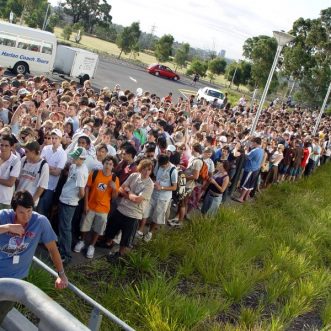
Acquisition is a common form of expansion.  Especially where customers buy regularly and repeatedly.  As the buyer, you add a whole bunch of new customers in one go, in bulk.  As the seller you get to cash in on all those years of hard work.

So far, so good.

For employees, takeover or merger often leads to culture shock, as two distinct (and probably inarticulate) Promises of Value clash in the new business.  This is a recognised issue that gets attention and effort from the buyer.

But what about customers?

Often, they don’t even know until after the event, when they call for support and find the rules have changed on them, or see the size of their next bill.

What do you think they feel when they find out?

Perhaps they don’t care, as long as there is no difference in the service they get or the fees they have to pay.  They didn’t have a relationship with the previous company and they don’t with the new one either.   These customers will stay until a significantly better offer comes along, as sooner or later it will.

Perhaps they are delighted – because the new rules make things easier for them, and efficiencies or economies of scale make their bills lower.  These customers will stay, and tell everyone why.

Or perhaps they feel belittled, betrayed and angry.   They had a relationship with the previous company.  They had chosen it because of its values and ethos.  They had bought in to its Promise of Value.  This company and the way it worked had become part of their life, and now you’ve taken that away.  Worse still, you’ve treated them as a commodity.  These customers will leave, and tell everyone why.

What’s the answer?

Aim for delighted, every time.
 

Gassaku

Gassaku

Gassaku, or ‘joint work’, is, unsurprisingly, a Japanese concept, where each collaborator’s contribution is celebrated and acknowledged, while recognising that the completed work transcends all of them.

In the west, we’ve become so used to the idea of the lone artist, the single originator, the star founder, that we are almost blind to joint work.   Except perhaps, when we watch a film, and see at the end the enormous numbers of people that helped to make it.

Yet all work is joint work.  We achieve nothing alone.

Everything we do is built on the work of others – not just those around us now, but those who have gone before.  Not just work that directly contributes to our achievements, but the work (not always paid) that built and continues to build and maintain all the infrastructures that enable them.

Time we acknowledged their contributions.

Good Design makes a product understandable

Good Design makes a product understandable

It clarifies the product’s structure.  Better still, it can make the product clearly express its function by making use of the user’s intuition.  At best, it is self-explanatory.   Dieter Rams, Design Principle number 4.

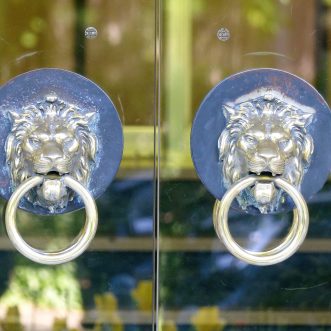
How many times have you pulled at a door that was meant to be pushed?  Or pushed a door that was meant to be pulled?

There are 4 simple design solutions that would prevent that tiny but all too frequent source of wasted energy and frustration:

  1. Put a flat plate on the ‘push’ side and a handle on the ‘pull’ side.
  2. Allow the door to swing both ways, and have a flat plate on both sides (because both are now ‘push’).
  3. Allow the door to swing both ways, and have a handle on both sides (because both are now ‘pull’).
  4. Have the door open automatically as someone approaches it.

1, 2 and 3 make the door understandable, 4 makes it self-explanatory.


We live and work among millions of designed products every day, from doors to roundabouts and office blocks to business processes, organisational structures and governments, many of which provide all too frequent sources of wasted energy and frustration.

How would you re-design them?

Stakeholders

Stakeholders

I found this on the Corporate Accountability Network‘s site the other day: “The Corporate Accountability Network thinks that every company, … Read More “Stakeholders”

We

We

“What can I do?   I’m only one person.”
Find the others.
“Never doubt that a small group of thoughtful, committed, citizens can change the world. Indeed, it is the only thing that ever has.”
Margaret Mead

Brave New Worlds

Brave New Worlds

The term ‘robot’ was coined in in 1920 by Josef Čapek for his brother Karel.   The word meant “forced labour”.

For all the impressive advances in robotics since then, some of which we saw on the BBC series ‘Revolutions‘ last night, the idea of “forced labour” – including, for Jim Al-Kalili, child-rearing – remains almost unquestioned.

It reminded me that we humans often dive into technology, when we should be re-thinking how we relate to each other.

Who’s driving?

Who’s driving?

Most of us business owners are driven by our needs – for autonomy, for self-expression, success, money or even revenge.   That doesn’t often build a business that lasts, except by chance.

The promise you make can’t be for everyone.   ‘Everyone’, or their close relation ‘anyone’, turns you into a commodity – interchangeable with every competitor in your field, putting all of you in a race to the bottom on price.

And before you work out what your promise really is, you need to work out who it’s for.

There is a community of people who need what you can offer.  They are underserved by what’s out there, looking for a change that you can help them to make.   They want to become something or someone different, and don’t know how to do it.

As long as there are enough of them, (and enough is less than you think), these people are your market, and by putting them in the driving seat, you’ll start to build a business that lasts.

It’s never about us, it’s about the people we serve.

Good design is unobtrusive

Good design is unobtrusive

Products fulfilling a purpose are like tools.   They are neither decorative objects nor works of art.   Their design should therefore be both neutral and restrained, to leave room for the user’s self-expression.”  Dieter Rams, Design Principle number 5.

Processes, organisations, jobs, are products fulfilling a purpose too.

Less, but better

Less, but better

“You cannot understand good design if you do not understand people; design is made for people.” Dieter Rams ‘Design by Vitsoe’, 1976

Good Design:

  1. is innovative – The possibilities for progression are not, by any means, exhausted. Technological development is always offering new opportunities for original designs. But imaginative design always develops in tandem with improving technology, and can never be an end in itself.
  2. makes a product useful – A product is bought to be used. It has to satisfy not only functional, but also psychological and aesthetic criteria. Good design emphasizes the usefulness of a product whilst disregarding anything that could detract from it.
  3. is aesthetic – The aesthetic quality of a product is integral to its usefulness because products are used every day and have an effect on people and their well-being. Only well-executed objects can be beautiful.
  4. makes a product understandable – It clarifies the product’s structure. Better still, it can make the product clearly express its function by making use of the user’s intuition. At best, it is self-explanatory.
  5. is unobtrusive – Products fulfilling a purpose are like tools. They are neither decorative objects nor works of art. Their design should therefore be both neutral and restrained, to leave room for the user’s self-expression.
  6. is honest – It does not make a product appear more innovative, powerful or valuable than it really is. It does not attempt to manipulate the consumer with promises that cannot be kept.
  7. is long-lasting – It avoids being fashionable and therefore never appears antiquated. Unlike fashionable design, it lasts many years – even in today’s throwaway society.
  8. is thorough down to the last detail – Nothing must be arbitrary or left to chance. Care and accuracy in the design process show respect towards the consumer.
  9. is environmentally friendly – Design makes an important contribution to the preservation of the environment. It conserves resources and minimizes physical and visual pollution throughout the lifecycle of the product.
  10. is as little design as possible – Less, but better – because it concentrates on the essential aspects, and the products are not burdened with non-essentials. Back to purity, back to simplicity.

Imagine if we designed organisations and processes this way too?